Stop Asking for Logs. Start Giving Answers

Challenge
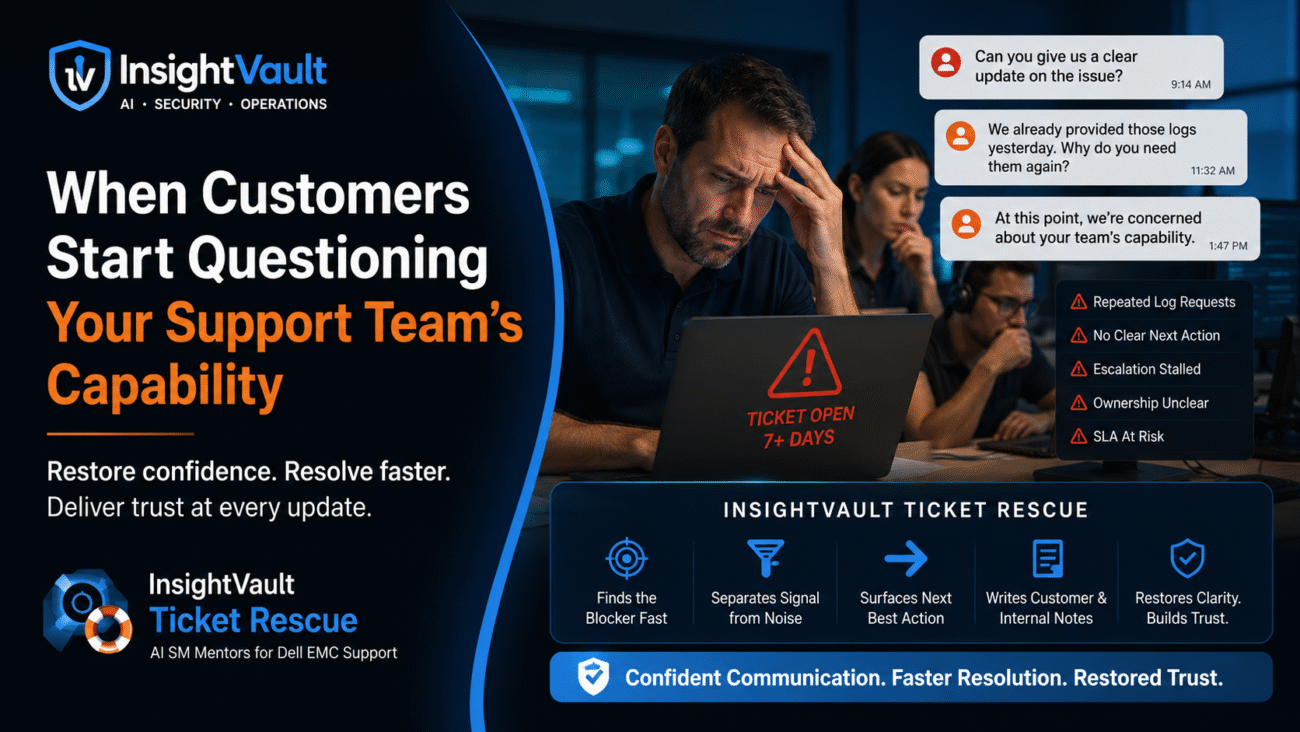
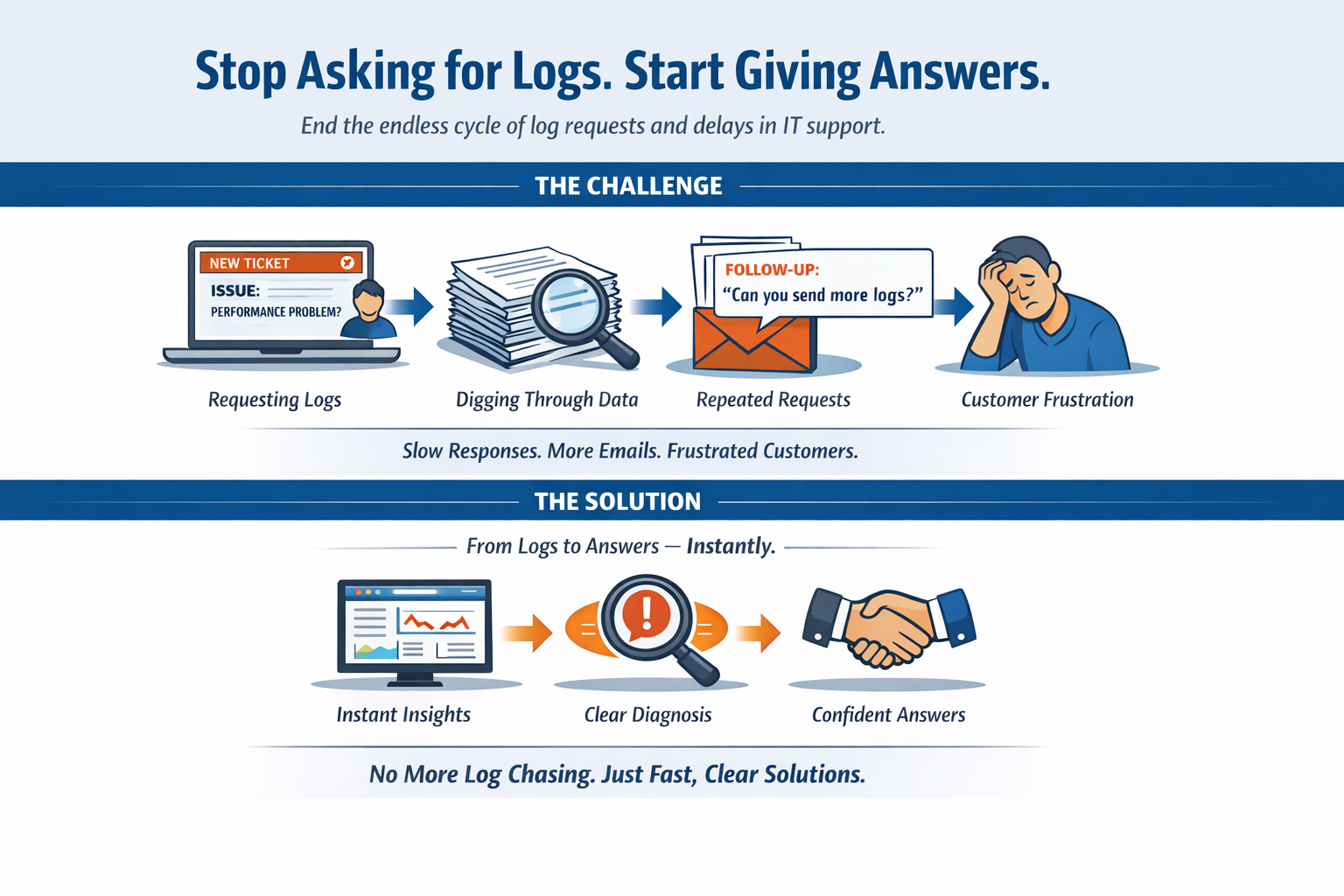
It starts the same way every time.
A customer raises a ticket because something isn’t working right. Performance is slow. Alerts are firing. Something feels off in the storage environment.
The engineer picks it up and asks for logs.
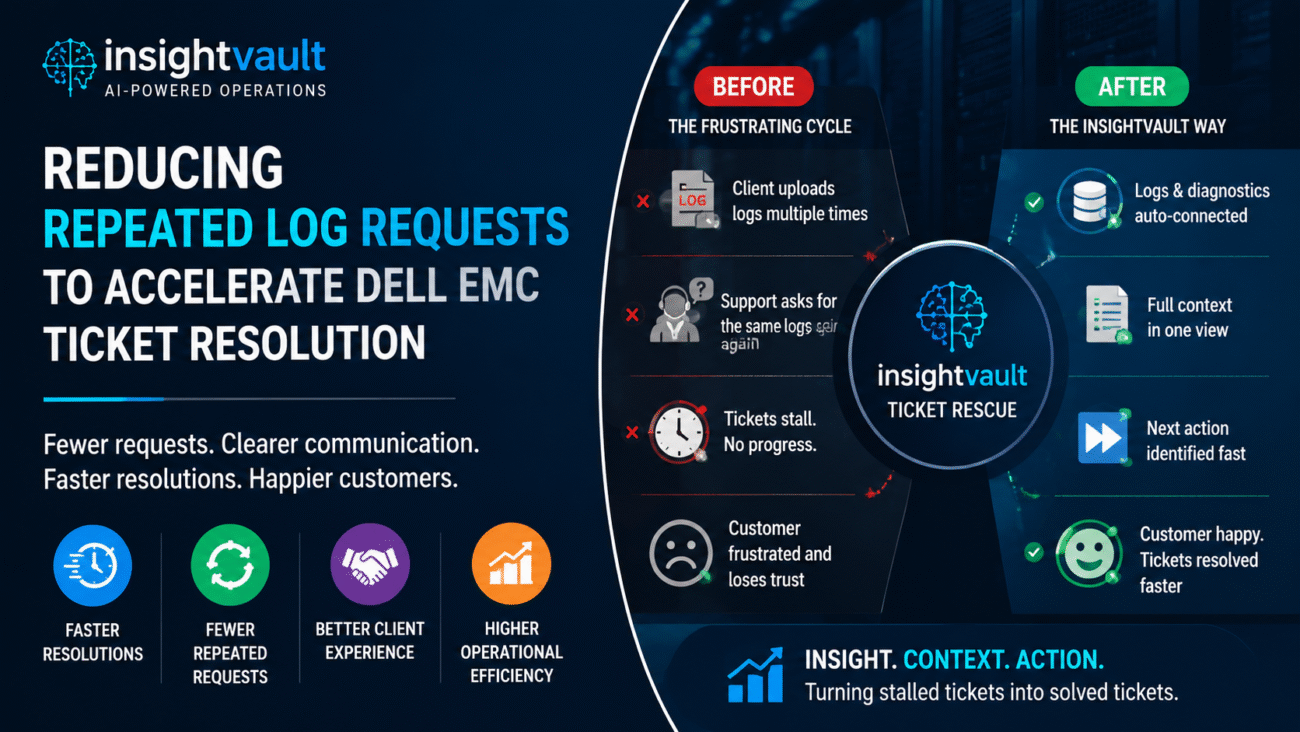
The customer shares what they have.
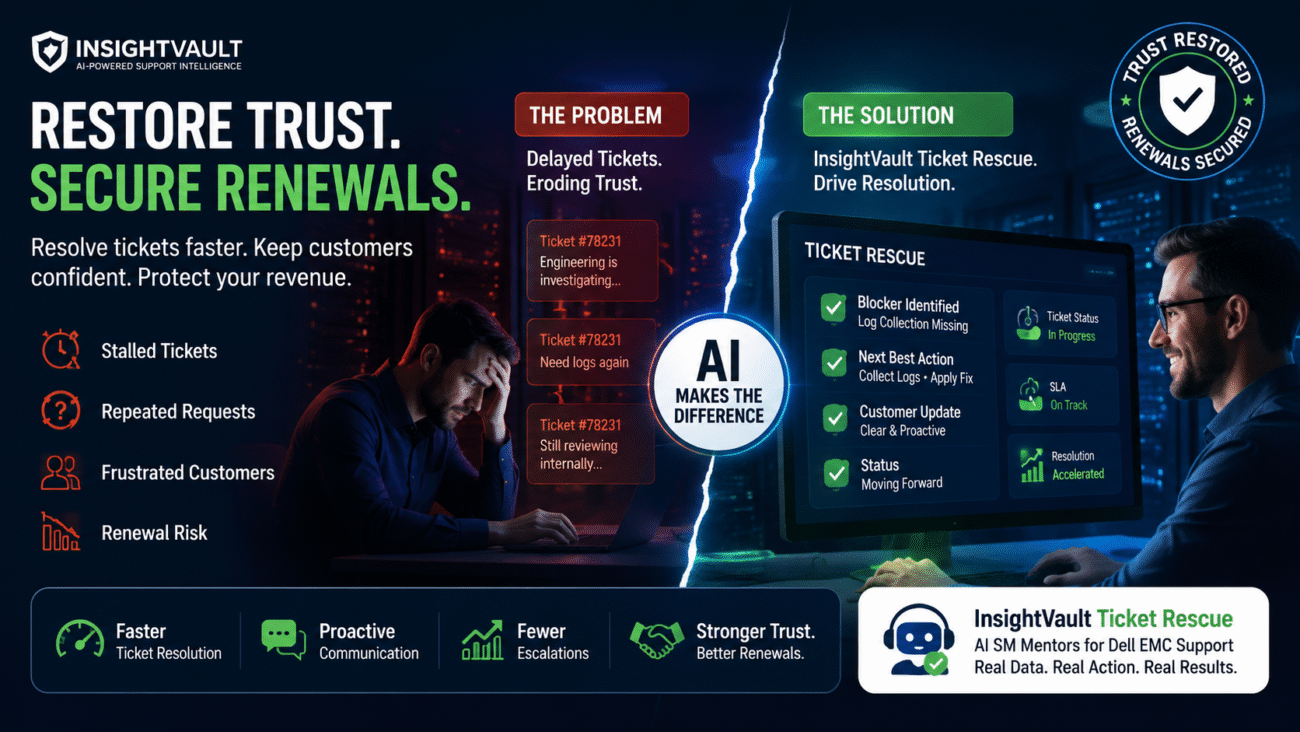
A few hours later — or sometimes the next day — the engineer comes back asking for more logs. Different ones this time. Maybe from another system. Maybe from a different time window.
The customer sends them again.
Then… silence.
Then another follow-up.
“Can you also share these logs?”
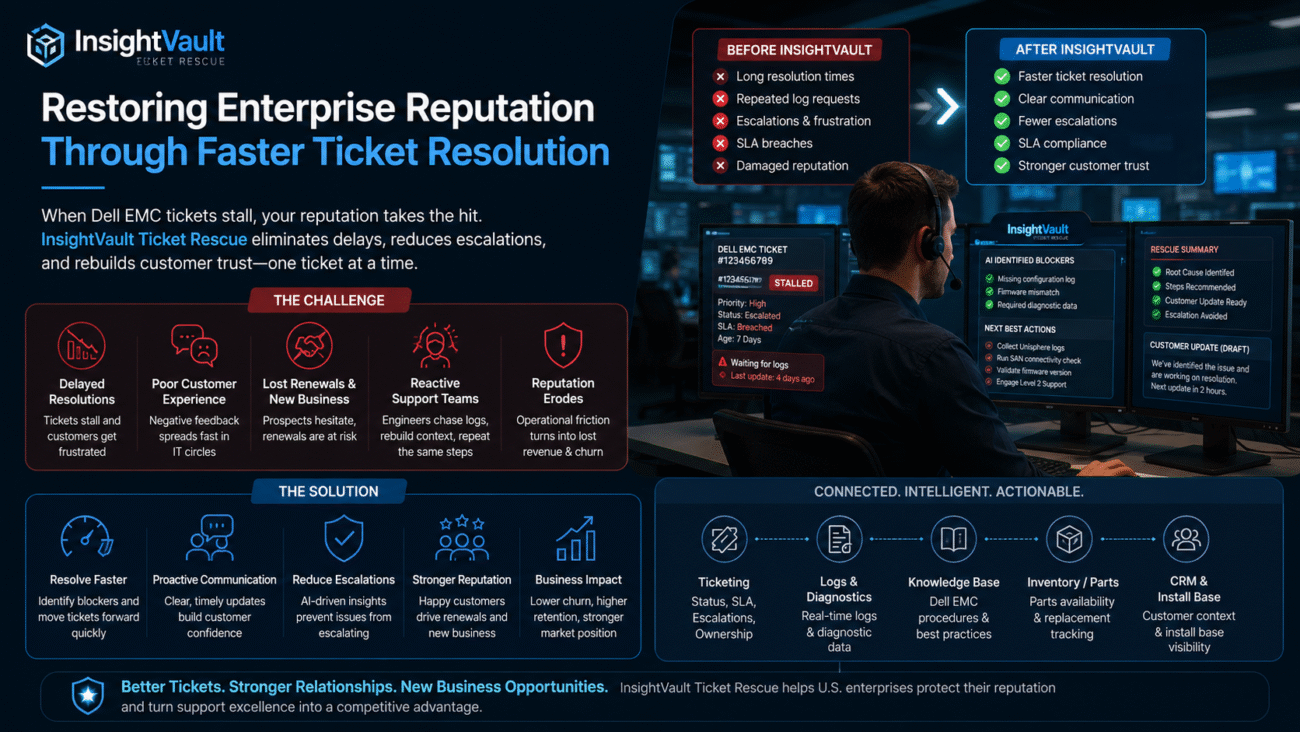
At this point, the customer is no longer just waiting for a fix — they’re frustrated. They don’t understand why the same information is being asked again and again. From their perspective, it feels like no one really knows what’s going on.
Inside the team, it’s not much better.
Engineers aren’t trying to delay anything. They’re just trying to piece together what’s happening. But every step depends on someone else sending something. Every answer depends on digging through logs manually. And every delay turns into another email, another follow-up, another round of back-and-forth.
Instead of solving the issue, everyone is stuck chasing information.
The result?
Tickets drag on.
Customers lose confidence.
Engineers spend more time asking questions than giving answers.
Solution
This should not be how troubleshooting works.
When a ticket is raised, the goal should be simple:
Understand what’s wrong — quickly — and respond with clarity.
Customers shouldn’t have to keep sending logs just to move things forward.
Engineers shouldn’t have to manually hunt through data every time.
The right approach is to:
- Bring all the relevant information together instantly
- Understand the situation without repeated requests
- Identify what’s actually causing the issue
- Respond with a clear, confident answer
Less back-and-forth.
More clarity.
Faster resolution.
That’s what customers expect — and what support teams need to deliver.
How It’s Done in InsightVault
InsightVault changes the way this entire process works.
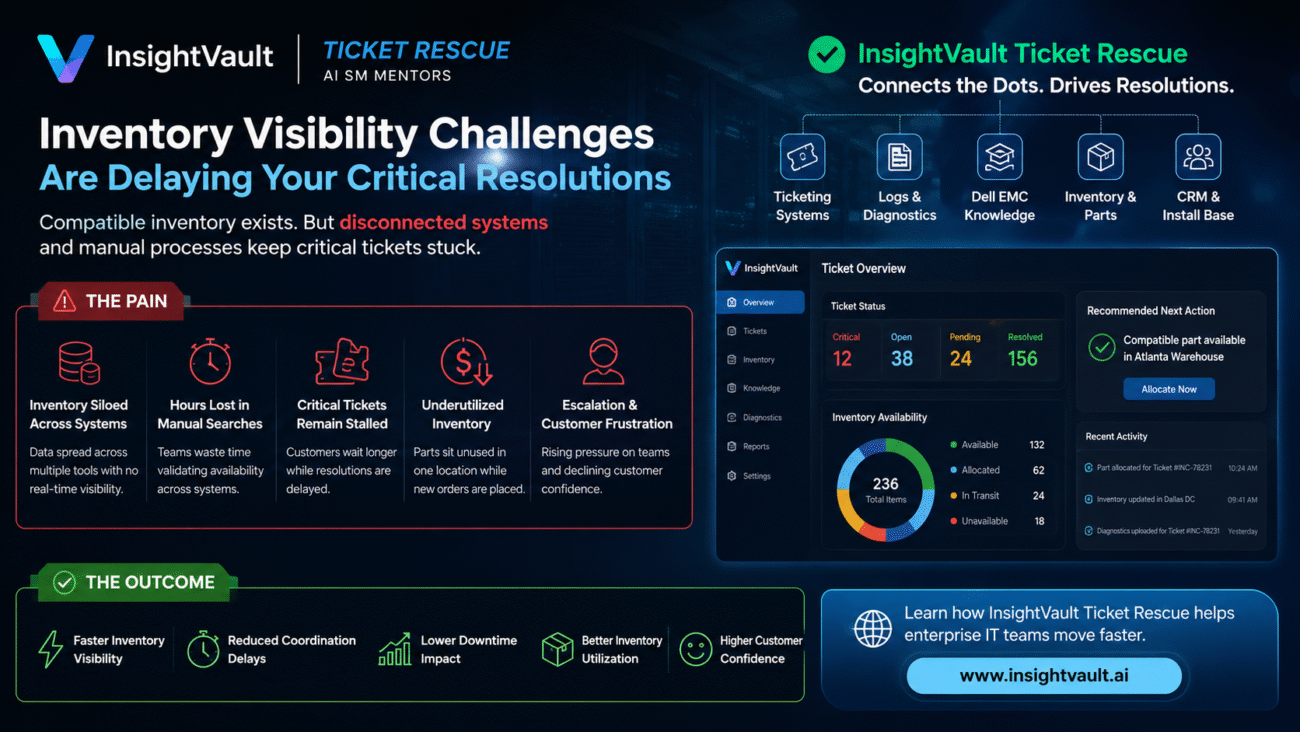
Instead of starting every ticket with “please share logs,” the system already understands the environment and the context behind the issue.
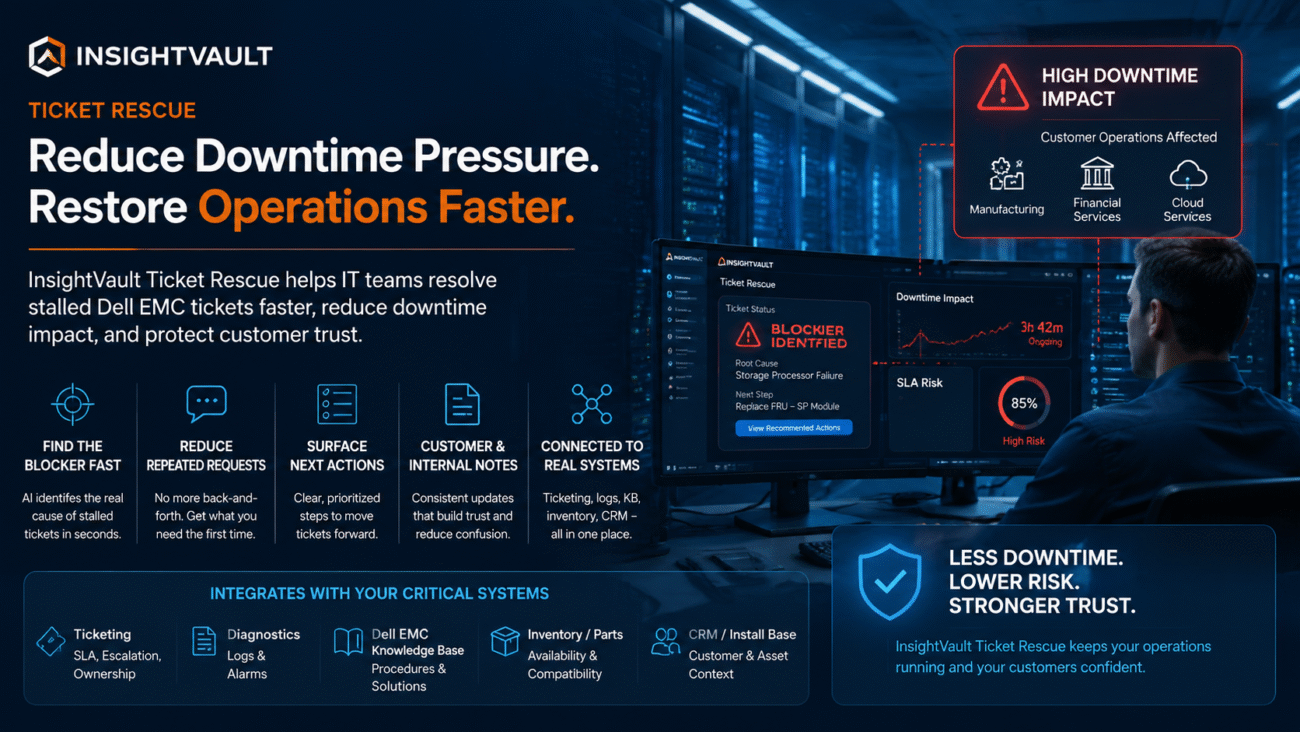
When a ticket comes in, InsightVault looks across the available data and connects the dots immediately. It identifies patterns, surfaces what matters, and highlights what’s likely causing the problem — without waiting for multiple rounds of log collection.
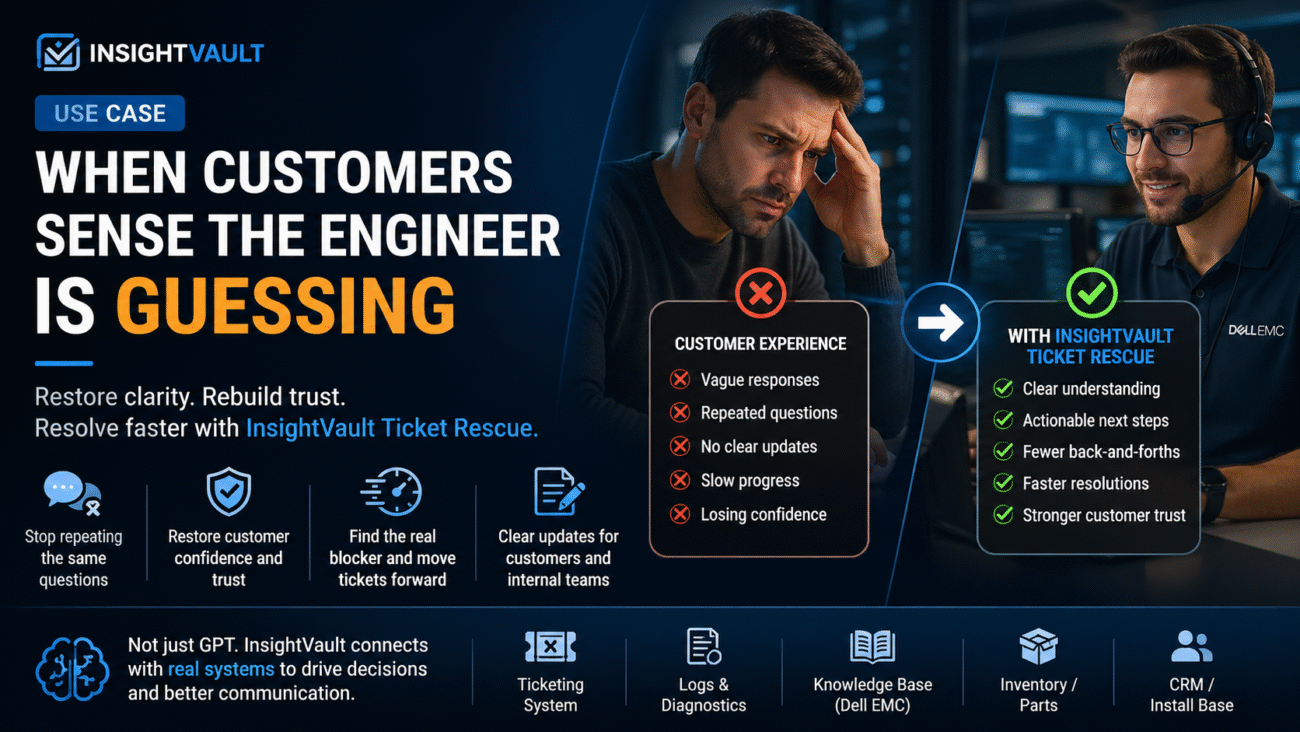
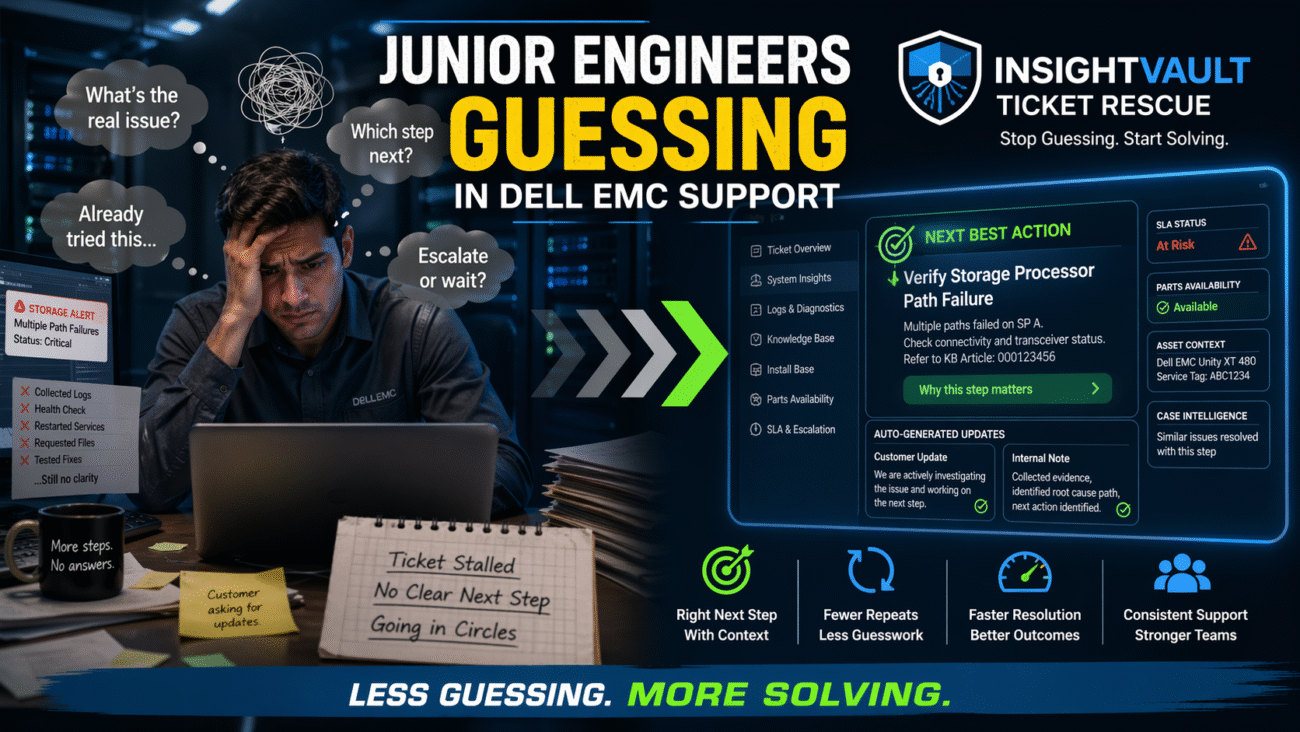
Engineers no longer have to guess what to ask next.
They don’t need to go back and forth with the customer just to gather basic information. The context is already there. The signals are already analyzed.
What they get instead is a clear direction:
- What’s happening
- Where the issue is coming from
- What needs to be checked or fixed
So instead of replying with another request for logs, they can respond with something far more valuable — an actual answer.
For the customer, the experience changes immediately.
No repeated requests.
No long pauses.
No confusion.
They get faster responses, clearer explanations, and a sense that the issue is understood from the start.
For the engineering team, the relief is just as real.
Less time chasing data.
Less dependency on manual investigation.
More time actually solving problems.
Tickets move forward instead of stalling.
Conversations become shorter and more productive.
And support starts to feel like support again — not a loop of endless log requests.