From Firefighting to Control: Ending Reactive Ticket Chaos in Dell EMC Operations

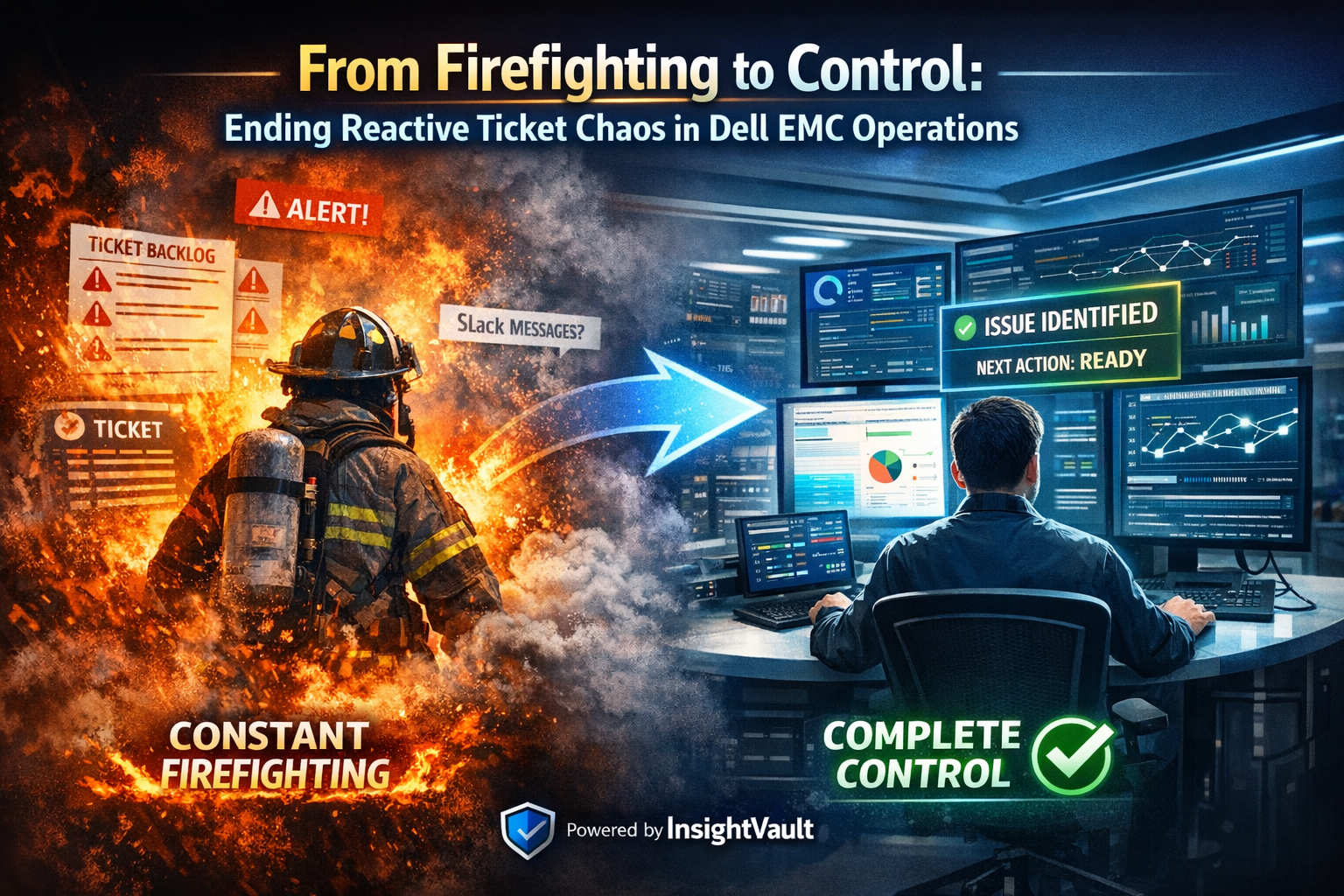
Challenge
Every day starts the same.
New alerts. Old tickets still open. Slack messages asking for updates.
No one has a clear picture of what’s actually blocked.
Engineers jump from one ticket to another, trying to keep things moving.
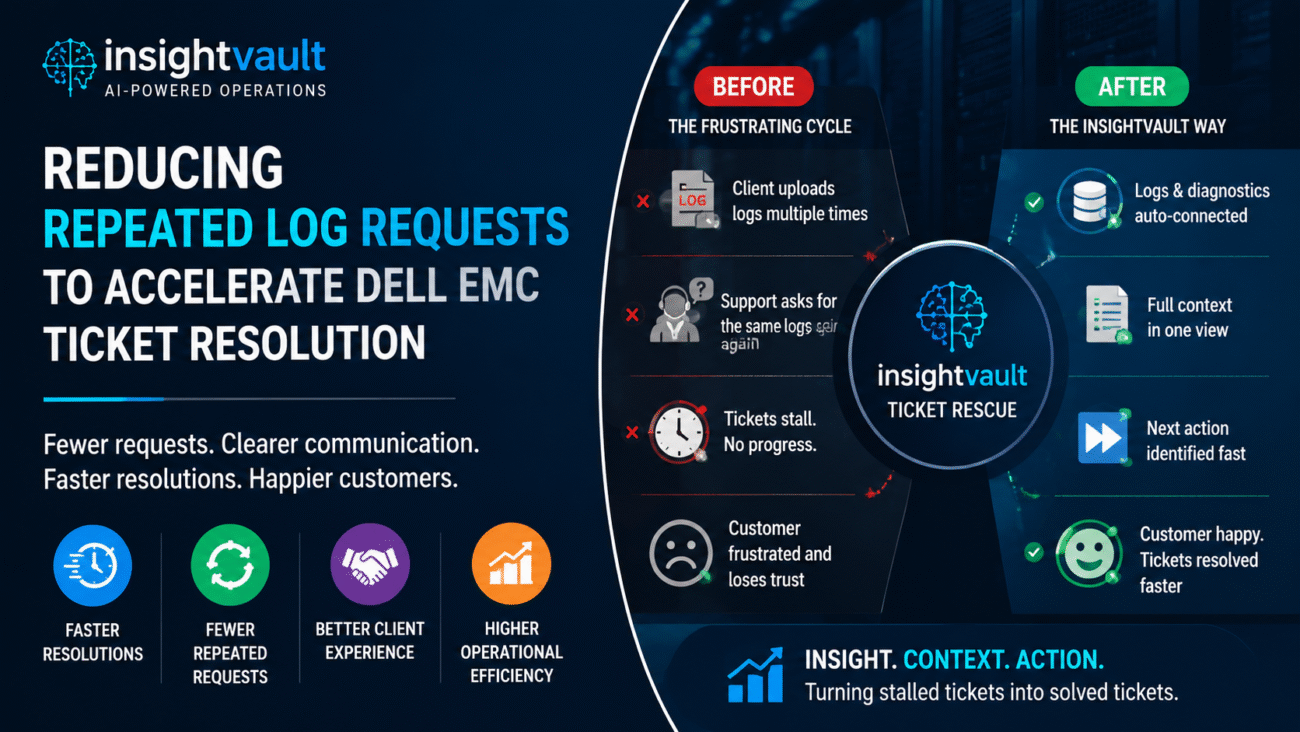
Logs get requested again. Updates get rechecked. The same issues come back.
There’s no time to step back.
No time to understand root cause.
No time to prevent repeat incidents.
It’s constant firefighting.
Not because everything is complex —
but because no one has clarity on what matters, what’s stuck, and what to do next.
The result:
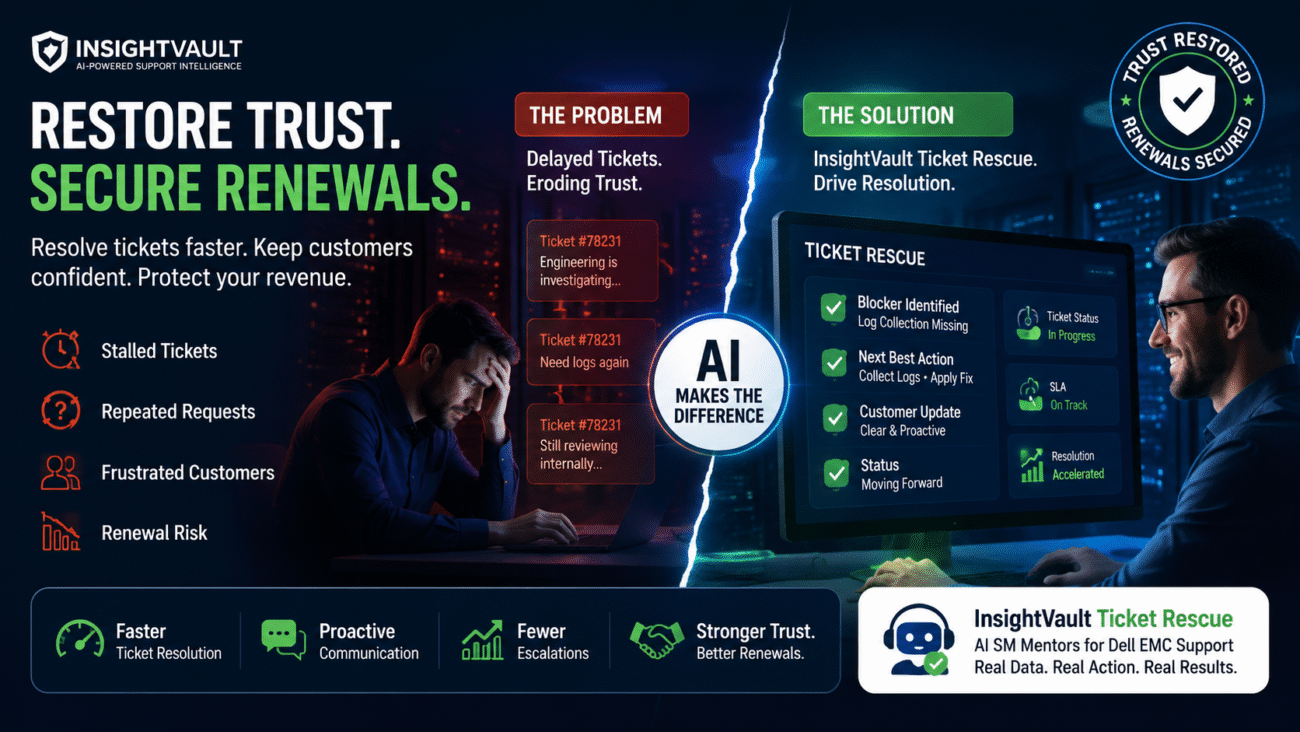
- Tickets stay open longer than they should
- Customers keep asking for updates
- Teams feel busy, but not effective
- The same problems keep coming back
There’s activity everywhere but no real control.
Solution
Instead of reacting to noise, teams operate with clarity.
They know:
- What’s actually blocking a ticket
- What action should happen next
- Which issues are repeating — and why
Engineers stop chasing updates and start resolving issues.
Tickets move forward faster.
Customers get clear answers.
Teams finally get breathing room.
Work becomes proactive — not reactive.
How It’s Done in InsightVault
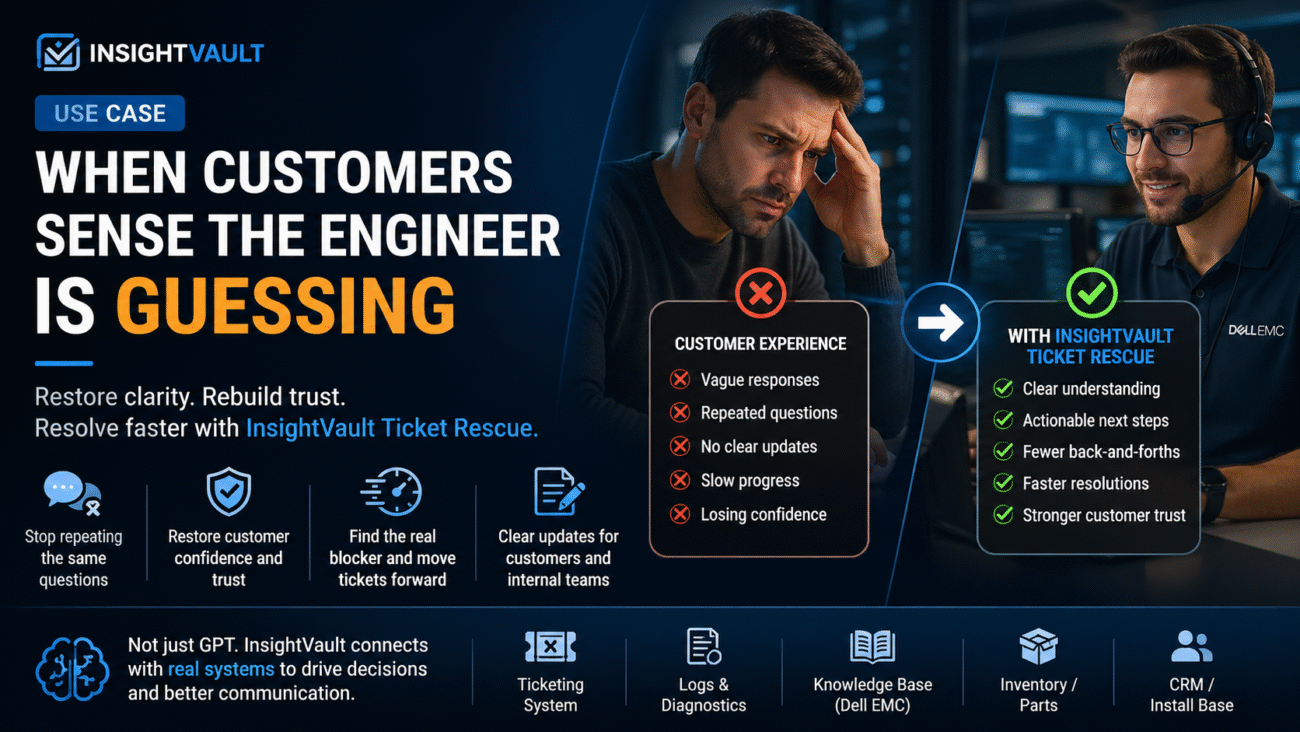
A normal GPT can read a ticket and summarize it.
That helps but it doesn’t move anything forward.
InsightVault Ticket Rescue works differently.
It doesn’t just summarize.
It drives action.
What InsightVault does that GPT doesn’t:
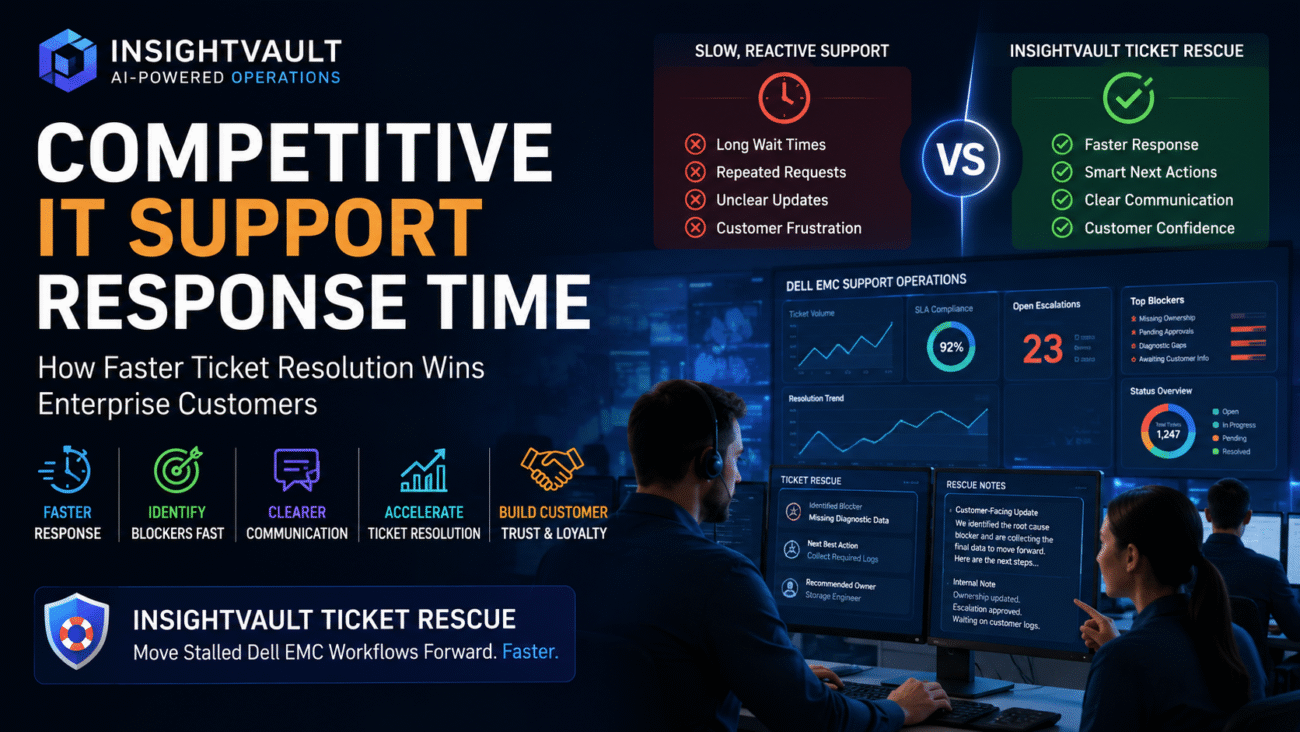
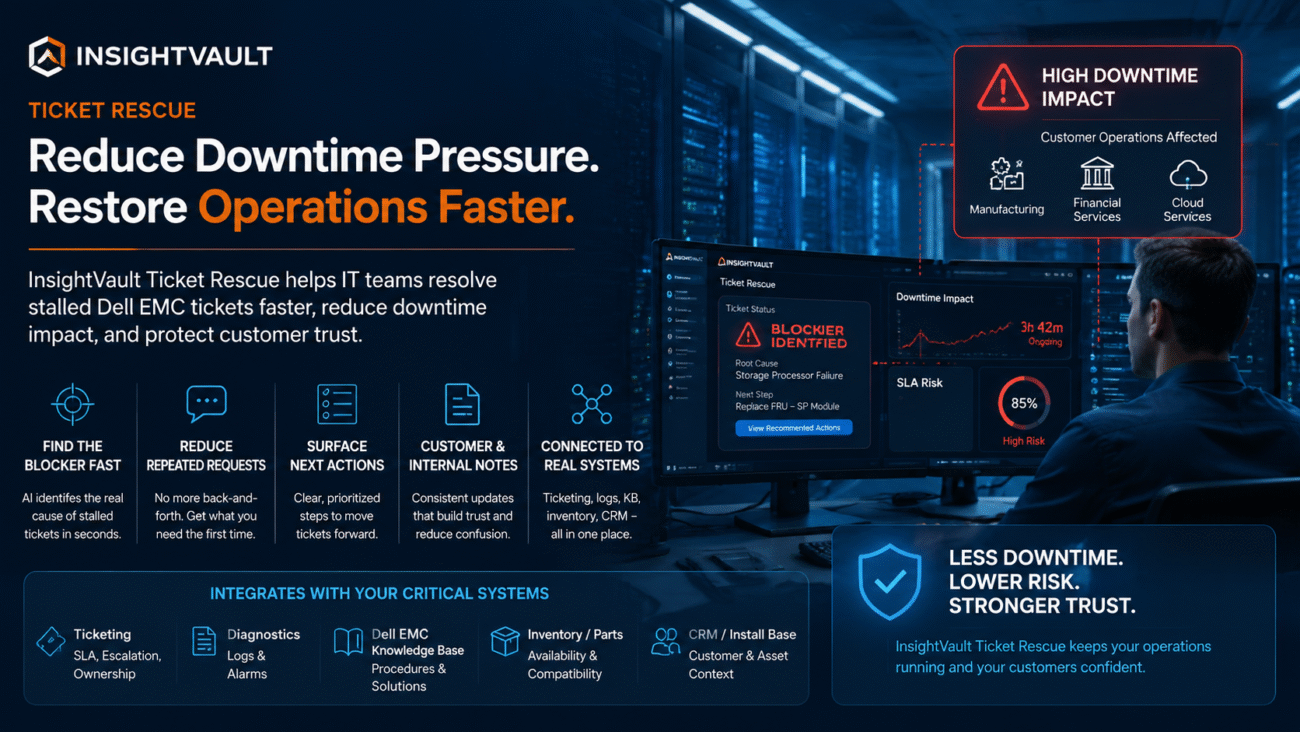
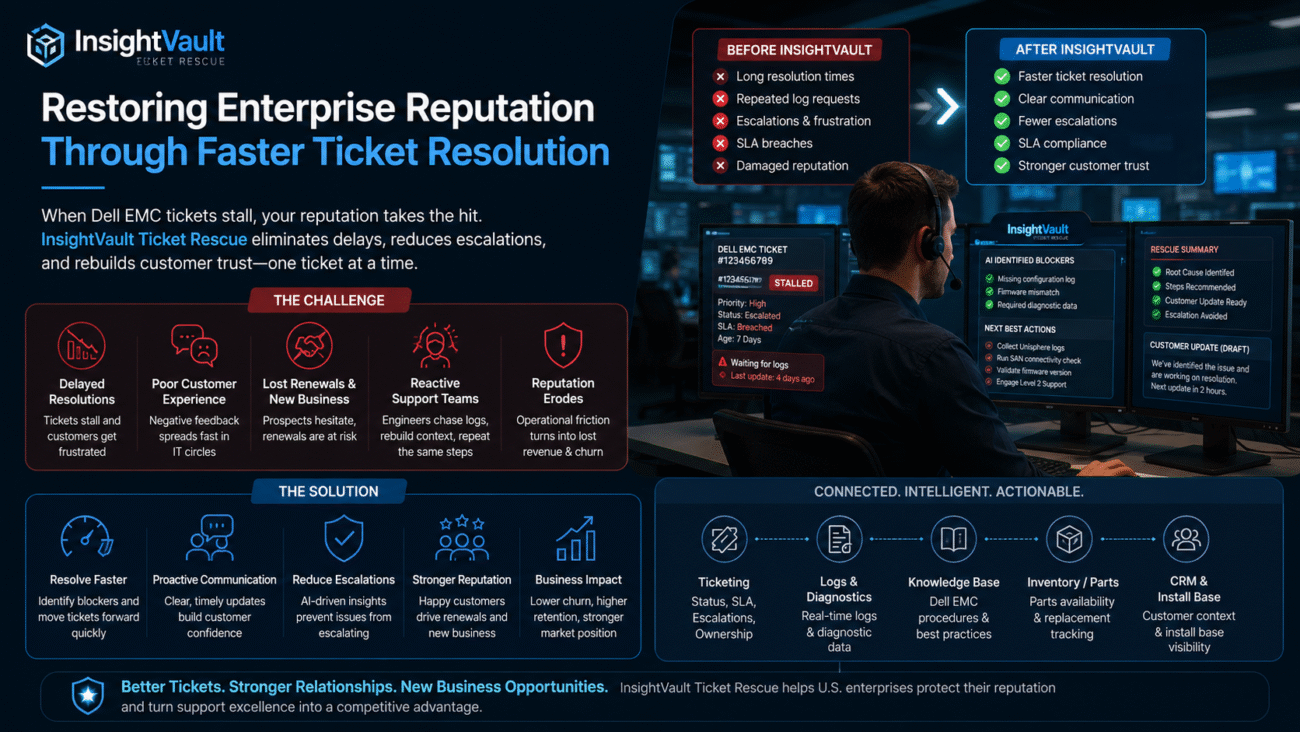
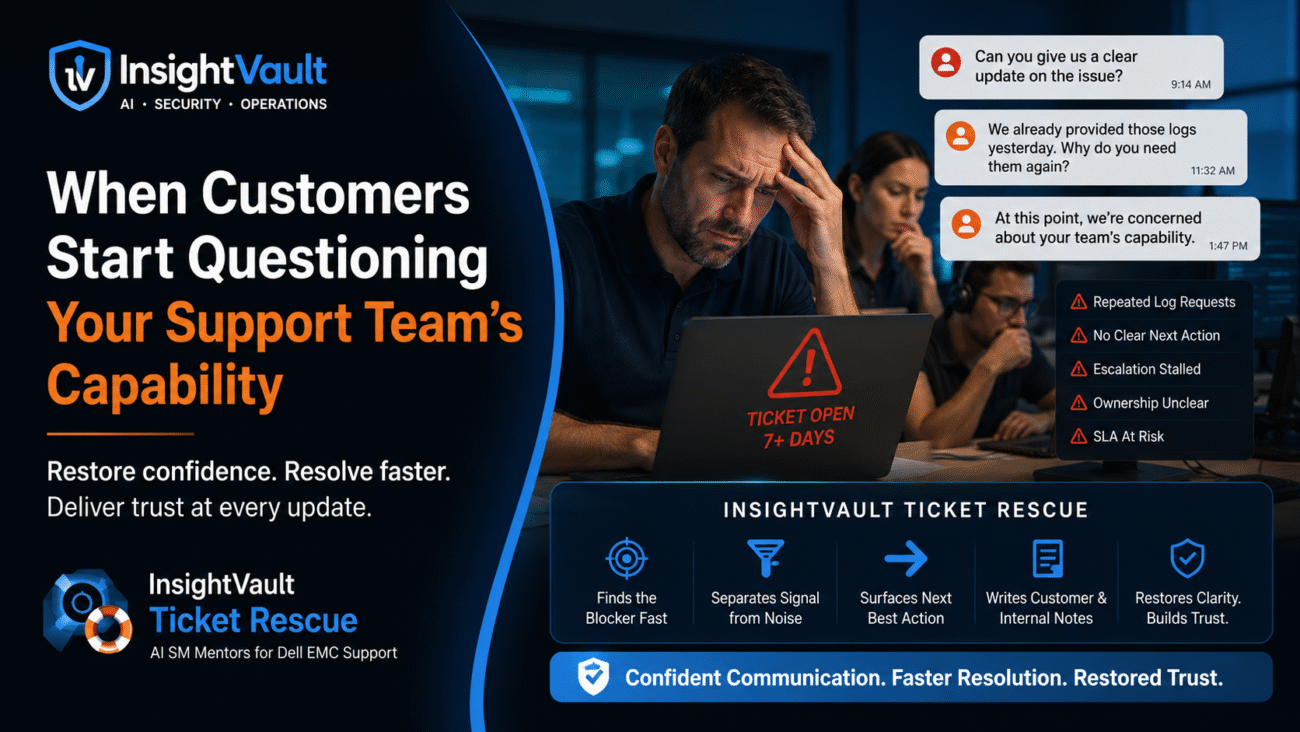
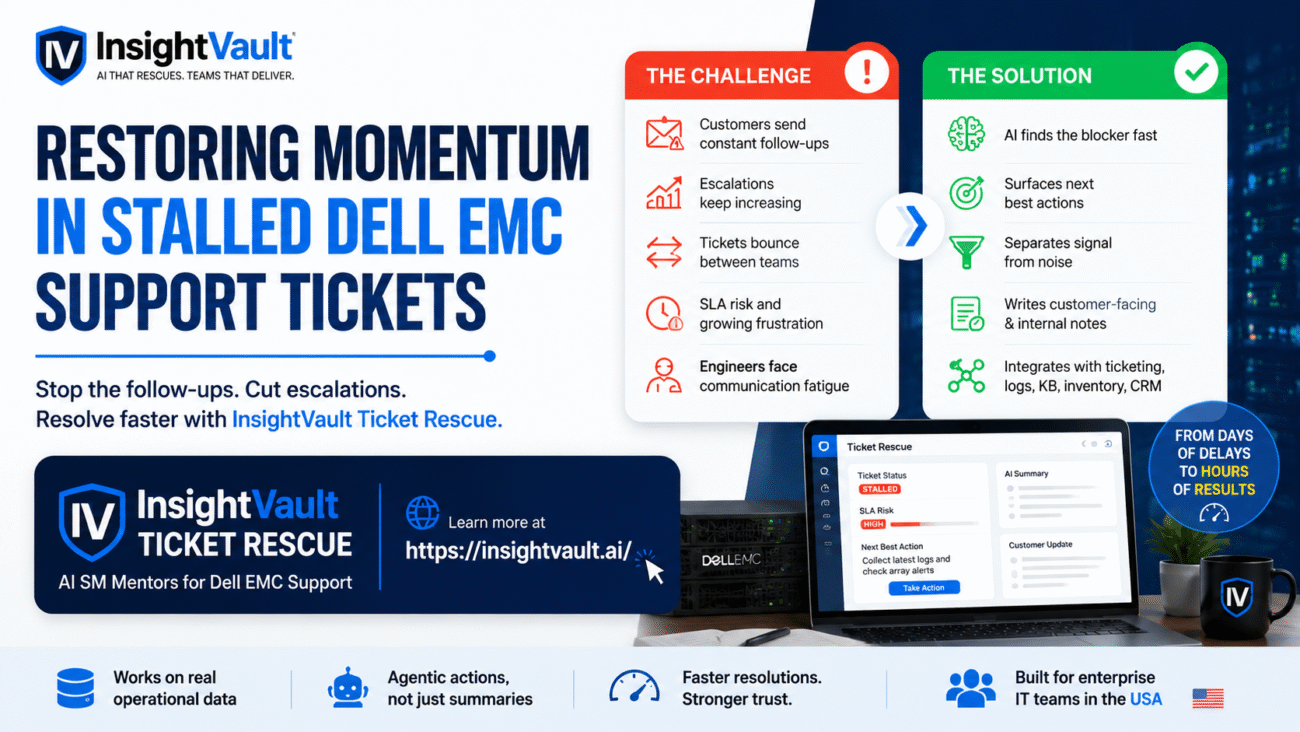
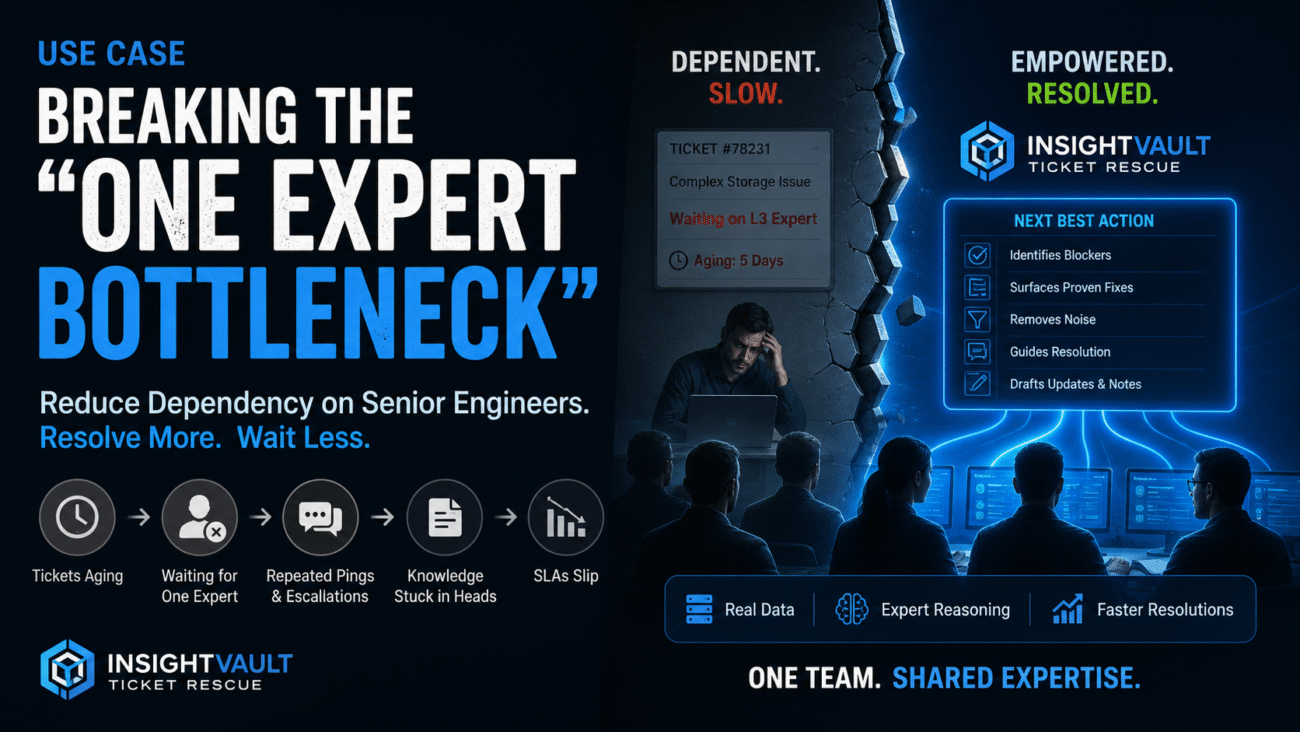
- Identifies the real blocker in seconds
- Stops repeated log requests and back-and-forth
- Recommends the next best action clearly
- Separates signal from noise across long ticket threads
- Writes both internal updates and customer-ready responses
- Focuses specifically on stalled Dell EMC workflows
Agentic Capabilities (Where the real difference is)
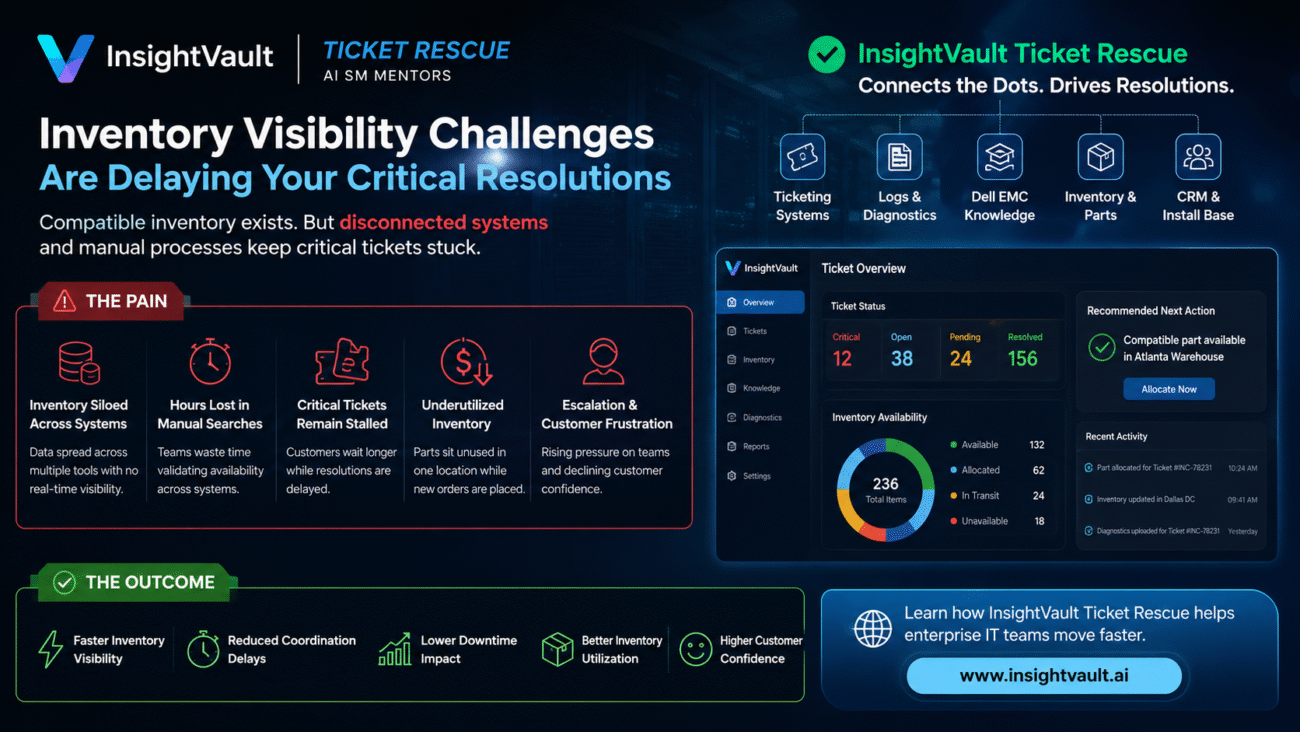
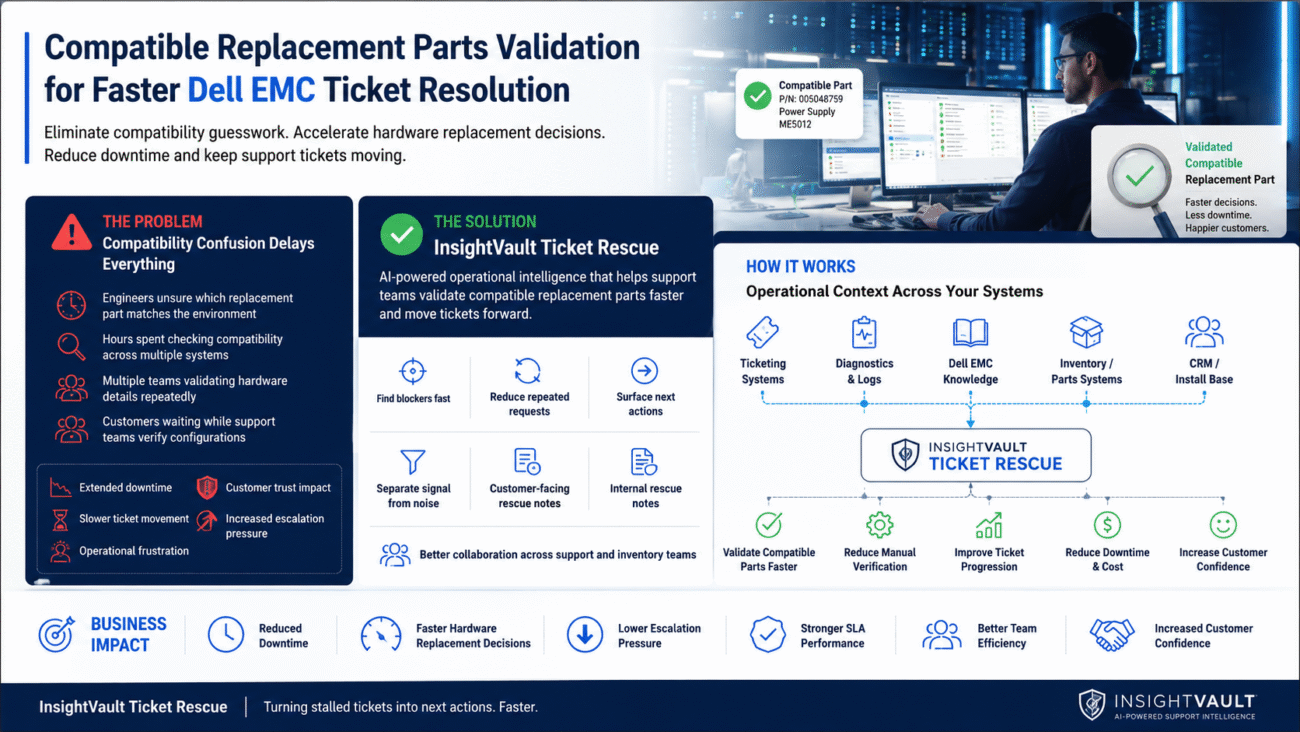
InsightVault connects directly to your operational systems:
- Ticketing systems → status, SLA, owner, escalation history
- Logs & diagnostics → real issue signals, not assumptions
- Knowledge base → proven Dell EMC fixes
- Inventory / parts systems → availability, replacements, dependencies
- CRM / install base → customer context and environment
👉 It works on real data — not just chat
👉 It doesn’t wait for prompts — it pushes action
What that means in practice:
- A stuck ticket is immediately diagnosed
- The missing step is identified without guesswork
- Engineers know exactly what to do next
- Customers get faster, clearer responses
- Repeat issues are recognized early
Outcome
- Faster ticket resolution
- Less back-and-forth
- Reduced operational stress
- Real control over daily work
Firefighting doesn’t stop because tickets disappear.
It stops because the chaos is removed.