Stop Wasting Time “Checking” — Start Closing Tickets Faster


Challenge
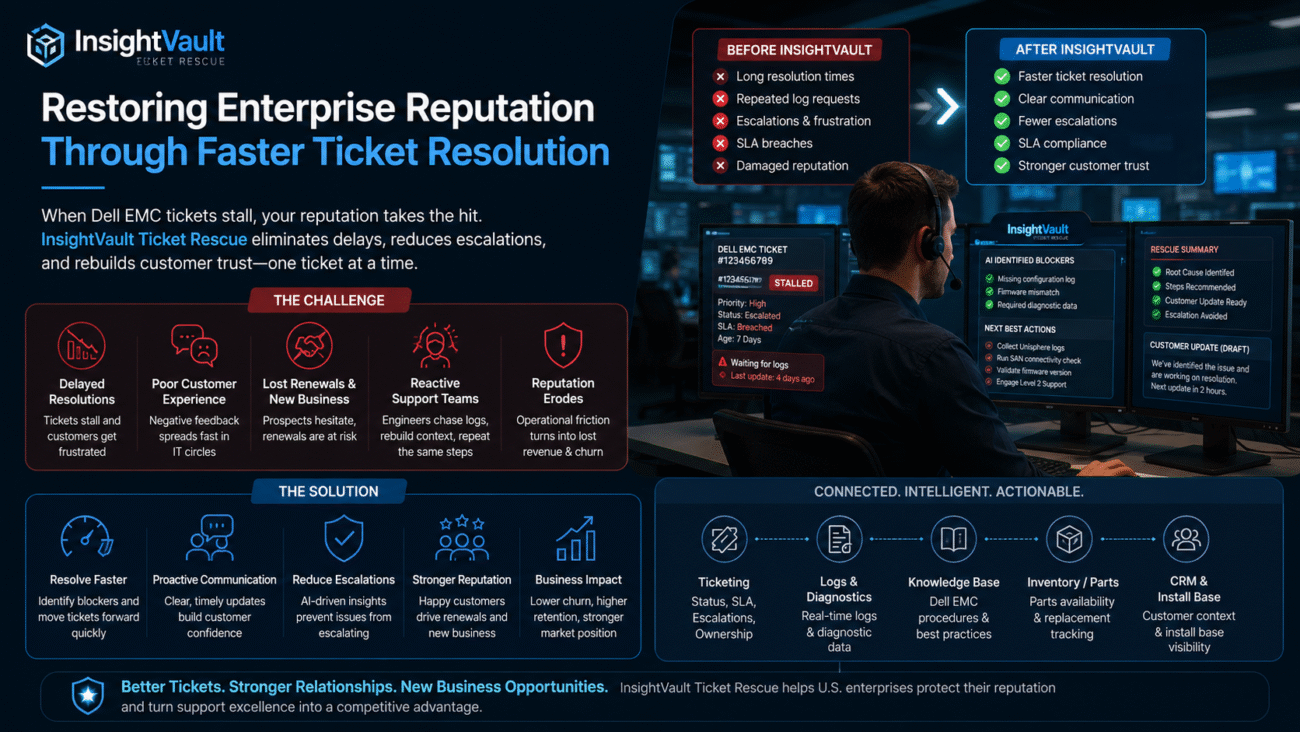
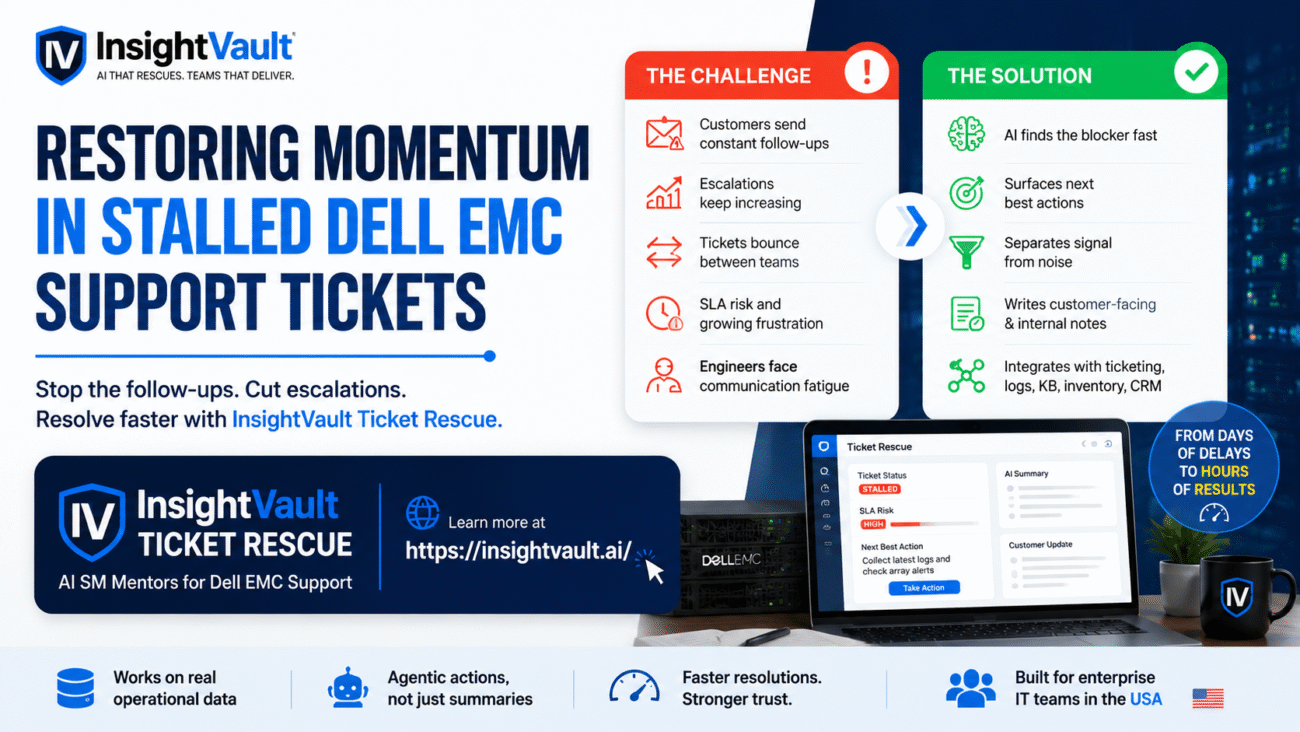
Most tickets don’t stay open because they’re complex. They stay open because engineers are stuck in endless checking loops.
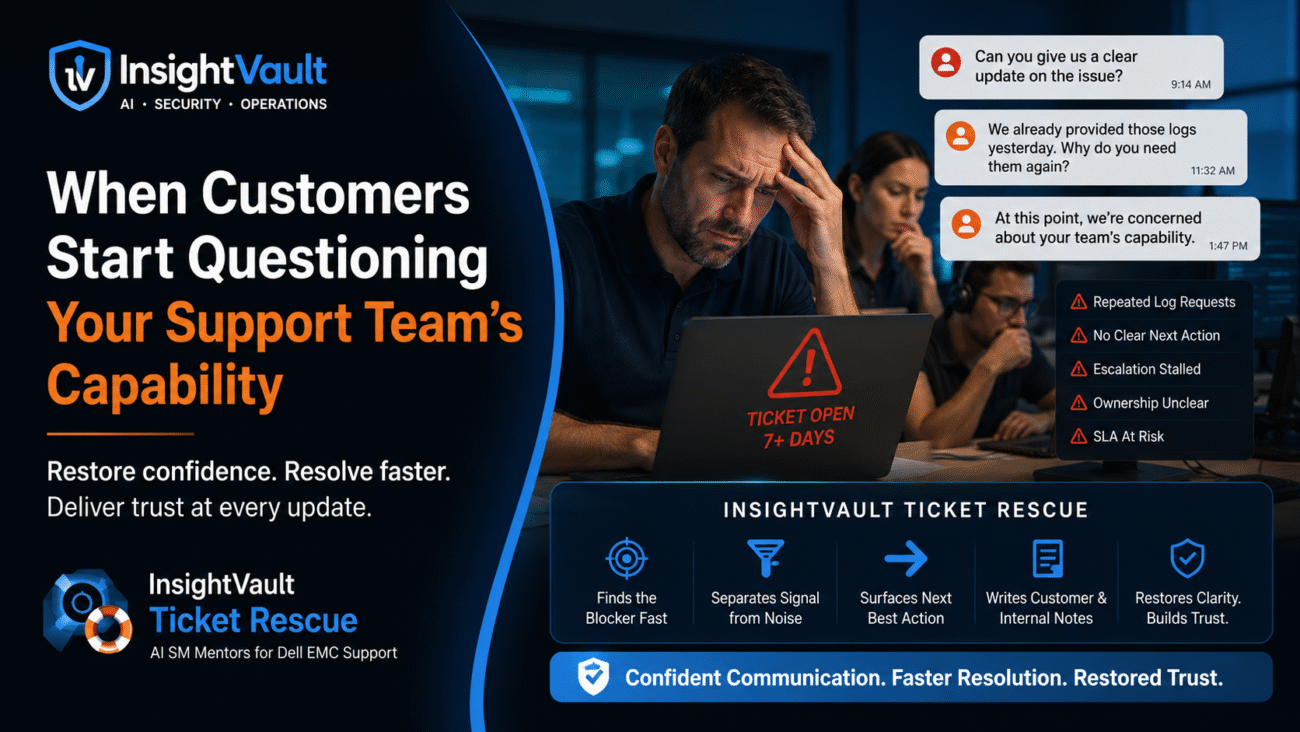
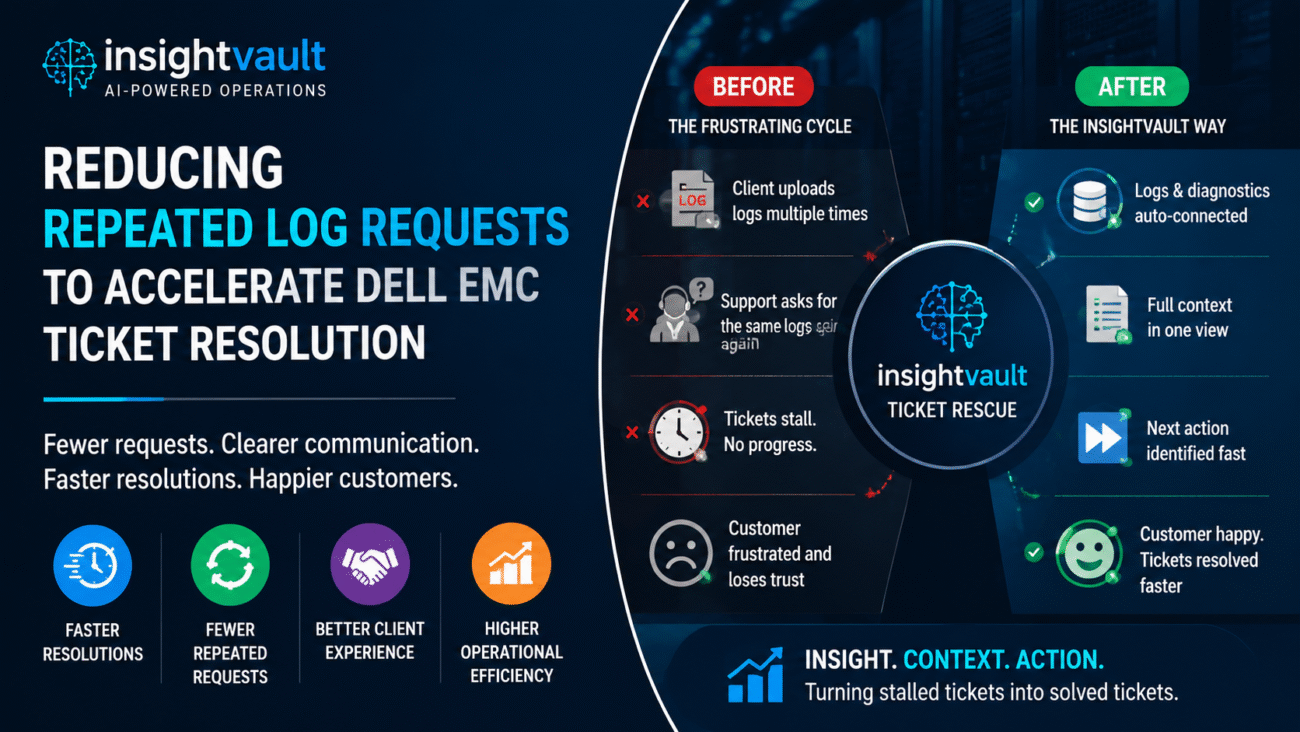
Every update triggers another round of validation. Someone re-reads the entire ticket thread just to understand what’s already been done. Logs get requested again—not because they’re missing, but because no one is sure if they’re still relevant. Engineers jump between the ticketing system, log repositories, internal notes, and emails just to piece together the current state.
Progress slows down. Not because the issue is hard—but because no one is confident about the next step.
A large part of the day disappears into “checking work” instead of solving the issue.
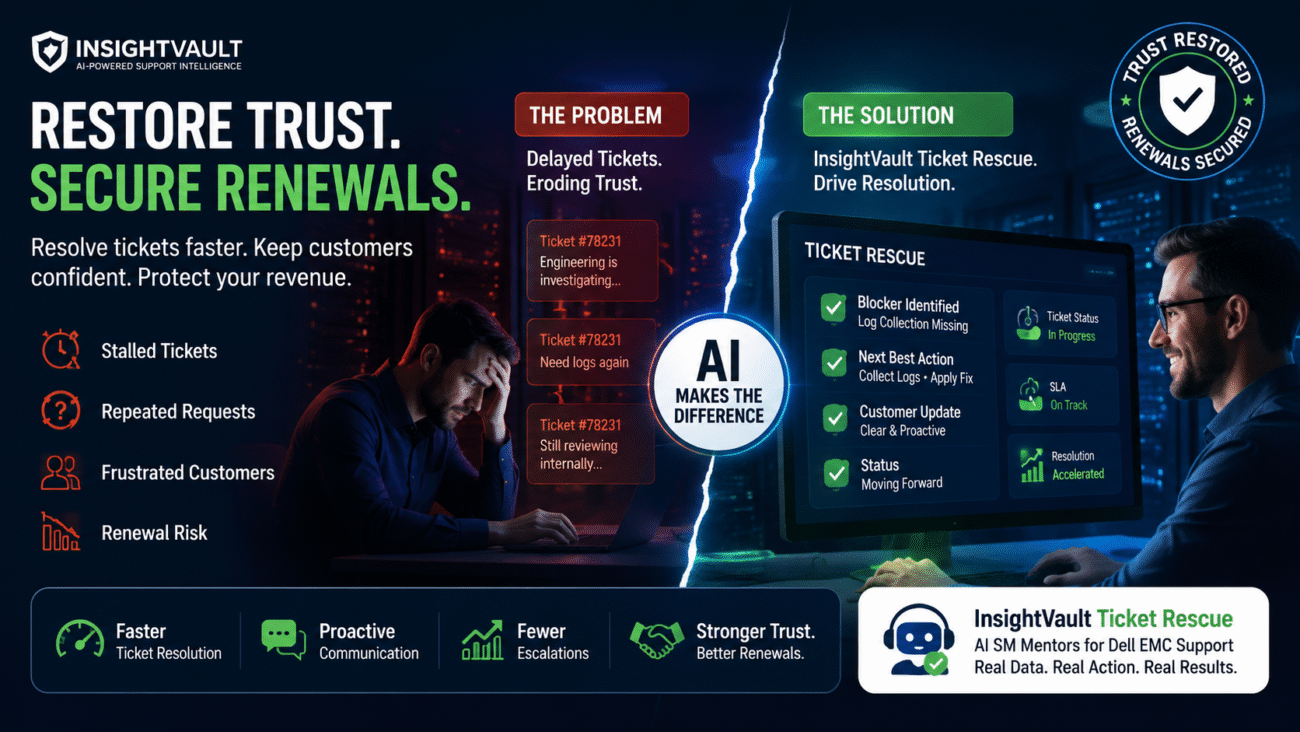
This is where most teams think a GPT tool can help. It can summarize the ticket. It can rewrite updates. But it still depends entirely on what’s pasted into it. It doesn’t know what’s missing, what’s outdated, or what actually matters right now.
So the checking continues.
More reading. More re-validation. More waiting.
And the ticket stays stuck.
Solution
The real shift is simple: stop helping engineers read the problem—start helping them move it forward.
Instead of forcing engineers to verify everything manually, the system should immediately show:
- What’s already confirmed
- What’s missing or blocking progress
- What the next action should be
- What not to waste time on
InsightVault Ticket Rescue changes how tickets move.
It reduces the need to double-check everything. It cuts out repeated requests. It removes the uncertainty around “what should I do next?”
Instead of reviewing the past, it pushes the ticket toward resolution.
Where a generic AI tool stops at summarizing, InsightVault focuses on execution:
- Identify the blocker fast
- Eliminate unnecessary back-and-forth
- Drive the next step clearly
- Keep both the engineer and the customer aligned
The result is simple: less checking, more solving.
How It’s Done in InsightVault
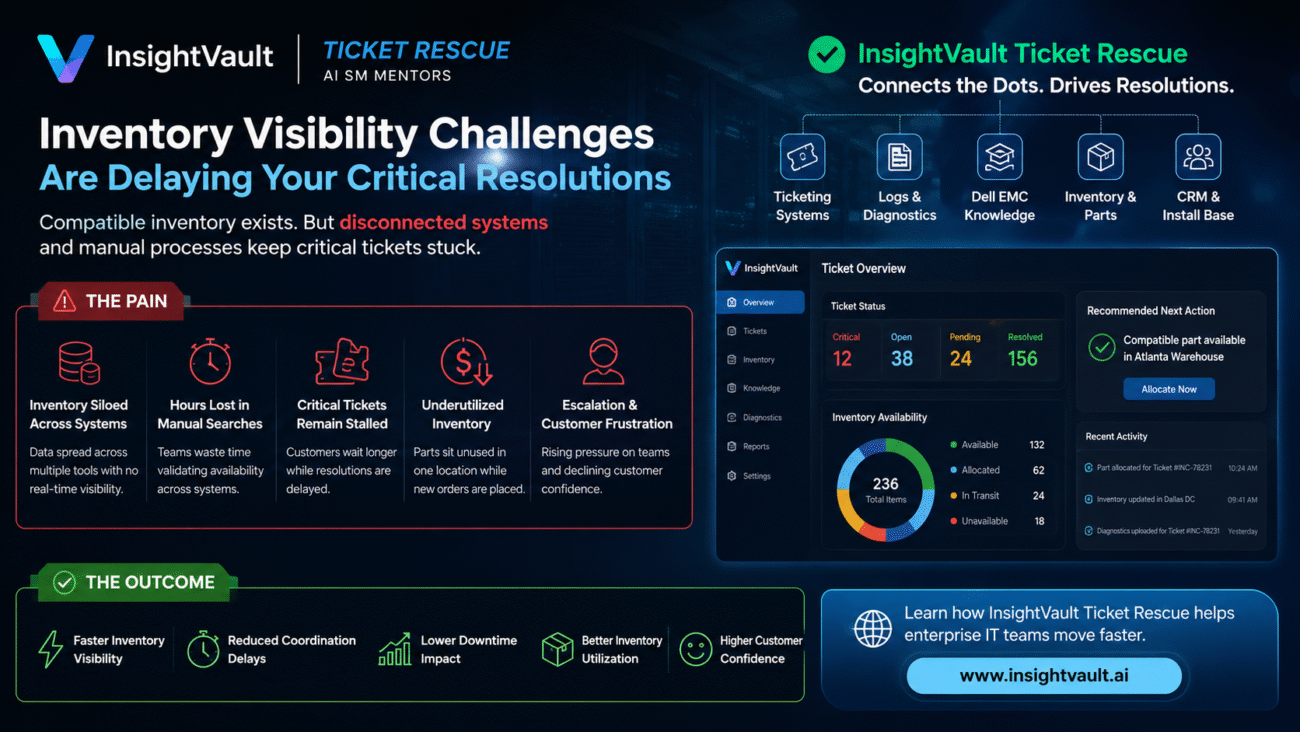
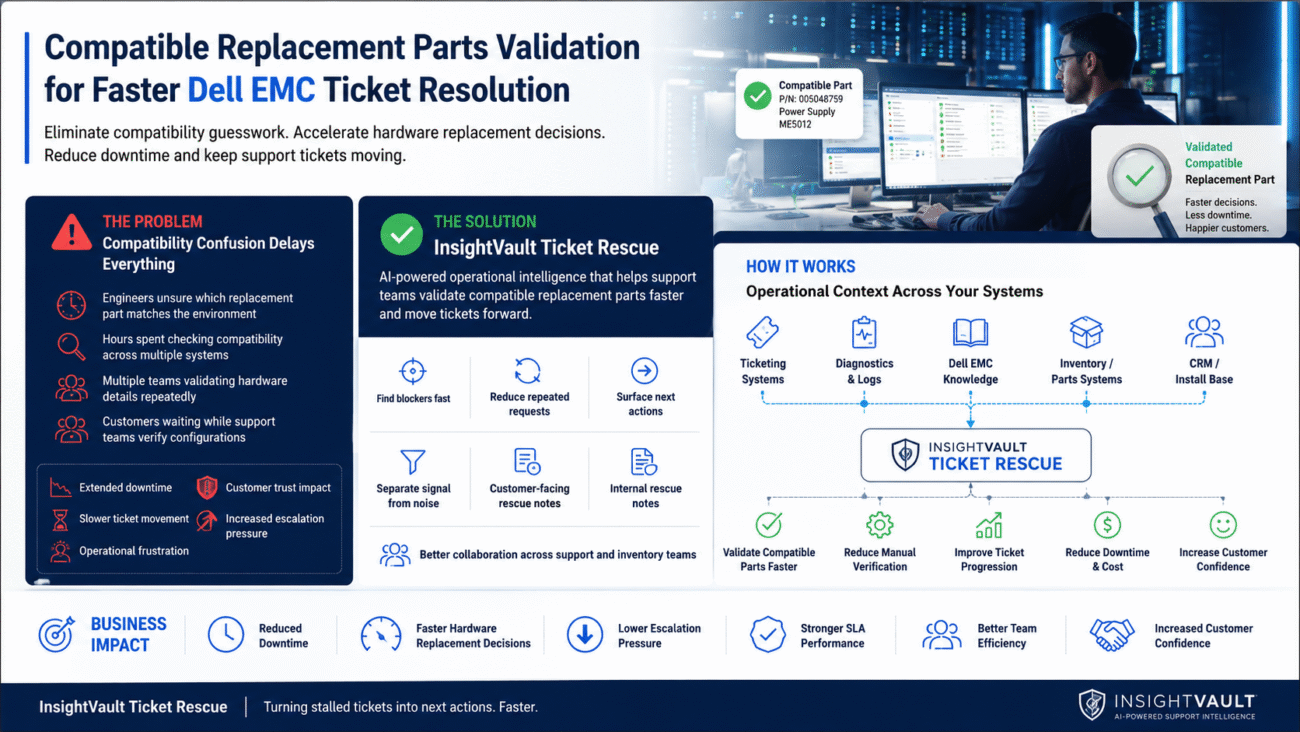
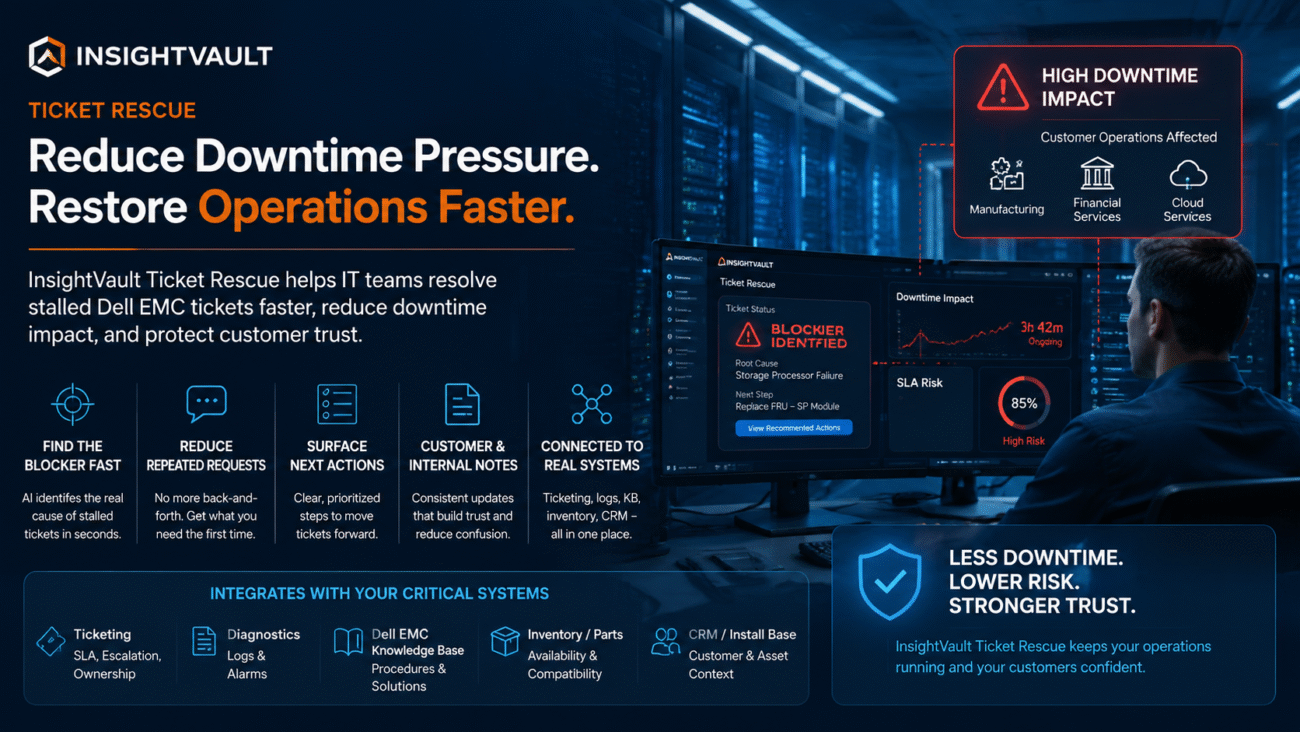
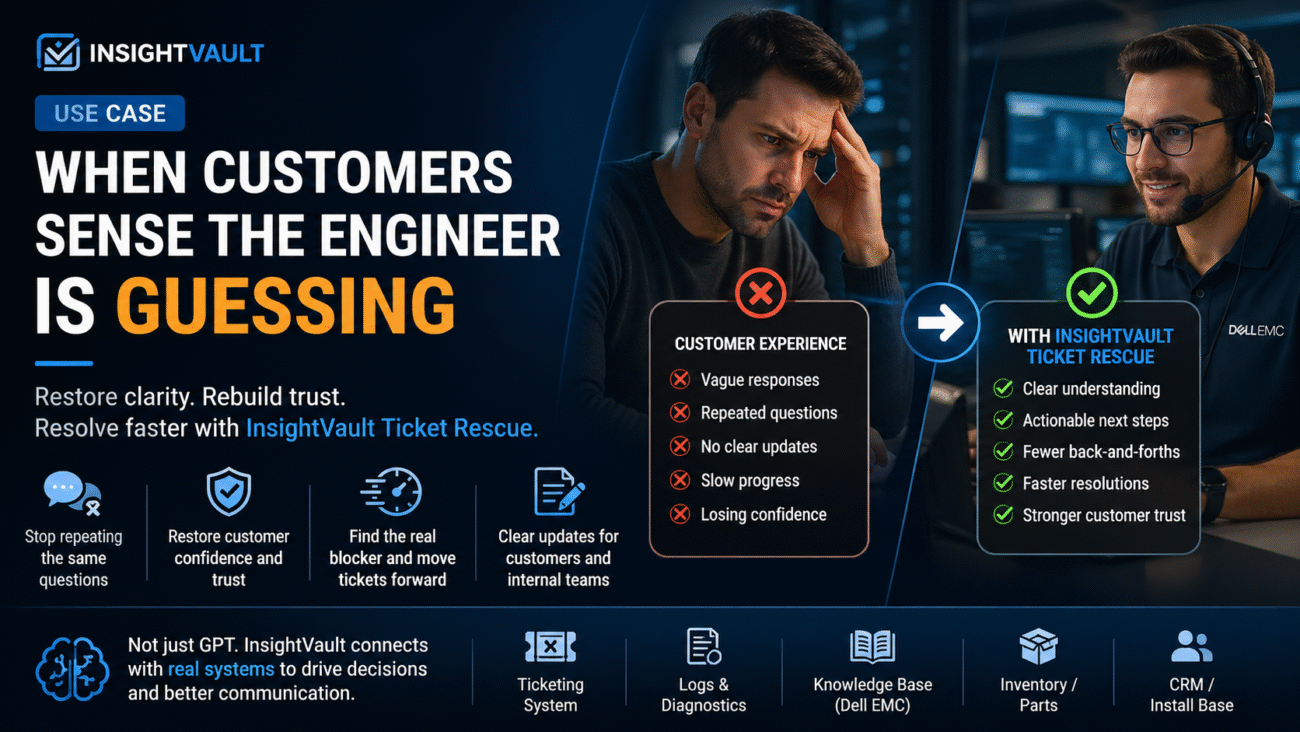
InsightVault Ticket Rescue doesn’t work on copied text—it works directly on live operational data across systems.
It connects to:
- Ticketing systems
Pulls full case history, ownership, SLA status, escalation levels, and recent updates - Log repositories and diagnostic APIs
Accesses the latest logs and uploaded files without re-requesting them - Knowledge base (Dell EMC procedures)
Matches the issue against known fixes, runbooks, and past resolutions - Parts and inventory systems
Identifies if hardware replacement or dispatch is required - CRM and install base systems
Understands customer environment, entitlement, and site context
This is where the difference becomes clear:
👉 A normal GPT reacts to what you give it
👉 InsightVault actively pulls what it needs
What InsightVault Actually Does
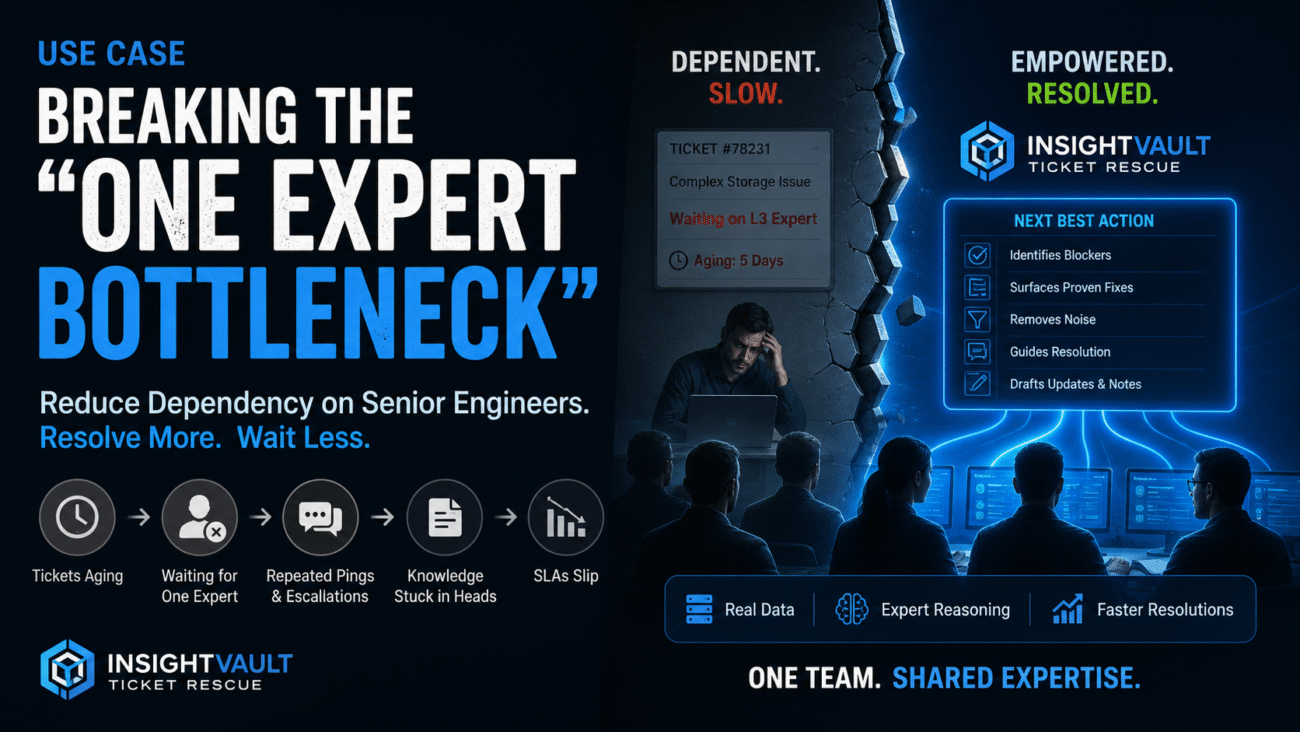
- Finds the blocker immediately
Instead of reviewing the entire thread, it identifies what’s stopping progress right now—missing logs, unclear ownership, or incomplete validation. - Eliminates repeated requests
If logs already exist, it surfaces them. If they’re outdated, it flags that. Engineers don’t ask blindly—they act with clarity. - Surfaces the next best action
No ambiguity. The system tells you exactly what to do next—analyze, escalate, replace, or close. - Separates signal from noise
Long ticket threads are reduced to what actually matters. No more digging through irrelevant updates. - Generates operational communication
- Internal notes: clear, structured, actionable
- Customer updates: precise, confident, forward-moving
Not generic responses—context-aware communication aligned with Dell EMC workflows.
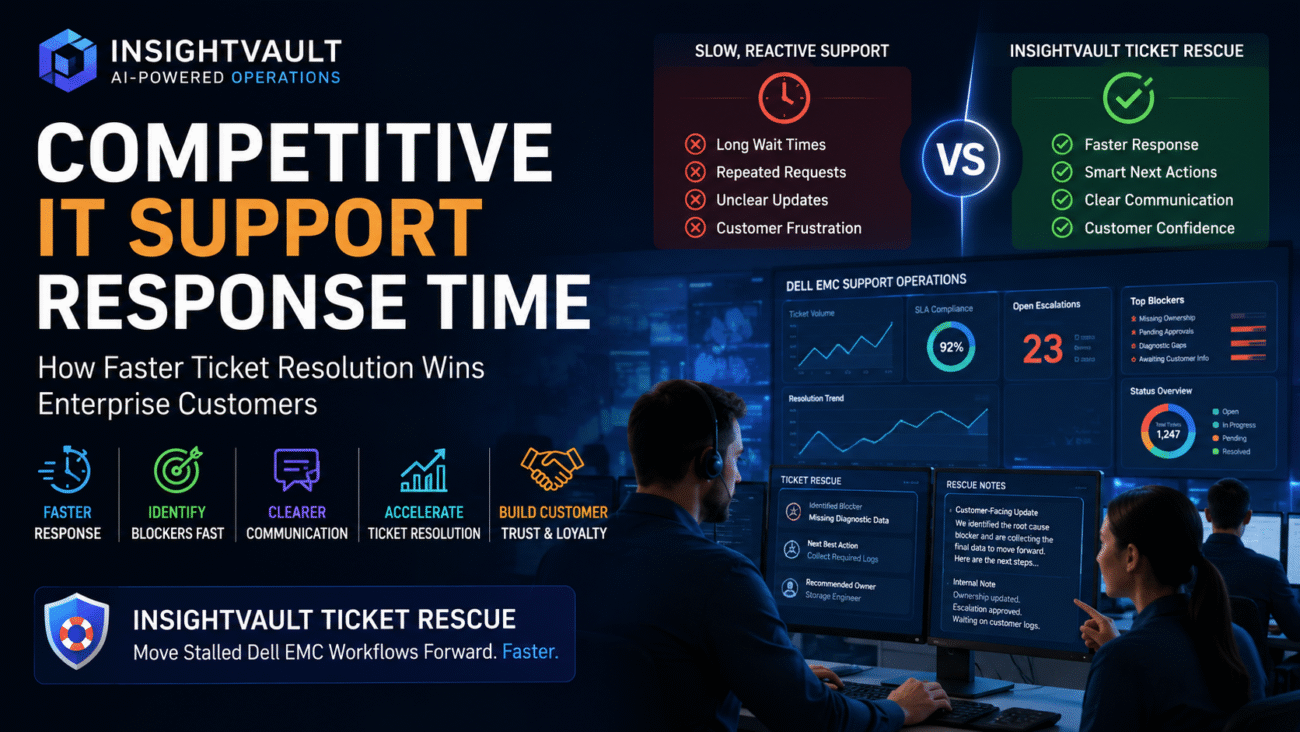
Why This Is Not Just GPT
- GPT summarizes
- InsightVault drives resolution
- GPT depends on manual input
- InsightVault pulls real-time operational data
- GPT explains what happened
- InsightVault decides what should happen next
This is operational intelligence—not just language generation.
Real Impact on Daily Operations
- Engineers stop re-reading tickets
- Fewer unnecessary log requests
- Faster decision-making
- Reduced ticket aging
- Clear ownership and next steps
Most importantly:
Engineers spend time solving—not checking.