When Junior Engineers Are Guessing Instead of Solving

Challenge
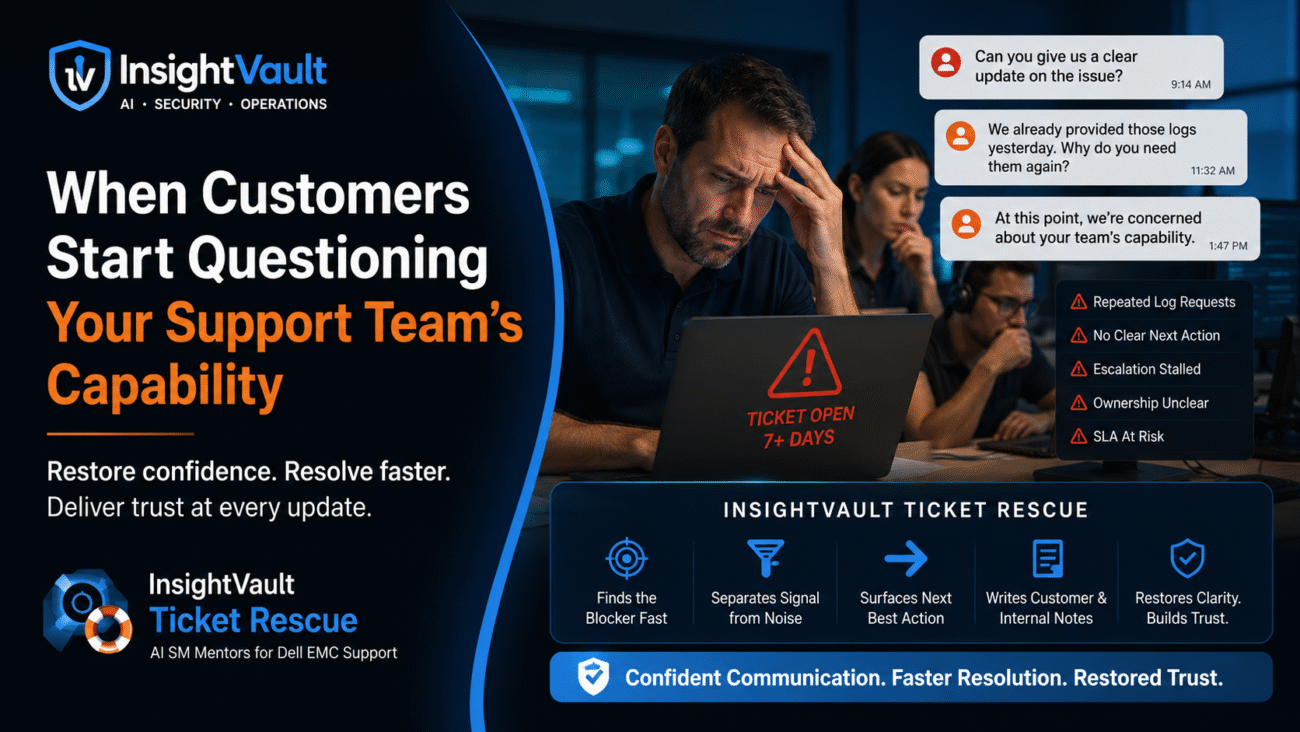
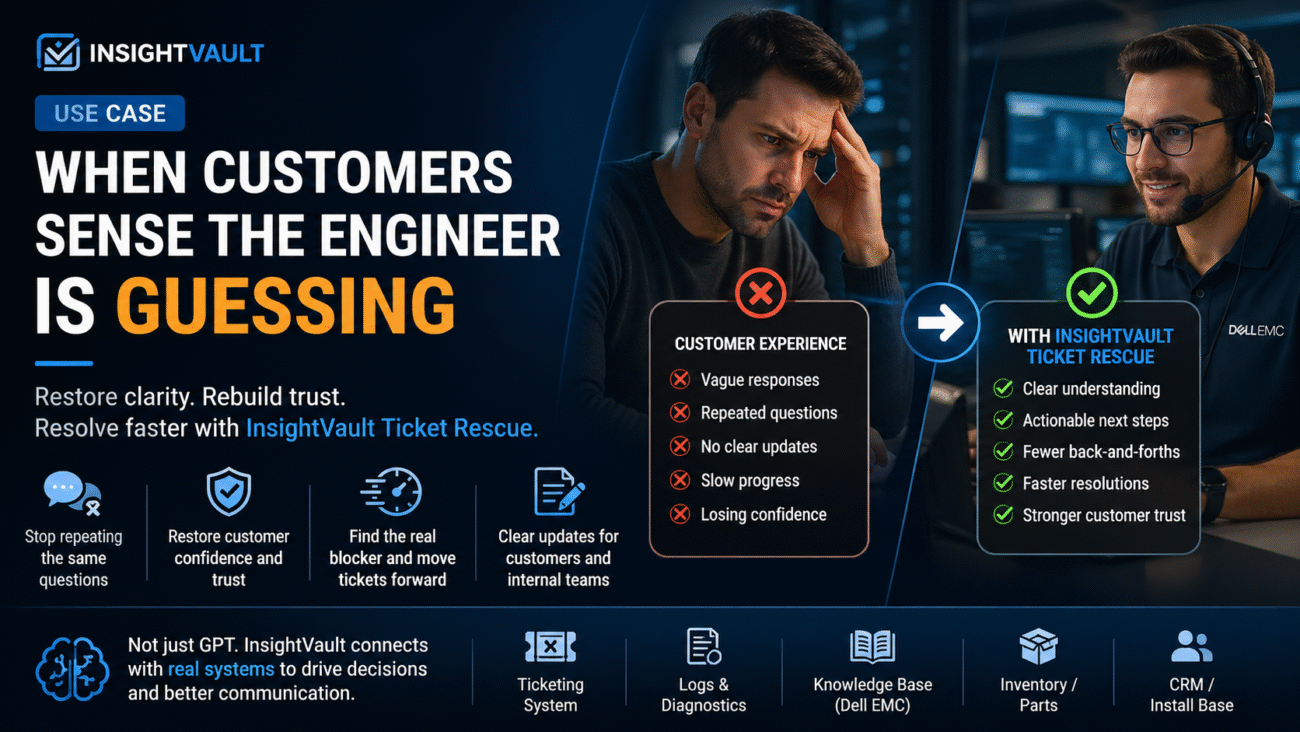
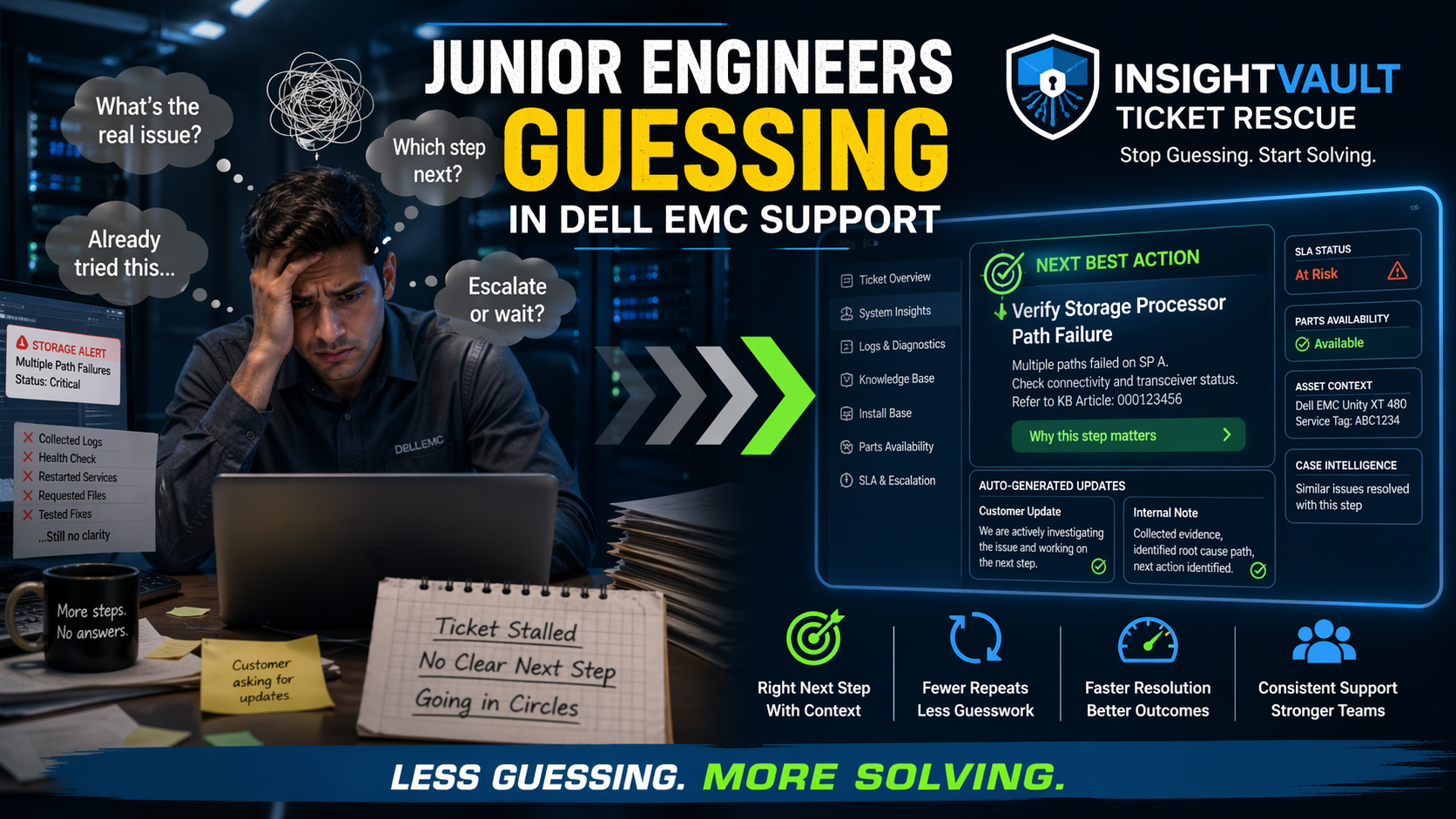
A storage ticket comes in with failed paths, unclear alerts, and a customer asking for updates. The L1 or L2 engineer knows something is wrong, but not what matters most. So they start trying steps they have seen before. They pull logs, retry health checks, ask for the same files again, and test fixes without real confidence. Some escalate too early because they do not want to make the wrong call. Others wait too long, hoping one more step will work. The result is slow progress, repeated troubleshooting, inconsistent handoffs, and ticket notes that do not clearly explain what has already been ruled out.
This is common in Dell EMC storage workflows where the real blocker is buried under noisy symptoms, incomplete notes, and scattered system data. Junior engineers are not failing because they do not care. They are stuck because they do not have enough context to know the right next move. That leads to trial and error, repeated mistakes, longer ticket times, and frustrated customers who feel like the case is going in circles.
Solution
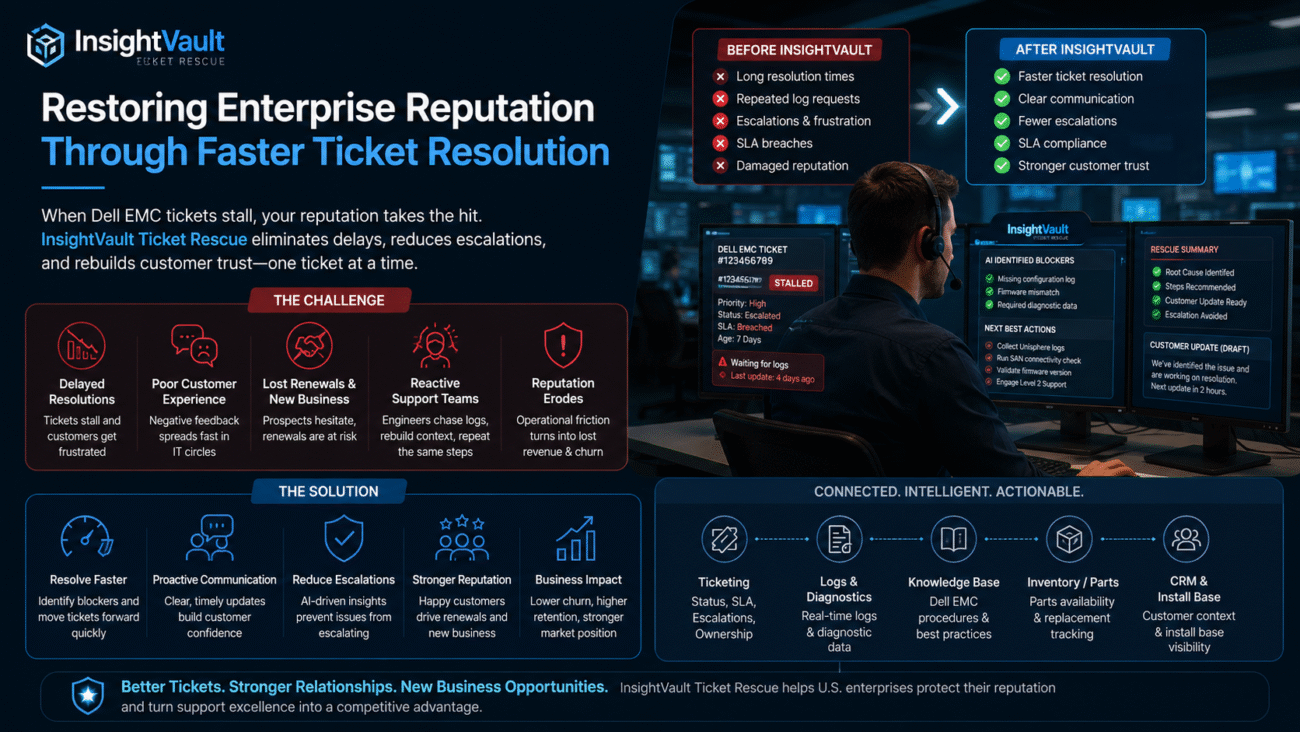
InsightVault Ticket Rescue helps engineers stop guessing and start moving with direction. Instead of forcing junior teams to piece everything together on their own, it guides them toward the next best action based on what the ticket, logs, diagnostics, knowledge base, and install base are actually showing.
The goal is not just faster responses. It is better decisions. Engineers get clearer troubleshooting paths, more confidence in what to do next, fewer repeated steps, and cleaner escalation timing. Tickets move forward with less hesitation, less backtracking, and more consistency across the team. That means faster resolution, fewer unnecessary requests, and a better experience for both support teams and customers.
How It’s Done in InsightVault
InsightVault Ticket Rescue is built for stalled support work, especially in Dell EMC storage environments where tickets often get delayed by uncertainty, repeated checks, and weak handoffs.
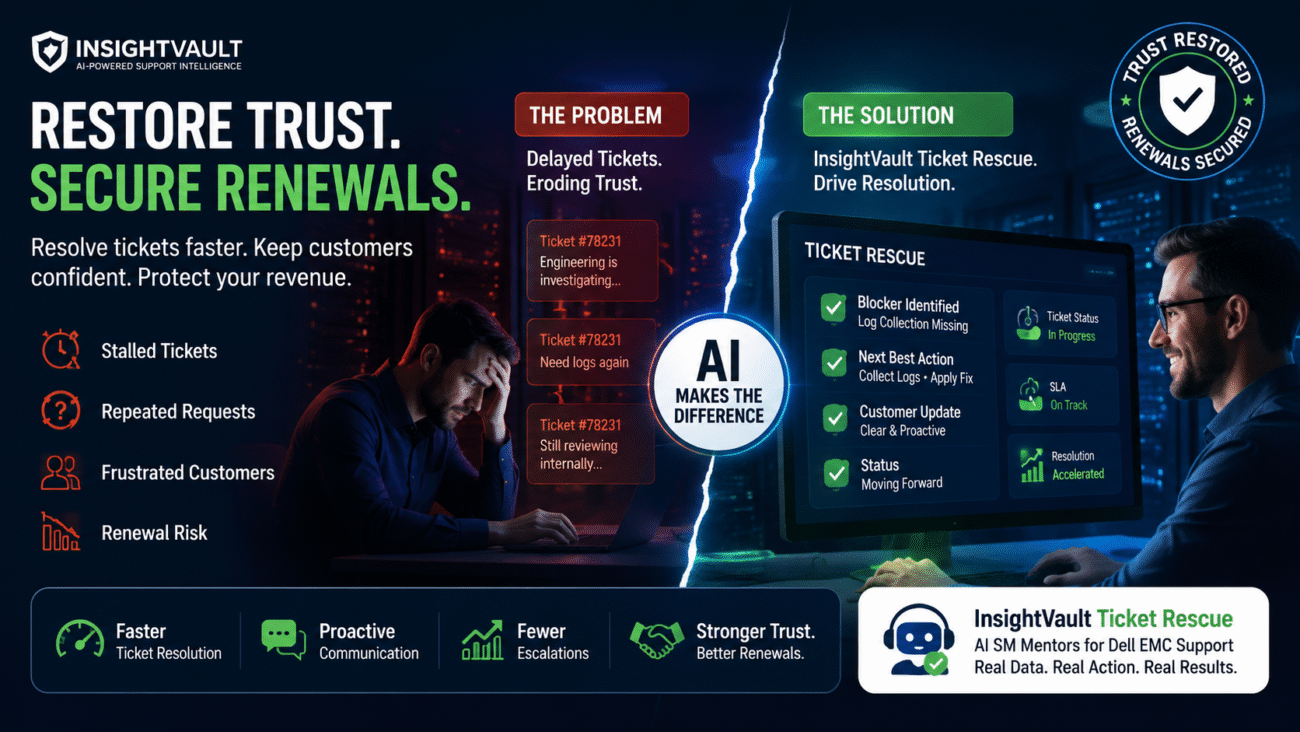
It does not act like a normal GPT tool. A standard GPT can summarize a case or rewrite notes based on what someone pastes into chat. That helps with language, but it does not solve the operational blocker. It cannot tell what has already been tried across systems, what step is missing, whether the SLA is at risk, whether parts are available, or whether the engineer is about to repeat the same failed action again.
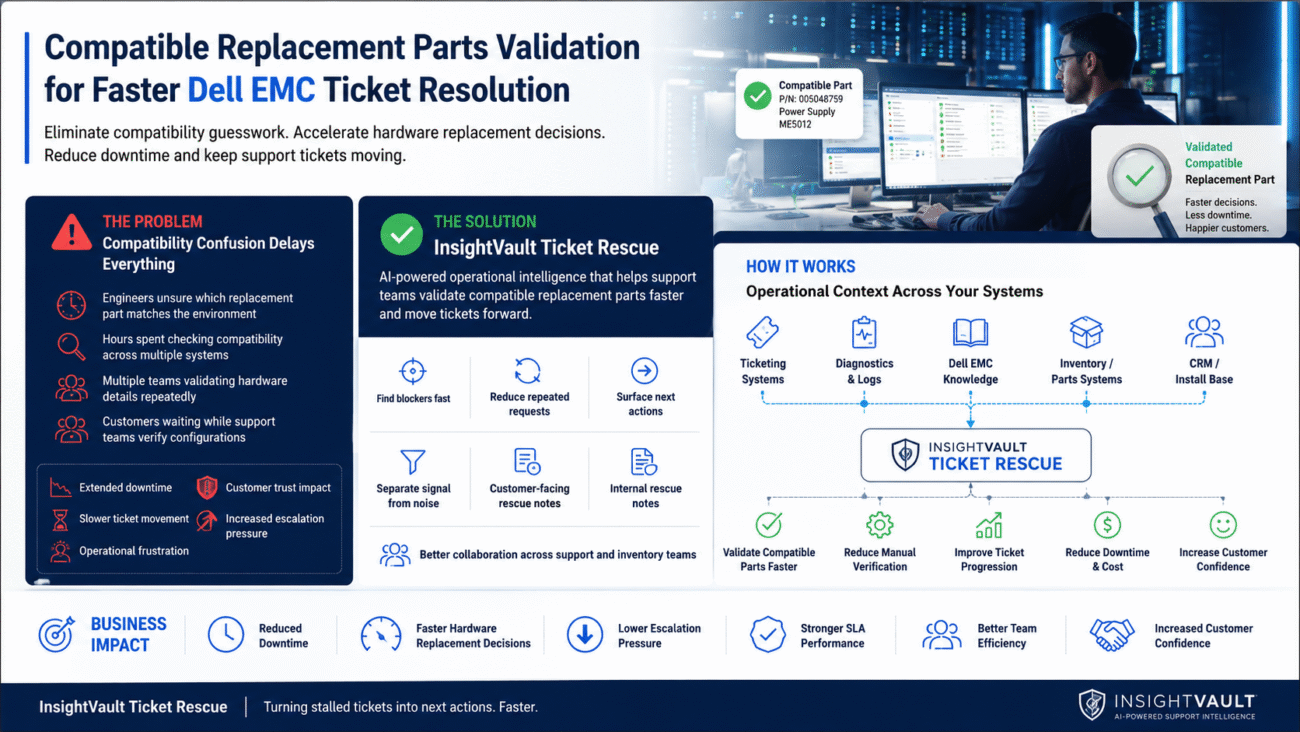
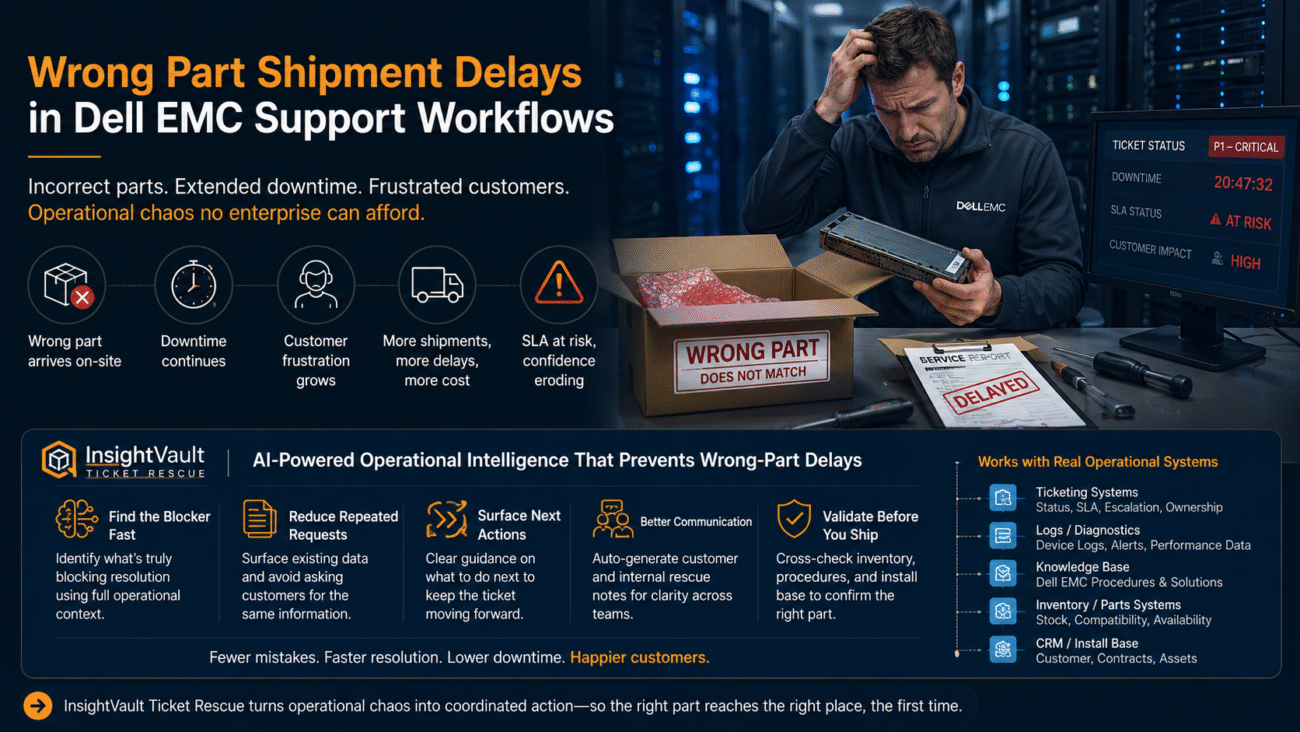
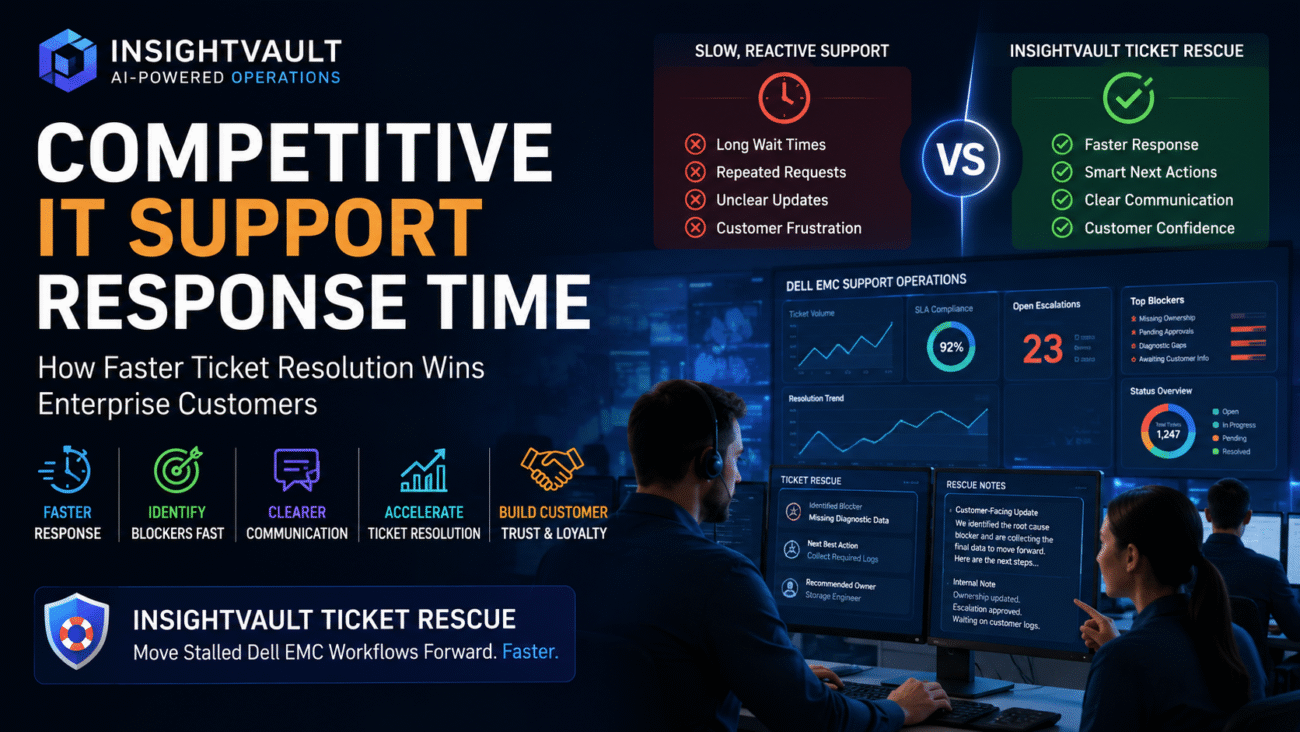
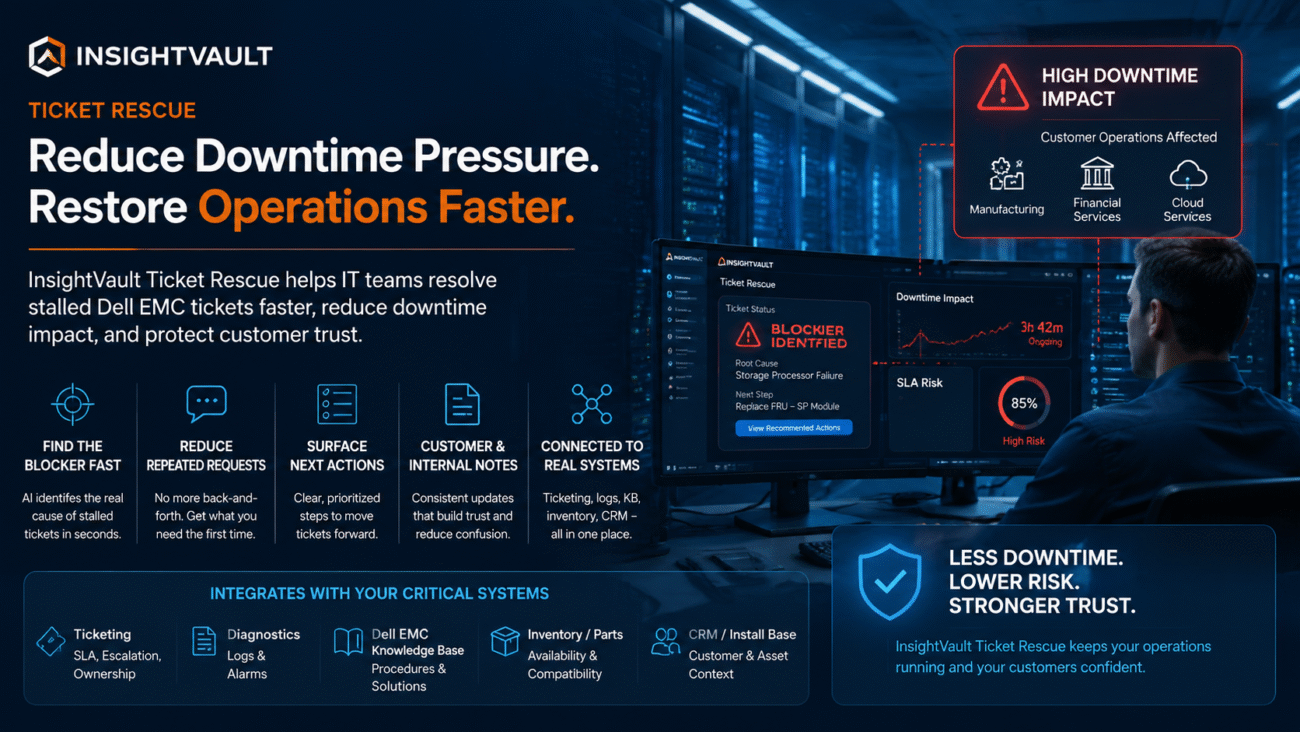
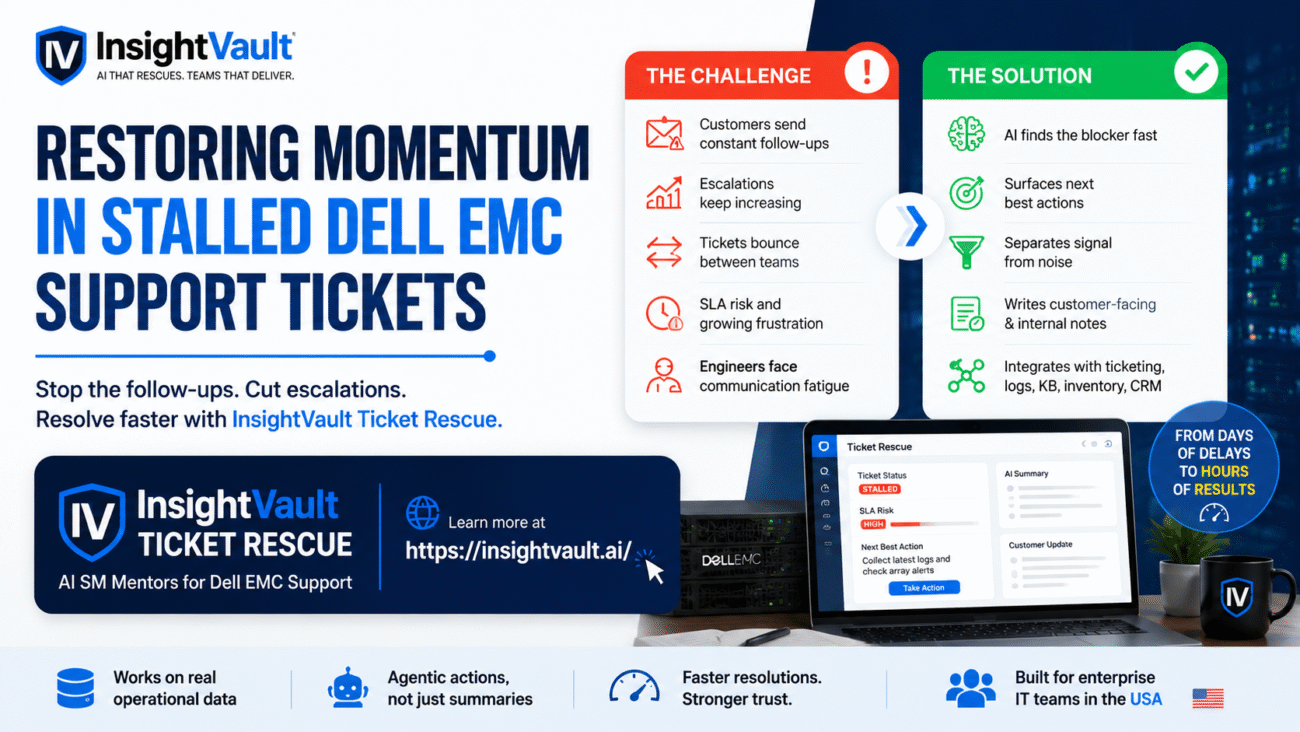
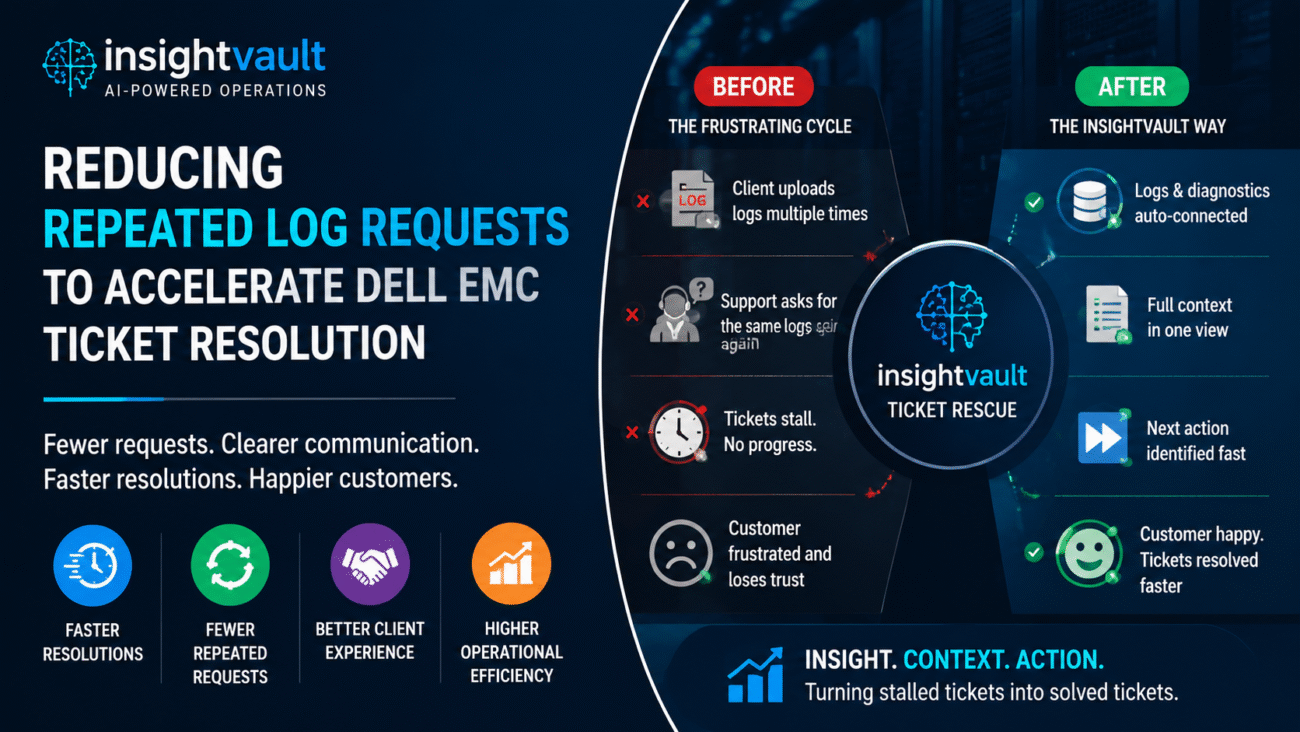
InsightVault Ticket Rescue goes further. It finds the blocker fast. It reduces repeated requests. It pushes the engineer toward the next action. It separates signal from noise inside noisy Dell EMC workflows. It also writes both customer-facing updates and internal notes, so the ticket moves forward clearly without making the engineer start from scratch.
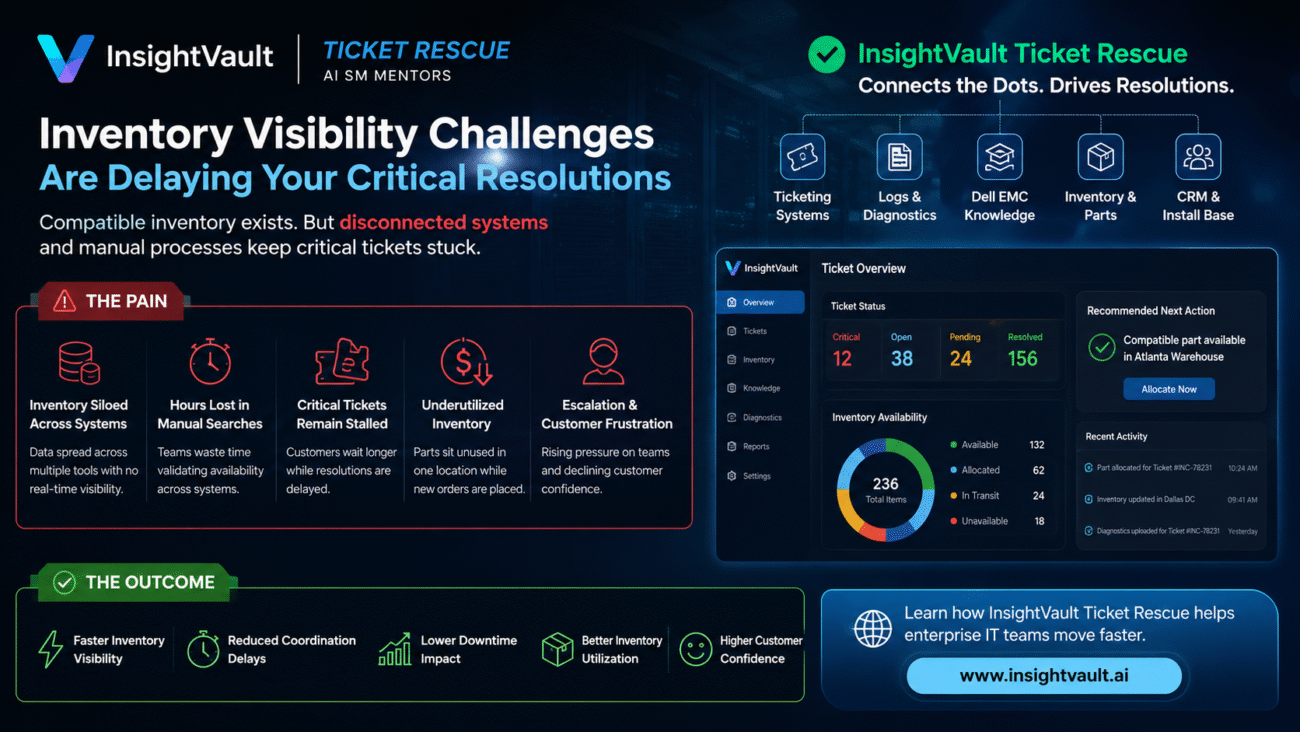
It works by connecting to the systems teams already use:
- Ticketing system for status, SLA risk, ownership, and escalation state
- Logs and diagnostics systems to identify patterns, failures, and missing evidence
- Knowledge base for Dell EMC procedures and known troubleshooting paths
- Inventory and parts systems to check availability before the wrong recommendation is made
- CRM and install base to understand asset history, entitlement, and configuration context
Because it works on real system data, InsightVault is not limited to chat input. It does not wait for the engineer to describe the issue perfectly. It uses operational intelligence from the live case environment to guide real decisions and actions.
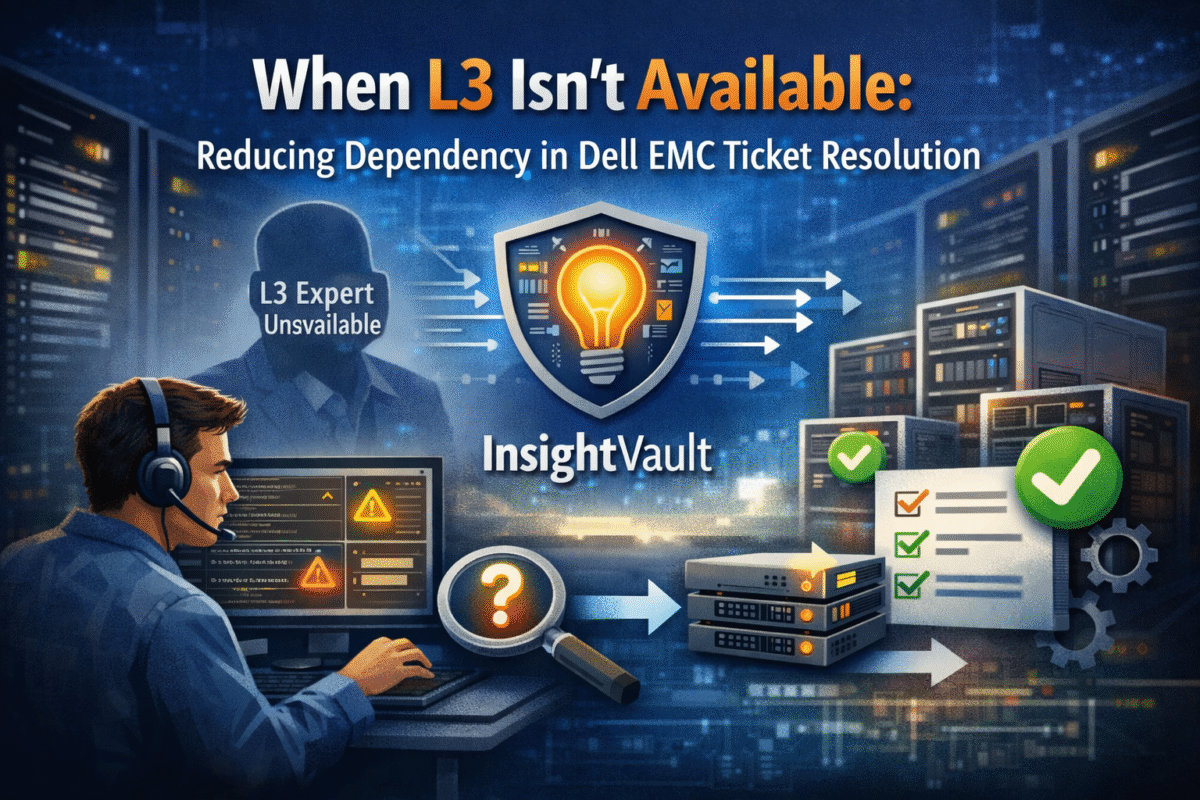
That means a junior engineer does not have to guess whether to collect more logs, verify a hardware condition, check a known Dell EMC procedure, prepare for dispatch, or escalate to the next team. InsightVault surfaces the next step with context, shows why it matters, and helps move the case forward with less trial and error.
In practice, this gives support teams a more reliable way to handle difficult tickets. Engineers spend less time circling the issue. Managers see fewer stalled cases. Customers get clearer updates. And the team as a whole becomes more consistent, even when experience levels vary.