When Customers Start Questioning Your Support Team’s Capability

Challenge
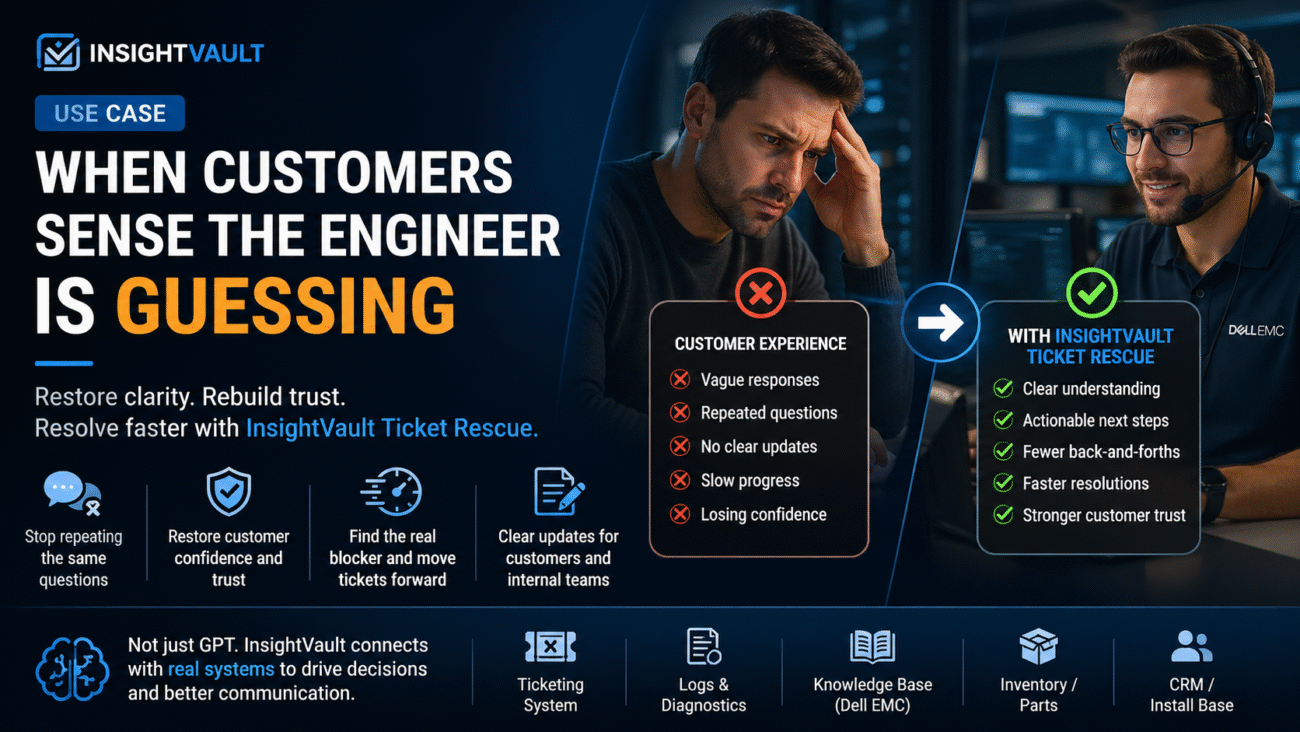
It usually starts with a simple question from the customer:
“Do you actually know what’s causing this issue yet?”
In enterprise Dell EMC environments, that question is dangerous. Because by the time a customer asks it, confidence is already fading.
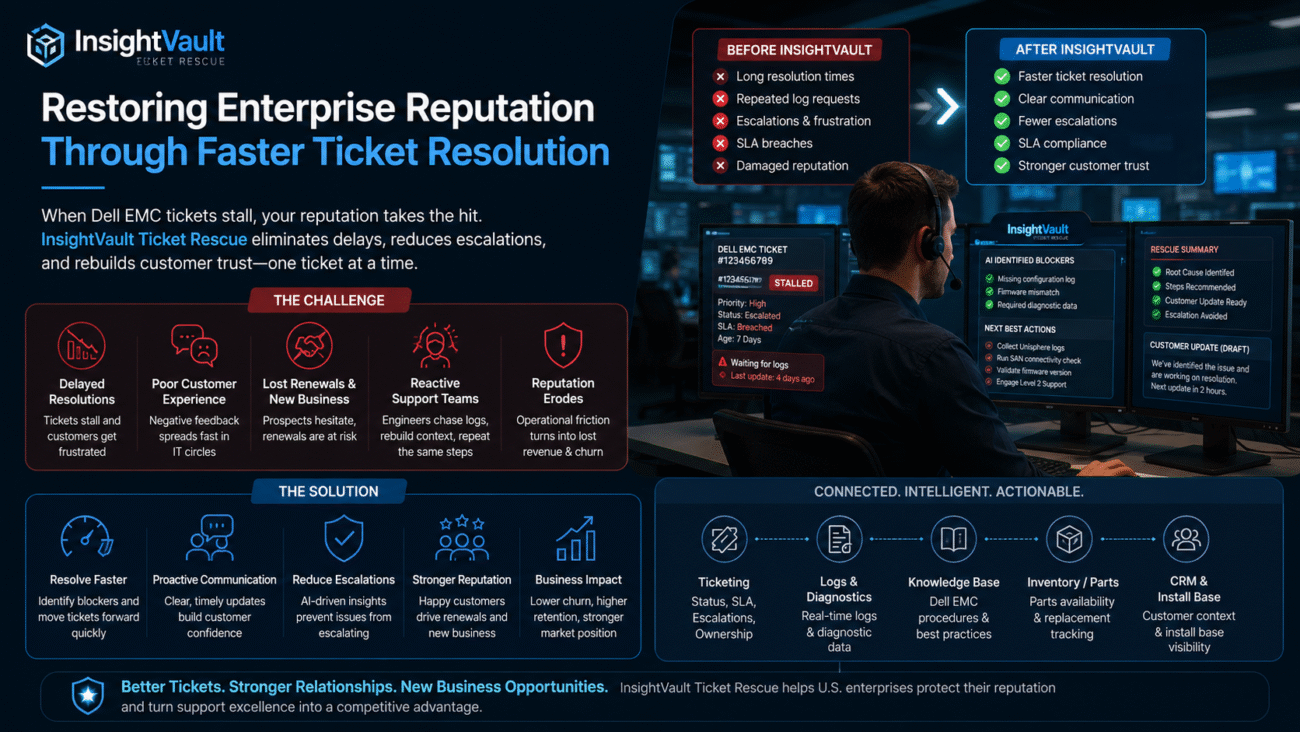
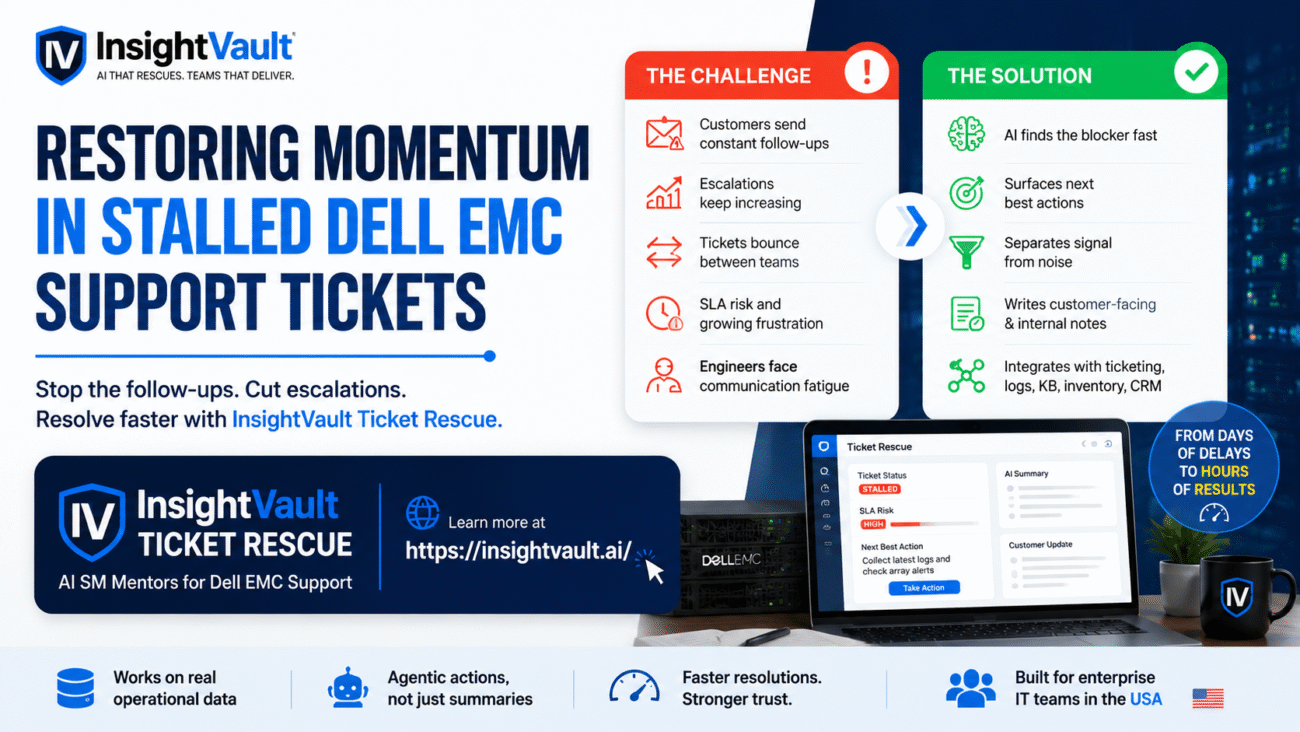
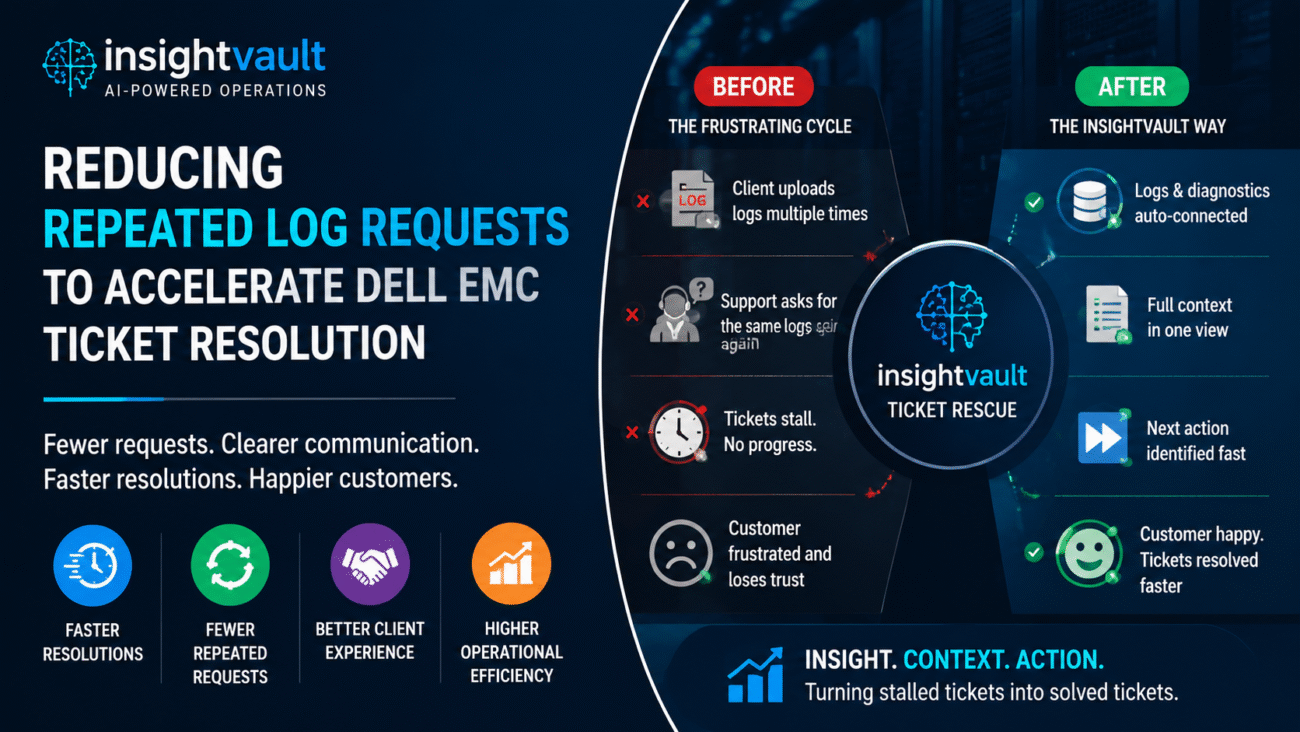
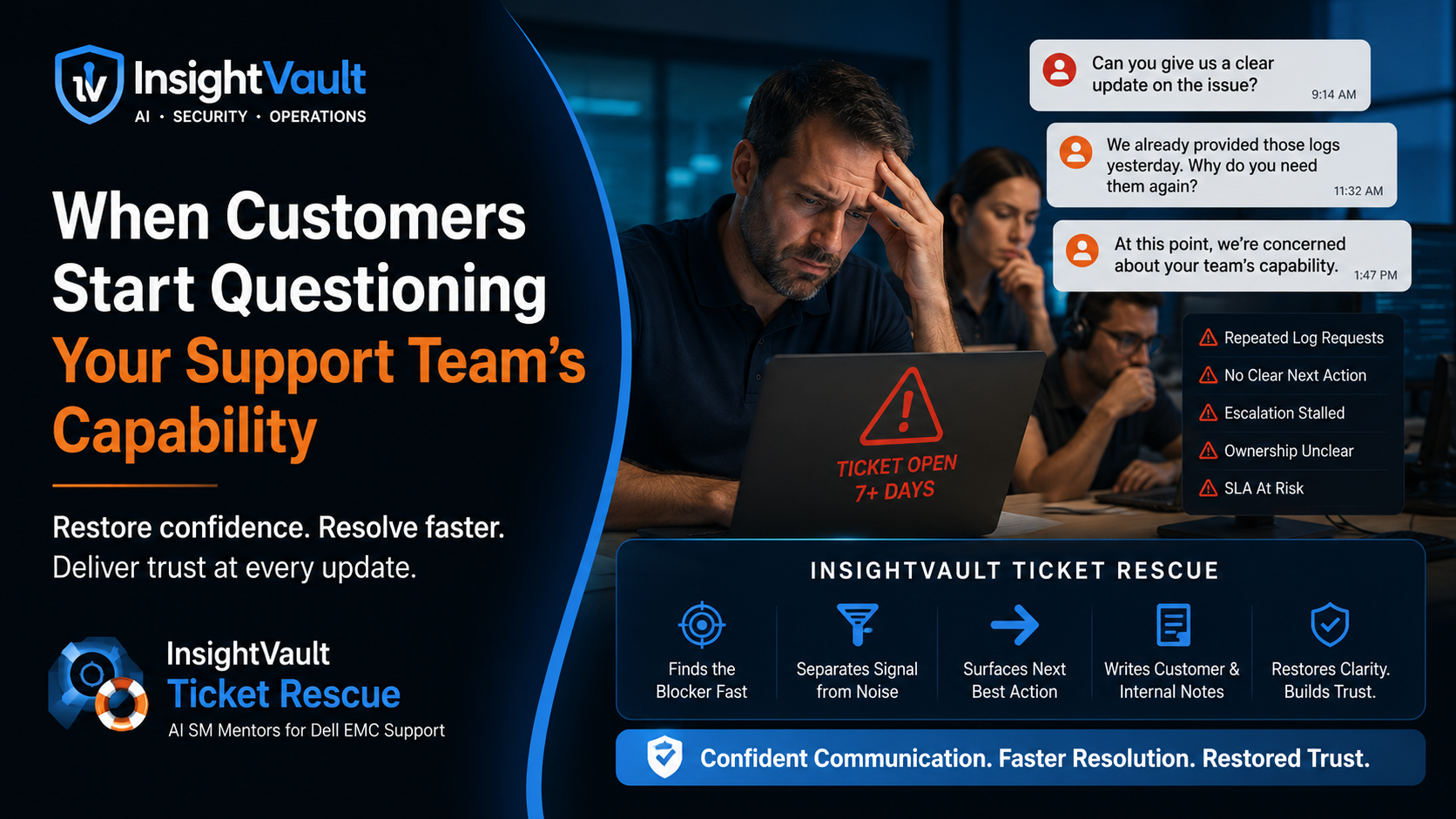
The ticket has likely been open for days. Updates are inconsistent. One engineer asks for logs that were already uploaded. Another asks the customer to repeat troubleshooting steps that were completed earlier in the week. Escalations start bouncing between teams. Internal notes become fragmented. The customer hears different explanations from different people.
From the customer’s perspective, the support organization starts looking uncertain.
Not because engineers are not working hard. But because the operational process itself is breaking down.
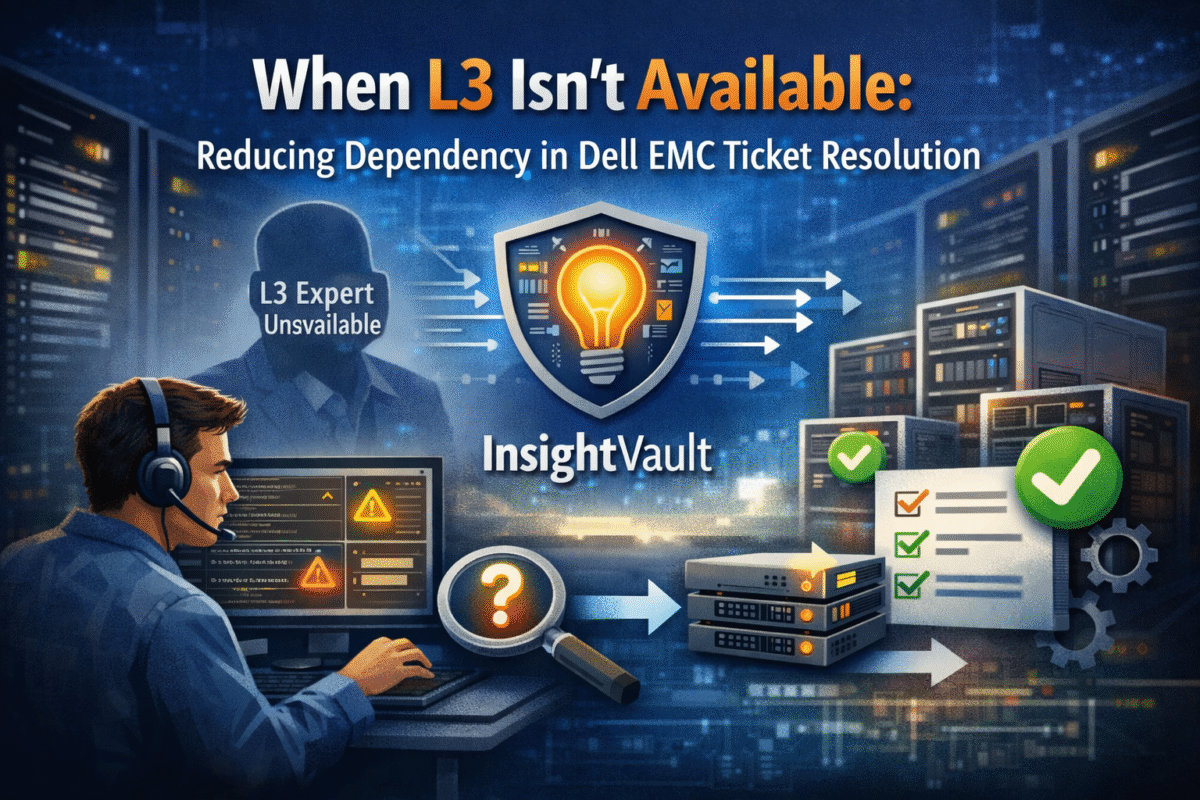
This is common in large U.S. enterprise IT environments where storage infrastructure is complex, ticket volume is high, and experienced Dell EMC support talent is increasingly difficult to find. Engineers spend more time reconstructing ticket history than solving the actual issue. Teams lose visibility into what was already attempted, which logs matter, which escalation is blocked, and what the next action should be.
The longer this continues, the more damaging it becomes.
Customers begin questioning whether the support team truly understands the environment. Internal pressure increases as account managers push for updates. Support leaders worry about SLA exposure and renewal risk. Engineers become reactive instead of decisive because they are chasing fragmented information instead of driving resolution.
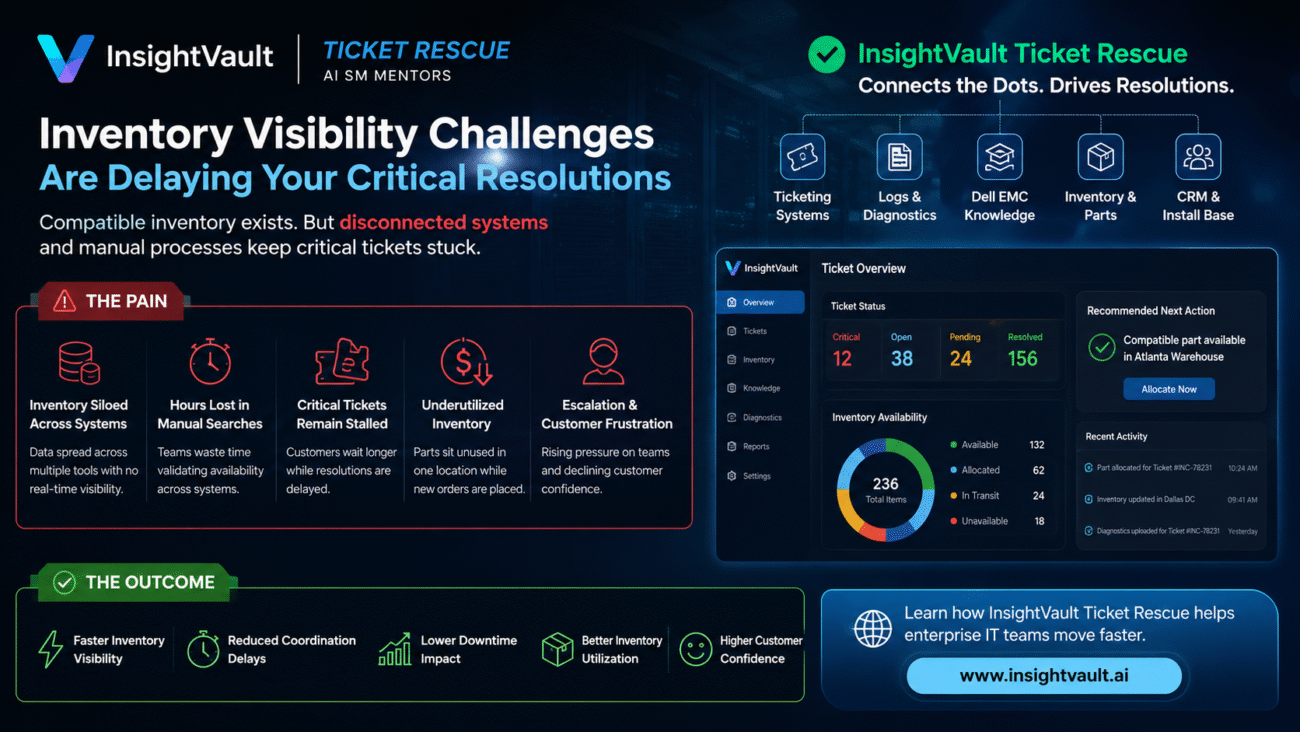
Traditional support workflows make this worse because critical operational context is scattered across ticketing systems, diagnostic uploads, knowledge articles, install-base records, escalation chains, CRM systems, and email threads.
This is also where standard GPT tools fall short.
A normal GPT model can summarize a ticket conversation or rewrite a status update. But summarization alone does not move the ticket forward. It does not identify the real blocker. It does not distinguish useful diagnostic signals from irrelevant noise. It does not understand Dell EMC operational workflows, escalation dependencies, ownership gaps, or inventory constraints.
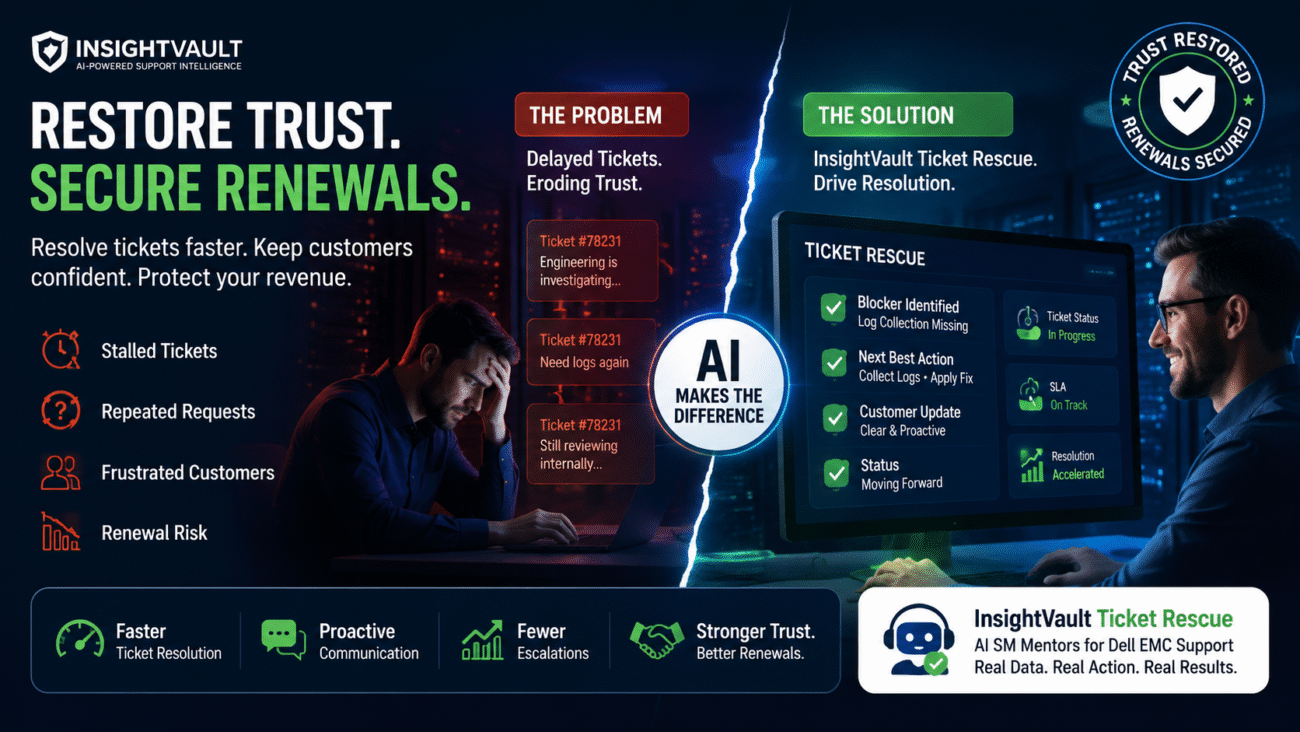
As a result, customers continue hearing vague responses like:
“We are still reviewing internally.”
“Engineering is analyzing the logs.”
“We will provide another update shortly.”
After enough of these responses, trust starts collapsing.
And once confidence is lost, every future interaction becomes harder. Customers escalate faster. Leadership scrutiny increases. Renewal conversations become more difficult. Even technically capable support teams begin appearing disorganized and ineffective.
That is the real operational risk.
Solution
InsightVault Ticket Rescue is designed to stop that confidence breakdown before it spreads.
Instead of allowing tickets to drift through fragmented systems and reactive communication loops, Ticket Rescue helps support teams regain operational clarity quickly and communicate with confidence.
The goal is not just faster resolutions. The goal is restoring trust during high-pressure support situations.
With InsightVault Ticket Rescue, engineers no longer need to manually piece together ticket history from scattered notes, duplicate requests, disconnected logs, and inconsistent escalations. The platform continuously analyzes the operational workflow to identify what is actually blocking progress.
That changes how support teams respond to customers.
Instead of uncertain updates, teams can provide proactive communication grounded in real operational context. Customers receive clearer explanations, more accurate next steps, and visible momentum. Internal teams stay aligned because everyone sees the same operational picture.
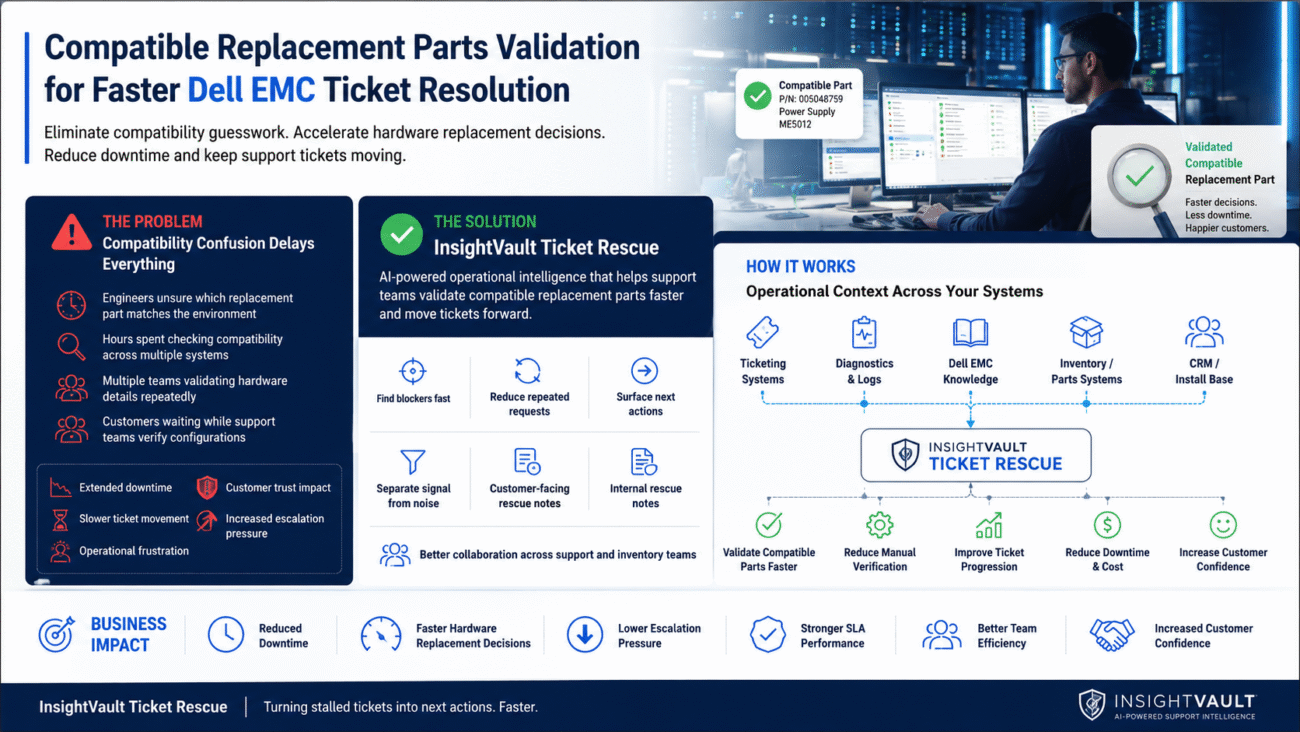
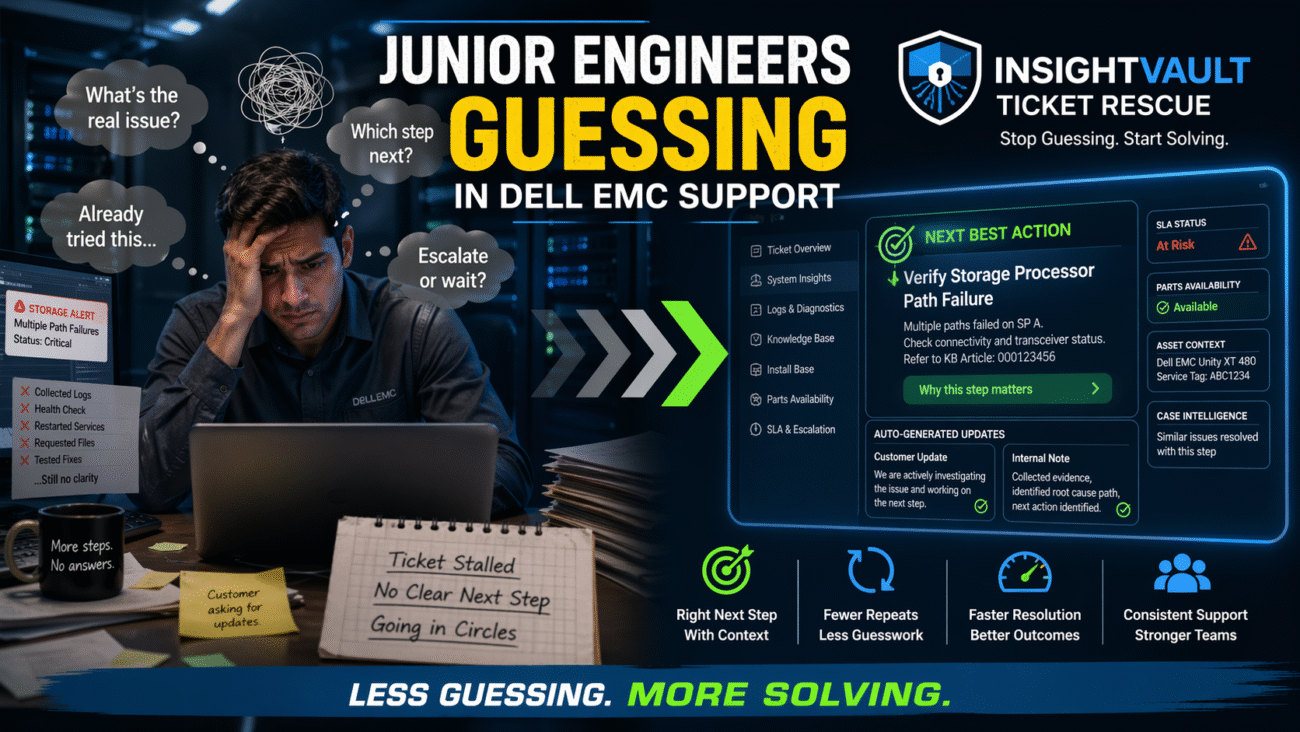
Support conversations become more confident because the system surfaces:
- What has already been attempted
- Which diagnostics matter most
- Where the escalation is stalled
- Which dependencies are unresolved
- What the next operational action should be
This dramatically reduces repetitive requests that frustrate enterprise customers.
More importantly, it changes customer perception.
Instead of seeing a support organization that looks confused or reactive, customers see structured progress, accountability, and direction.
Ticket Rescue is particularly valuable for Dell EMC workflows where support complexity increases rapidly across firmware dependencies, hardware inventory issues, storage diagnostics, escalation ownership, and install-base relationships.
The platform helps teams move tickets forward faster while reducing communication fatigue on both sides.
Customers stop chasing updates because updates become meaningful again.
Support leaders gain visibility into operational blockers before escalations spiral out of control.
Engineers regain time to solve problems instead of rebuilding ticket context repeatedly.
The result is a support organization that sounds prepared, coordinated, and trustworthy even during critical incidents.
How It’s Done in InsightVault
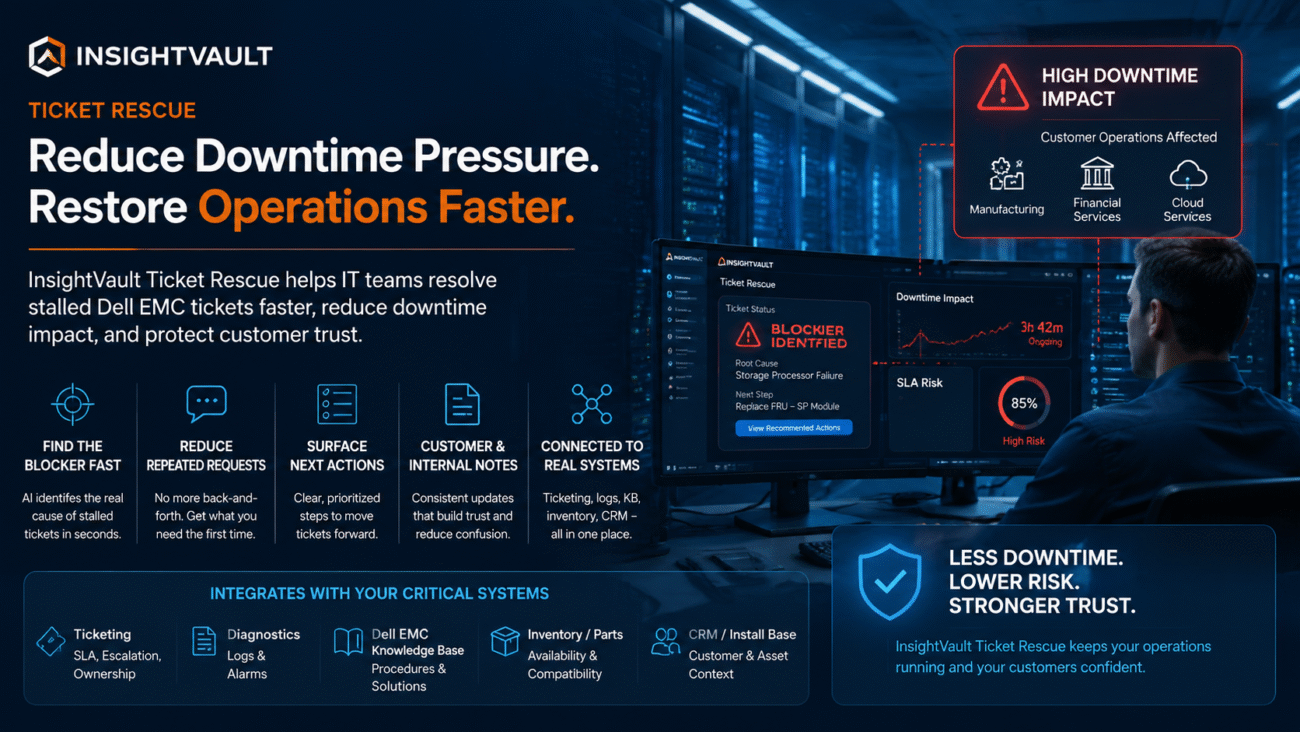
InsightVault Ticket Rescue works differently from a standard AI chatbot because it operates on real operational data instead of isolated pasted conversations.
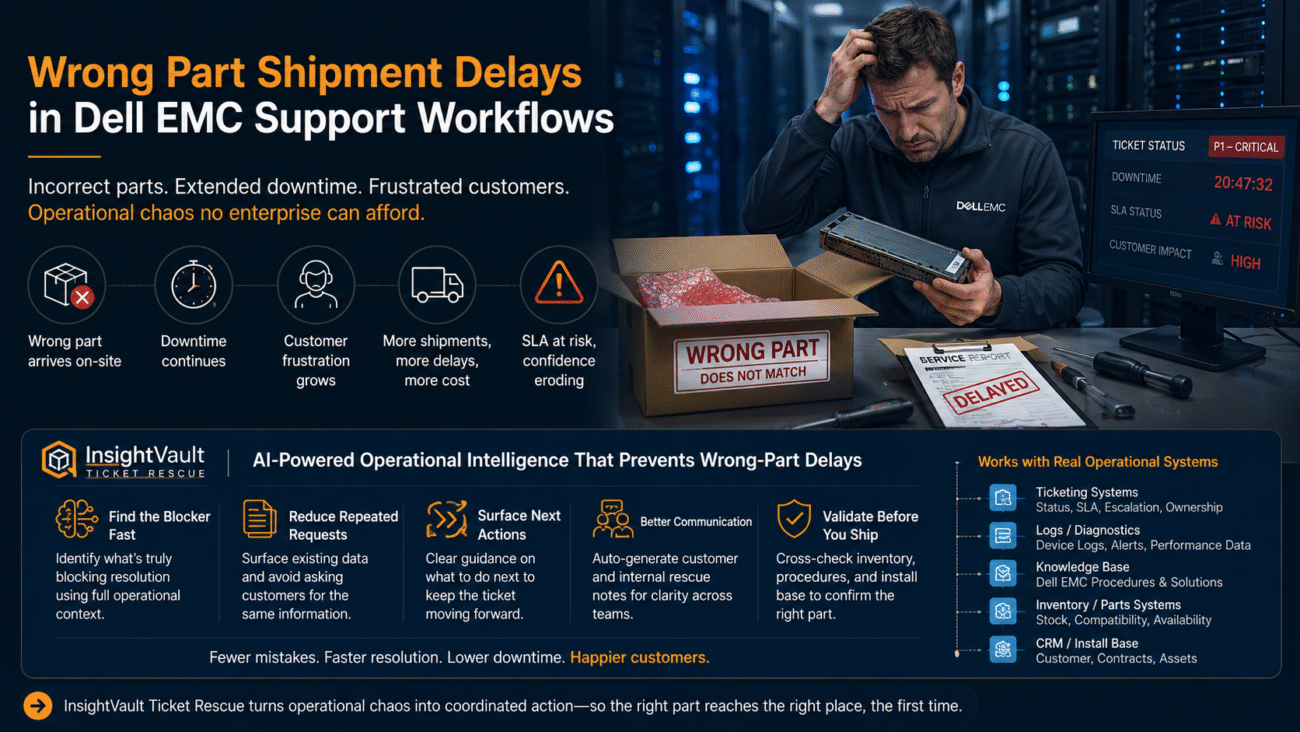
The platform connects directly into enterprise support environments, including:
- Ticketing systems for status, SLA exposure, ownership, and escalations
- Logs and diagnostic platforms for technical analysis
- Dell EMC knowledge workflows and procedures
- Inventory and parts systems
- CRM and install-base systems
This operational integration matters because enterprise support problems are rarely caused by missing summaries. They are caused by missing context.
Ticket Rescue continuously analyzes signals across these systems to separate noise from meaningful operational blockers.
For example, instead of simply summarizing that a customer uploaded logs, the platform identifies whether the uploaded diagnostics actually answer the escalation question. If critical data is still missing, the engineer sees that immediately. If the issue is already known in Dell EMC procedures, the workflow surfaces that guidance directly. If ownership stalled between teams, the system highlights the delay before the customer escalates again.
That is the difference between AI summarization and operational intelligence.
A normal GPT model can generate a polite response.
InsightVault Ticket Rescue helps determine whether the response is operationally correct.
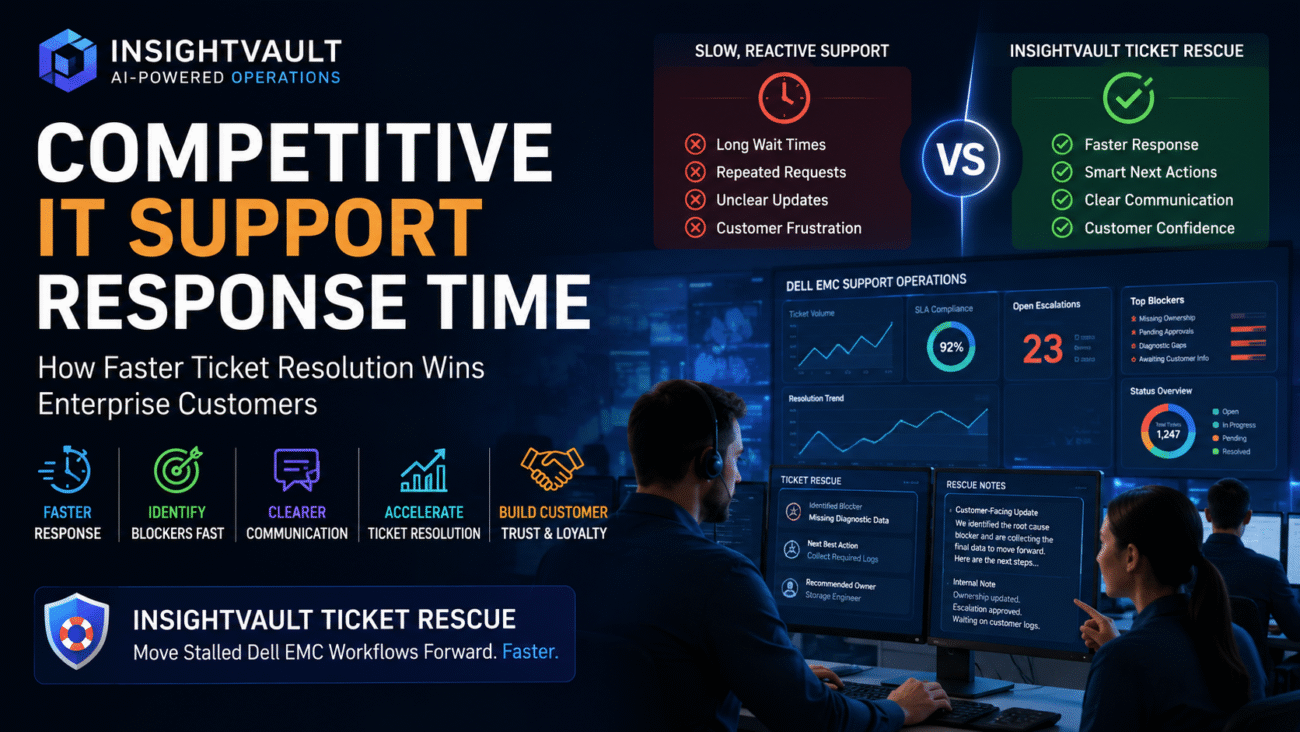
The platform also generates two different forms of communication simultaneously:
- Internal rescue guidance for engineers
- Customer-facing updates written with clarity and confidence
This reduces the inconsistency customers often notice when multiple support engineers touch the same ticket.
Because Ticket Rescue understands operational dependencies, teams can communicate proactively instead of reactively. Customers receive updates that explain not only what happened, but what happens next.
That shift is critical in enterprise support.
Confidence is rarely restored through technical jargon alone. It is restored when customers feel the support organization has control of the situation.
InsightVault Ticket Rescue helps support teams regain that control by identifying blockers faster, reducing repeated requests, surfacing next actions clearly, and improving communication quality across the entire support workflow.
The outcome is not just faster ticket movement.
It is restored operational trust.