Competitive IT Support Response Time | InsightVault

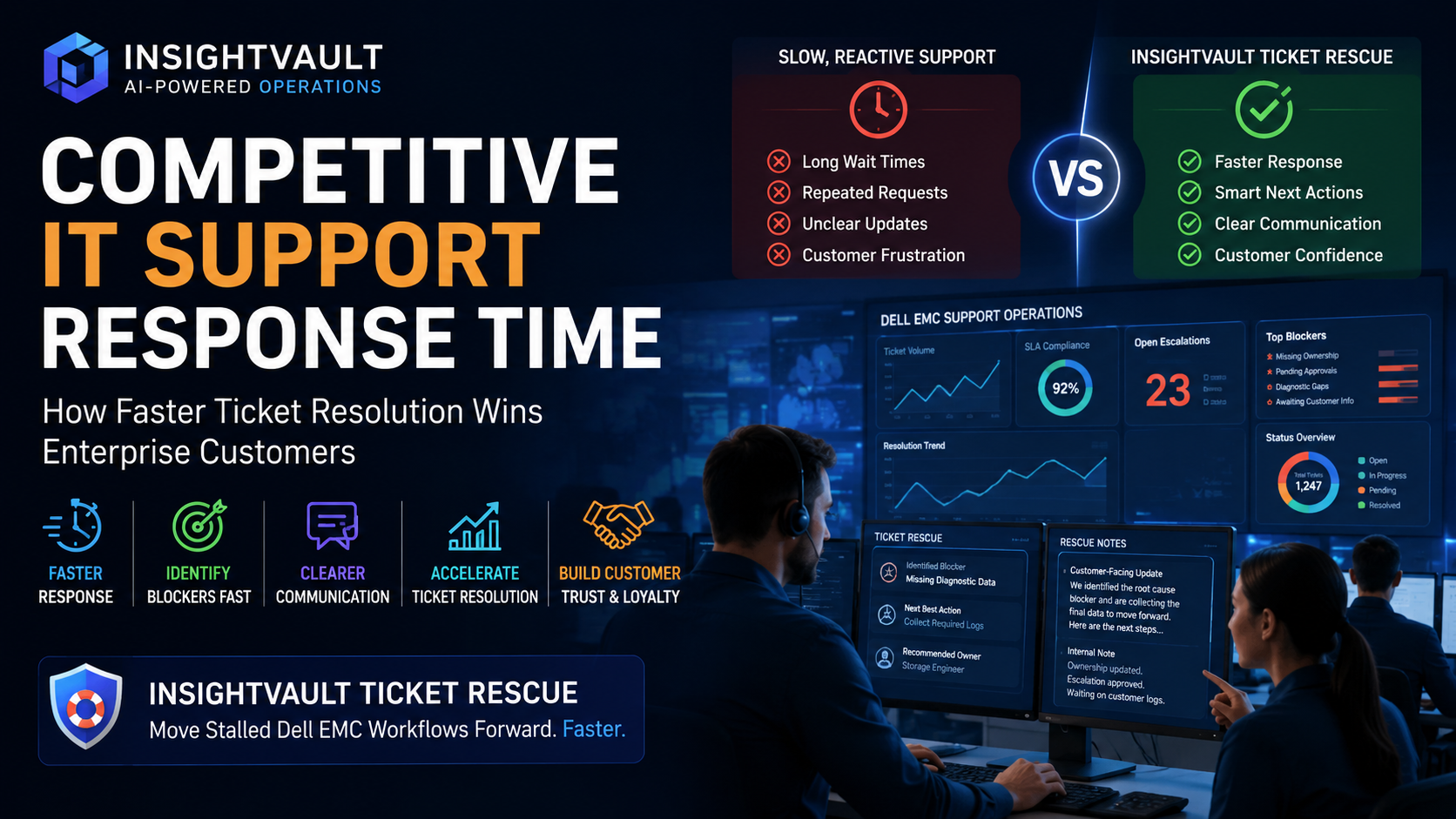
In enterprise infrastructure support, competitive IT support response time is becoming one of the biggest factors influencing customer retention and renewal decisions. Enterprise customers no longer compare vendors only on hardware, pricing, or SLAs. They compare how fast support teams respond, how clearly they communicate, and how quickly issues move toward resolution.
In large Dell EMC environments across the United States, support leaders are seeing the same pattern repeat itself. Customers open critical tickets. Updates slow down. Engineers request the same logs multiple times. Escalations grow. Meanwhile, a competitor resolves a similar issue faster and communicates with more confidence.
That comparison changes everything.
Customers begin questioning whether their current support provider can still meet operational expectations. Sales teams lose leverage during renewals. Account managers struggle to rebuild trust. Support teams feel pressure from every direction while trying to piece together fragmented ticket history, diagnostics, inventory records, and escalation notes.
This is where operational visibility becomes a competitive advantage.
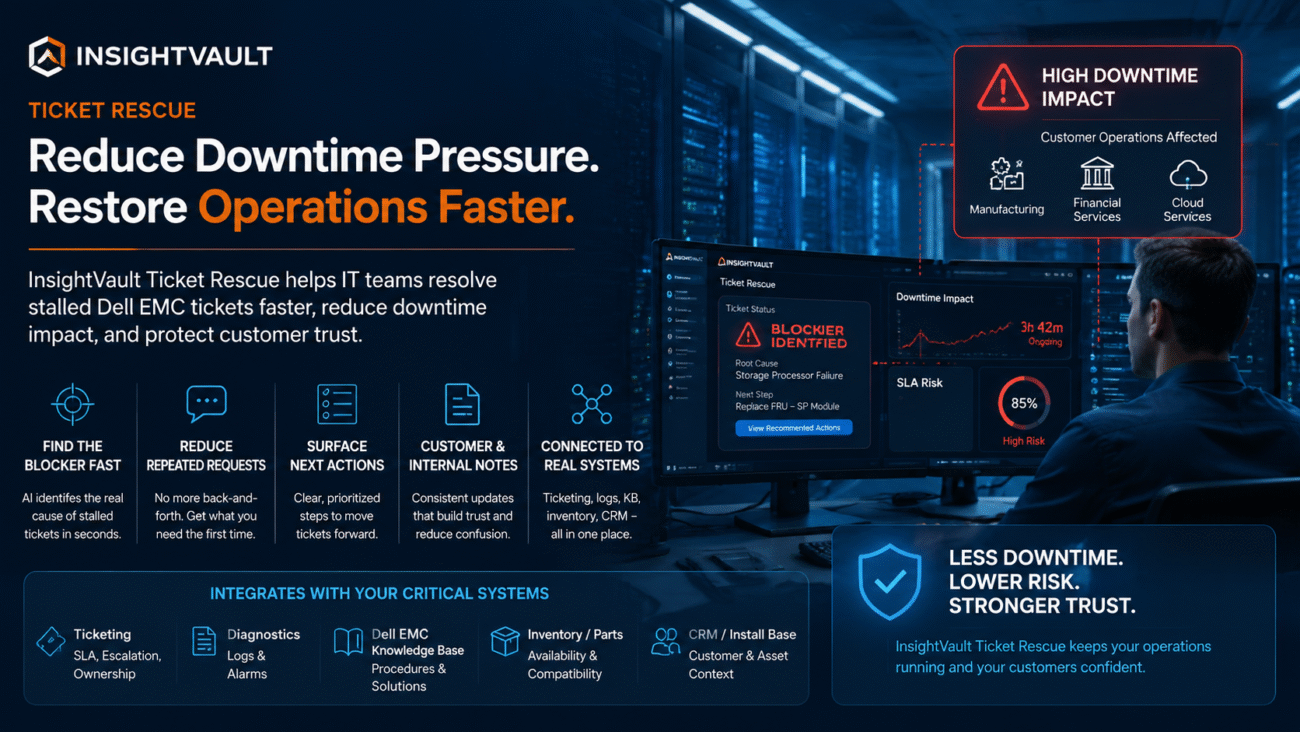
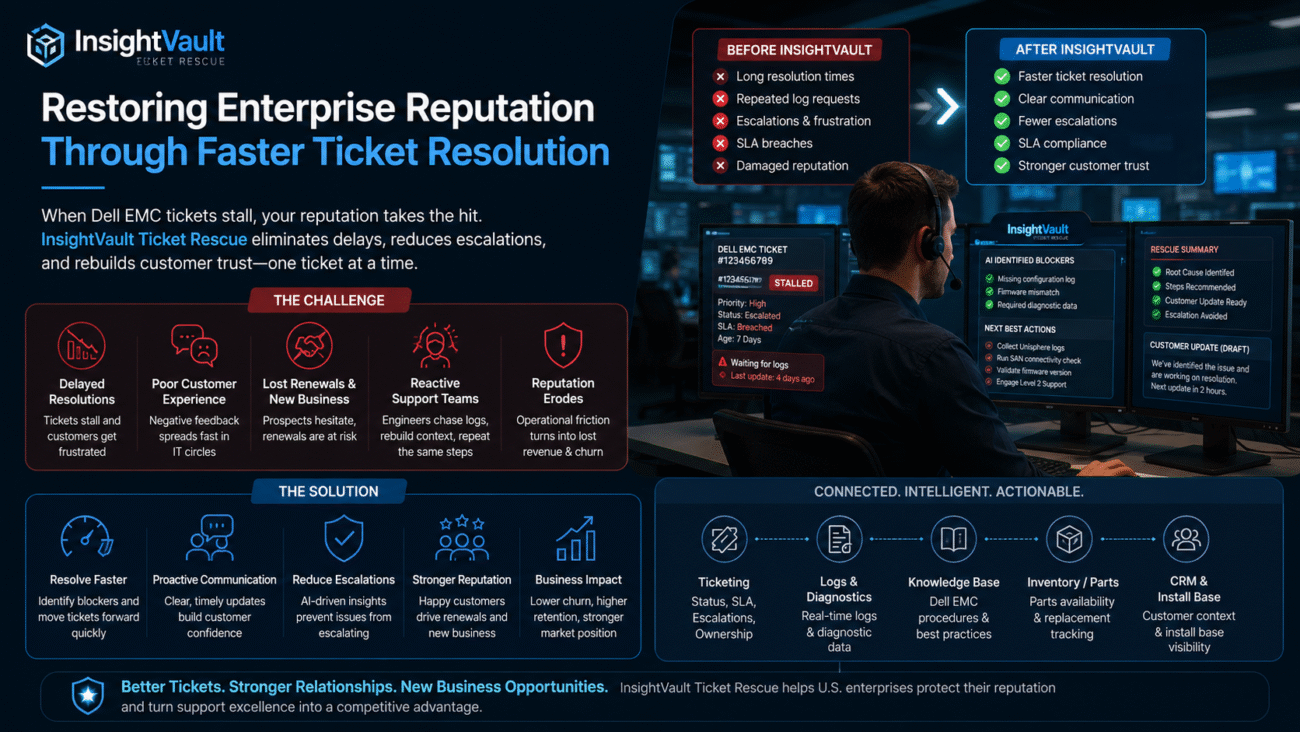
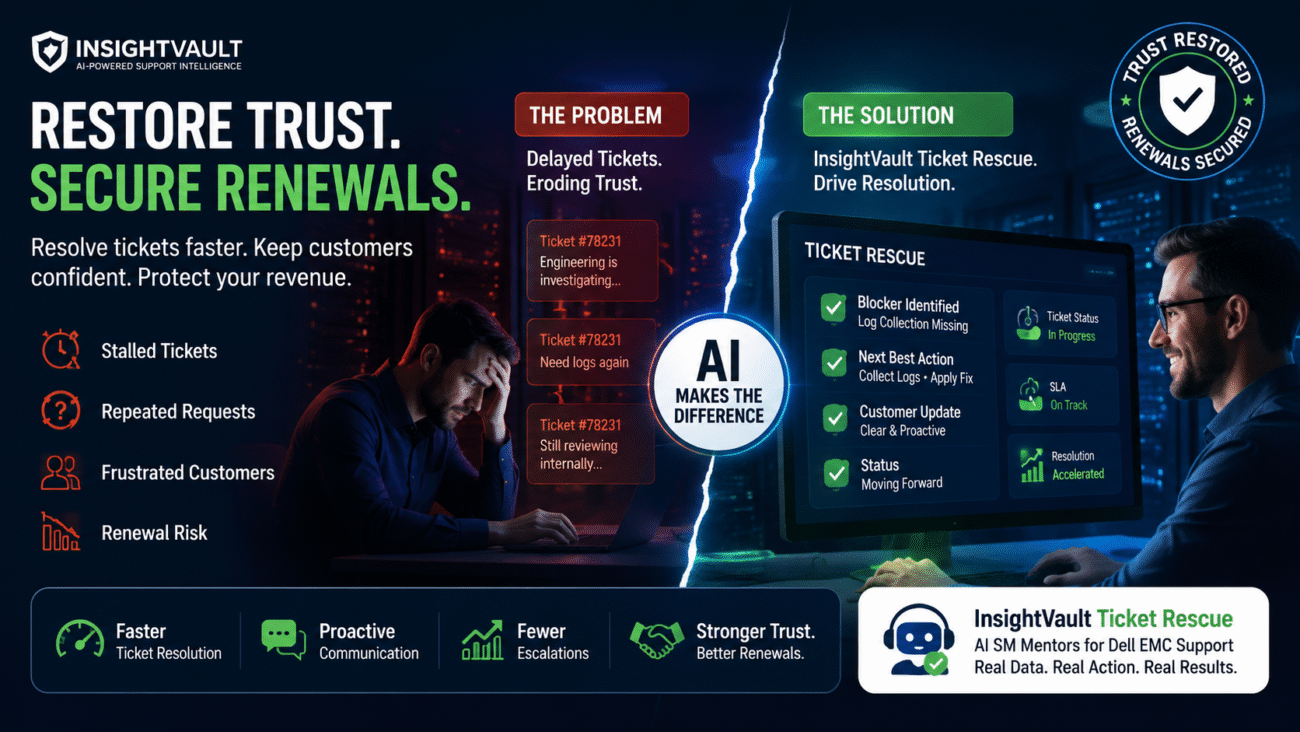
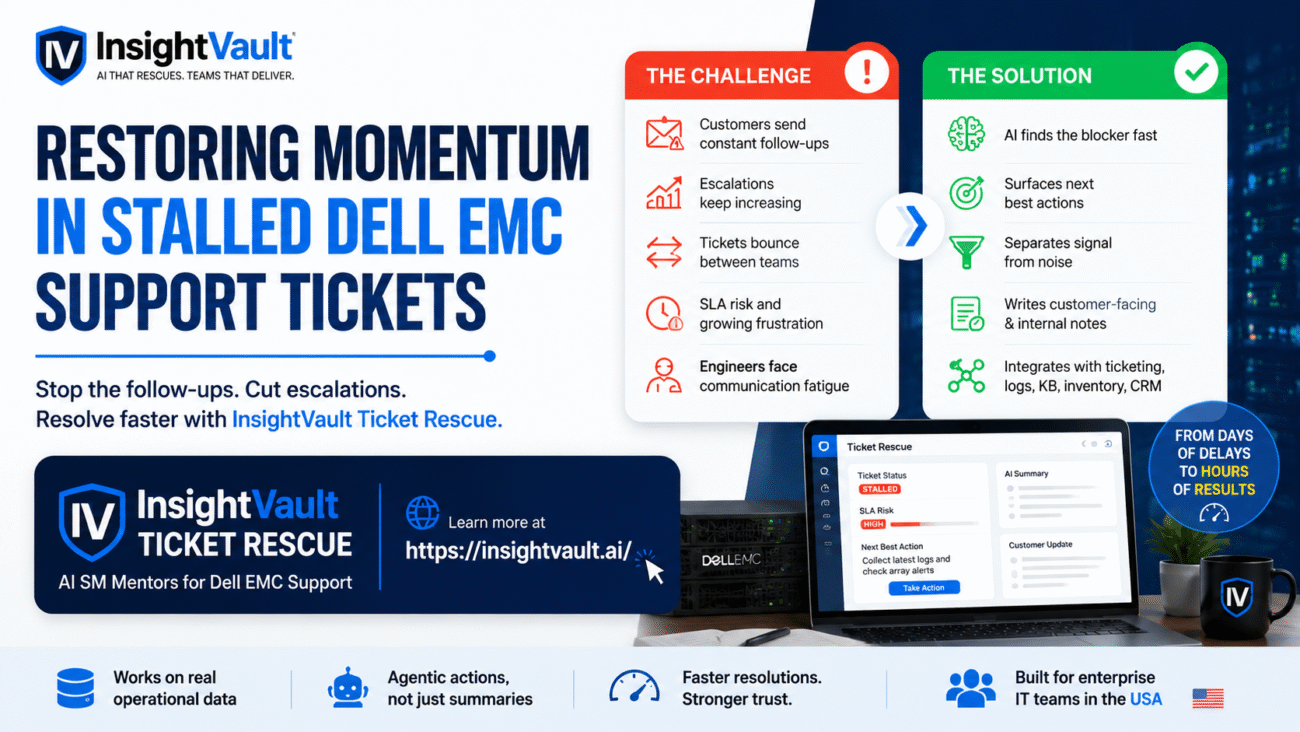
InsightVault Ticket Rescue helps enterprise support organizations move stalled Dell EMC workflows forward faster by identifying blockers, reducing repeated requests, surfacing next actions, and improving communication across the entire support lifecycle.
Learn more about InsightVault AI operations workflows:
Challenge
Enterprise customers notice support quality long before a renewal conversation starts.
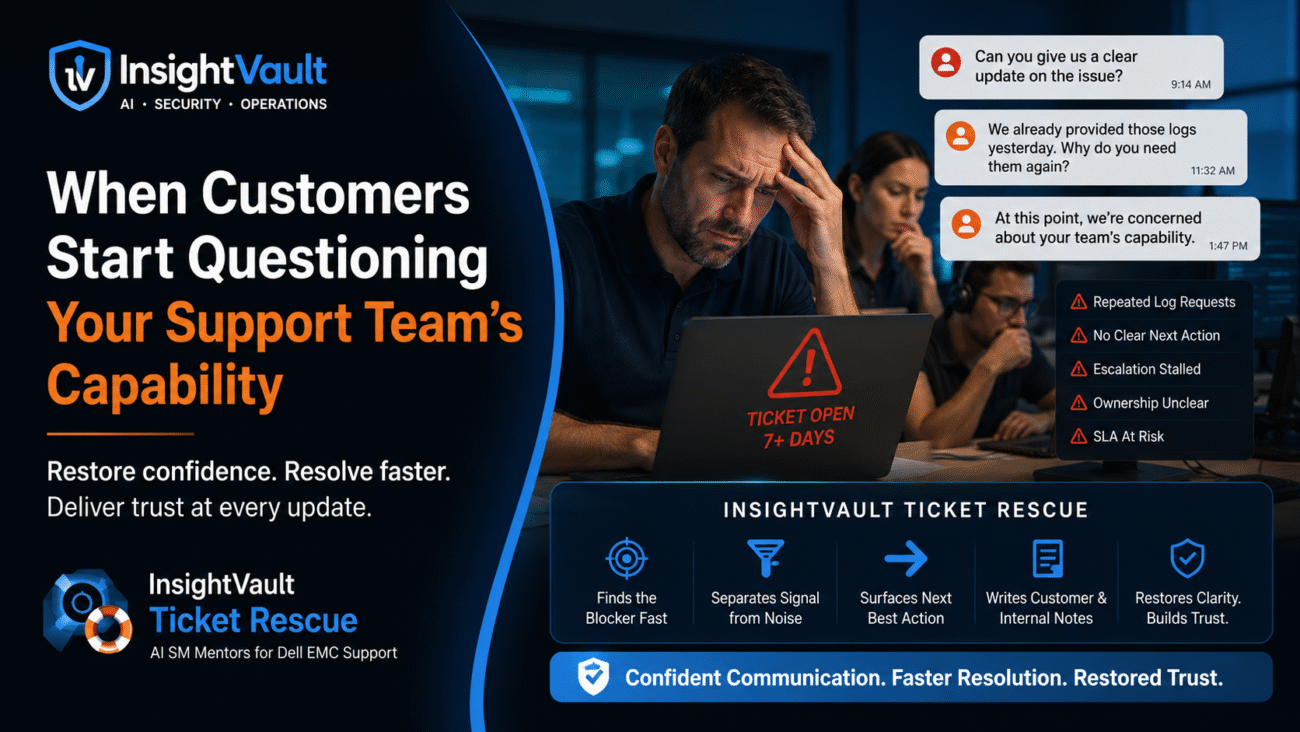
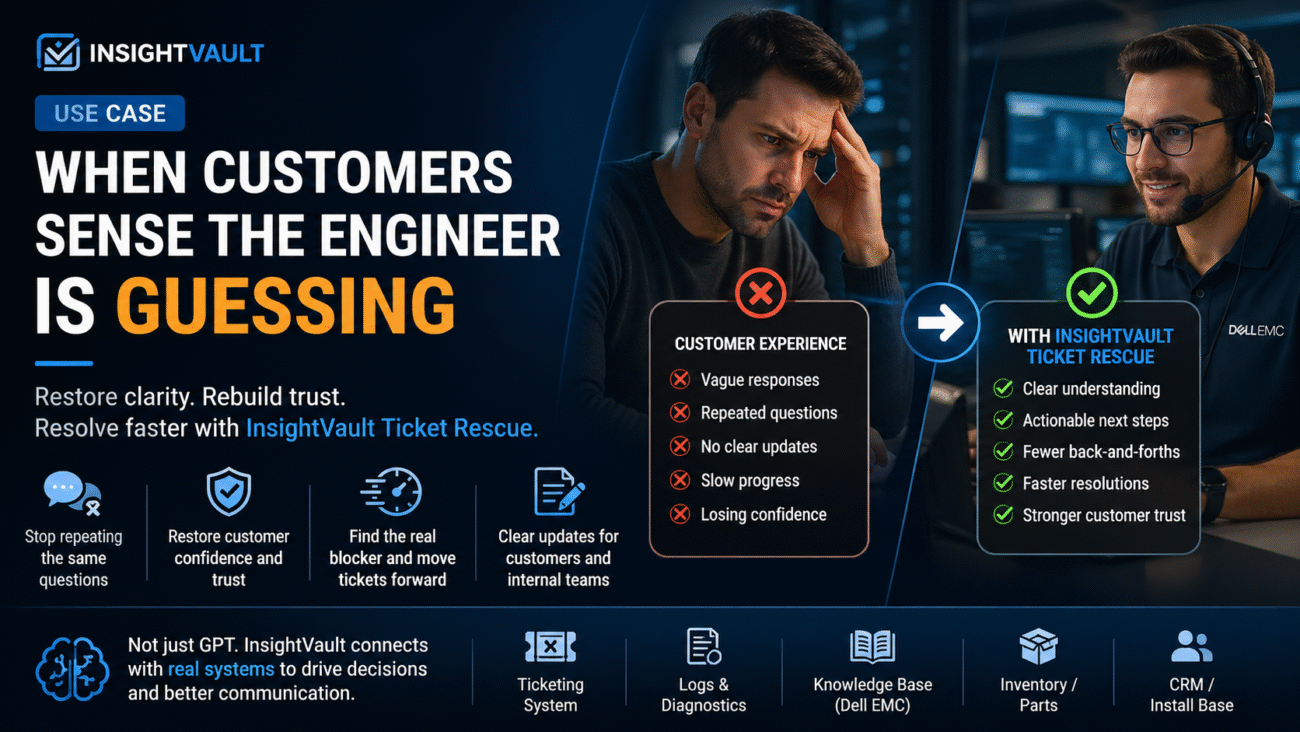
A ticket remains open too long. Updates become repetitive. Engineers continue asking for logs already submitted earlier in the escalation. Internal ownership changes multiple times. Customers stop hearing clear next steps and start hearing generic status updates instead.
At the same time, competitors are responding faster.
In large U.S. enterprise data center environments, support responsiveness directly affects vendor reputation. Customers compare response quality between infrastructure vendors, third-party maintenance providers, and managed service teams every day. When another provider communicates faster, isolates root causes sooner, and moves tickets toward resolution more effectively, trust begins shifting immediately.
The operational reality inside many support organizations is messy.
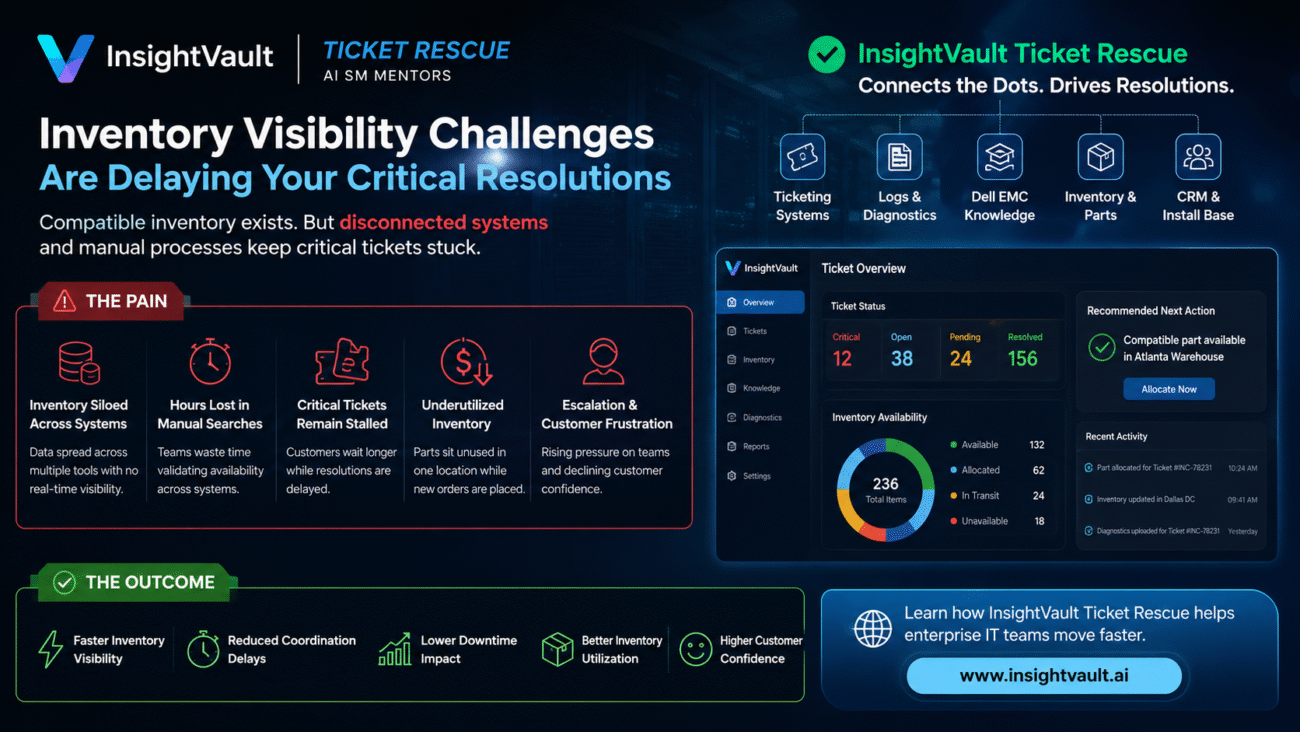
Support engineers often work across disconnected systems:
- ticketing platforms
- escalation queues
- diagnostics and logs
- Dell EMC knowledge procedures
- CRM records
- parts and inventory systems
- install-base data
Critical context gets buried across multiple tools and long ticket histories. Engineers spend valuable time reconstructing what already happened instead of advancing the case.
This slows down ticket progression and creates customer frustration.
Customers begin escalating more aggressively because they do not see momentum. Support leaders struggle to provide confident updates because operational visibility is incomplete. Sales and renewal teams inherit the consequences later when customers question whether the support organization can still compete operationally.
The problem is not lack of effort.
The problem is that traditional workflows were never designed to handle the speed, complexity, and communication expectations modern enterprise customers now demand.
Standard GPT tools can summarize ticket conversations. They can generate generic responses or shorten long threads.
But summaries alone do not move enterprise support operations forward.
They do not:
- identify operational blockers
- reduce repeated requests
- connect real-time ticket data
- surface next actions
- separate signal from noise
- improve accountability inside escalations
And they do not help support teams compete against vendors who are already resolving issues faster.
Solution
Enterprise support organizations need more than AI-generated summaries.
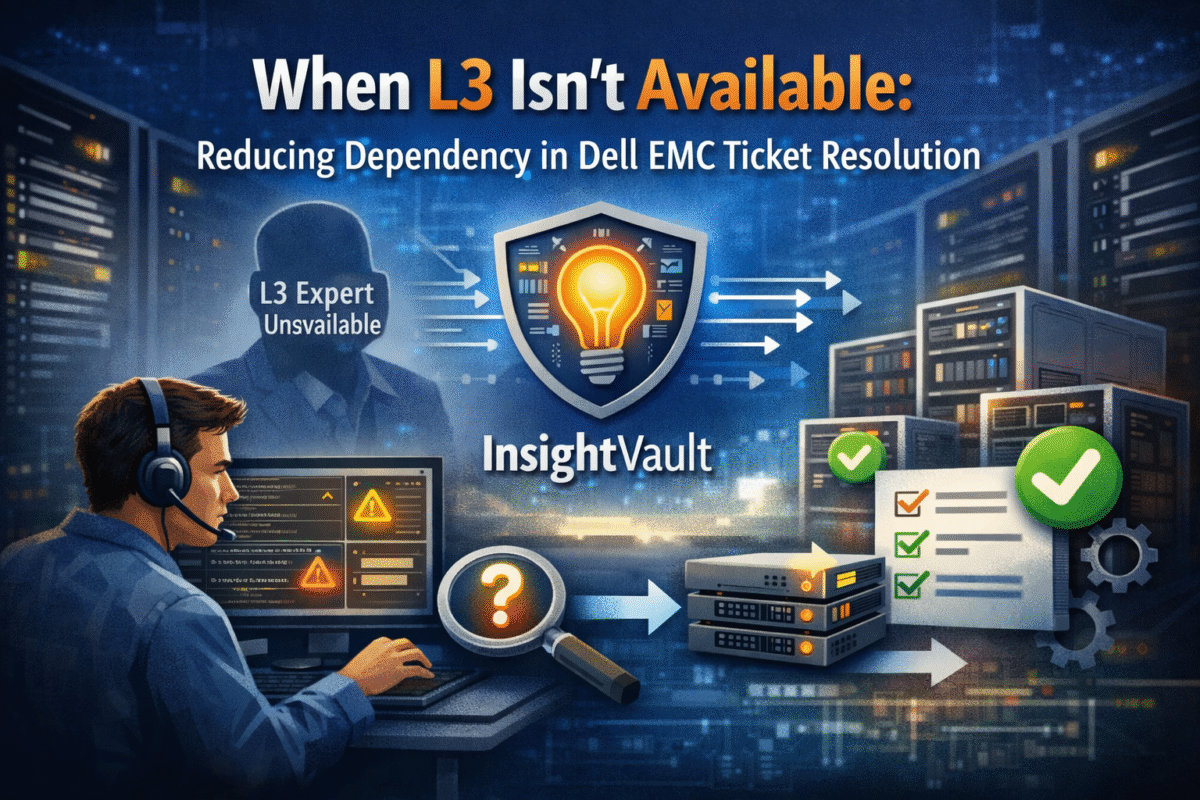
They need operational intelligence that actively helps teams move tickets forward.
InsightVault Ticket Rescue was built specifically for stalled Dell EMC support workflows where response speed, communication quality, and escalation management directly affect customer confidence and competitive positioning.
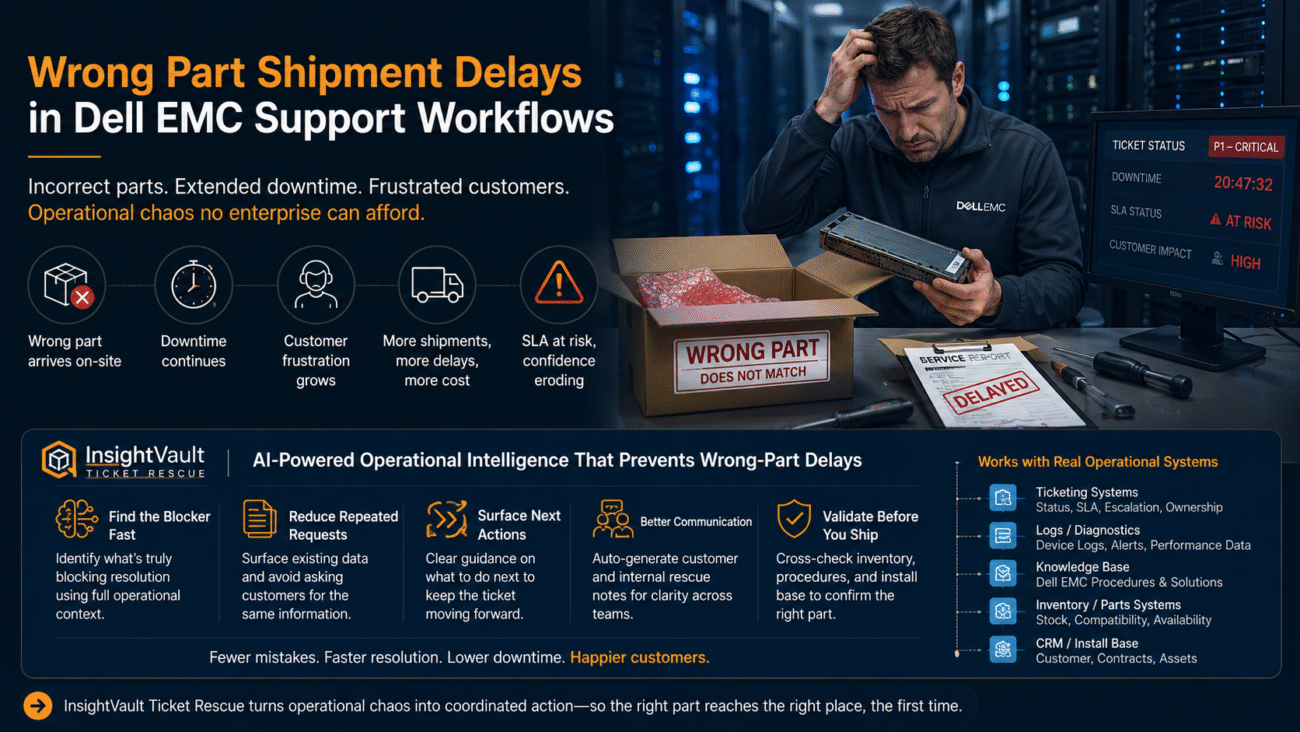
Instead of simply summarizing conversations, InsightVault helps support organizations:
- identify blockers faster
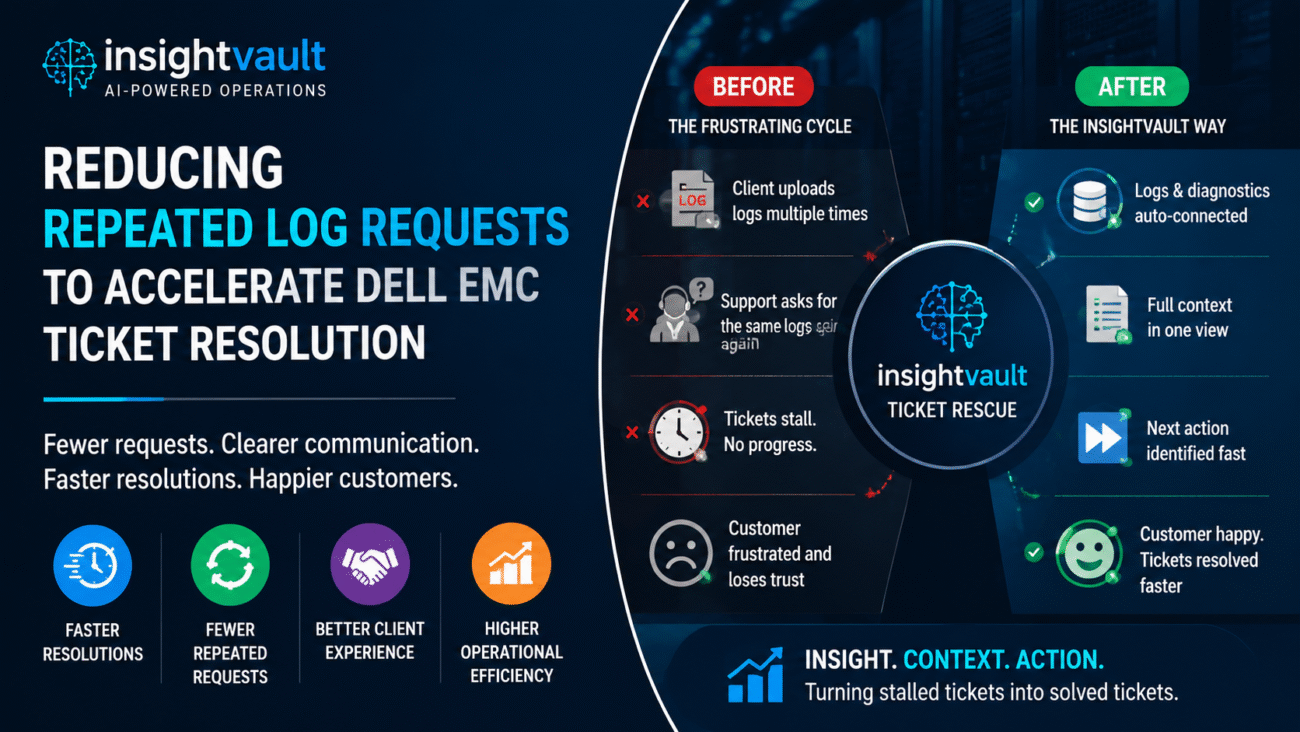
- reduce repeated log and data requests
- surface operational next actions
- generate clear customer-facing updates
- improve internal escalation communication
- accelerate ticket progression
The result is a more proactive support operation.
Customers receive clearer updates. Engineers spend less time reconstructing context. Escalations move faster because teams understand ownership, status, diagnostics, and missing actions earlier in the process.
Most importantly, support organizations stop appearing reactive.
That changes how customers perceive the entire vendor relationship.
Instead of hearing:
“We are still investigating.”
Customers begin hearing:
“We identified the blocker and here are the next steps.”
That difference has a direct impact on:
- customer trust
- renewal conversations
- support reputation
- competitive positioning
- operational confidence
In enterprise infrastructure support, speed without clarity creates chaos. Clarity without action creates frustration.
InsightVault focuses on both.
How It’s Done in InsightVault
Faster Blocker Identification
InsightVault Ticket Rescue continuously analyzes operational ticket context to identify why cases are stalled.
Instead of forcing engineers to manually reconstruct timelines across disconnected systems, the platform highlights:
- missing ownership
- unresolved escalations
- repeated requests
- stalled approvals
- diagnostic gaps
- unresolved dependencies
This allows teams to focus immediately on what is preventing progress.
Reducing Repeated Requests
One of the fastest ways to lose customer confidence is repeatedly asking for the same information.
InsightVault reduces communication fatigue by tracking submitted diagnostics, ticket history, escalation notes, and workflow activity in real time.
This prevents engineers from:
- requesting duplicate logs
- repeating troubleshooting steps
- restarting investigation cycles
- creating inconsistent customer updates
Customers experience a more coordinated support process instead of fragmented communication.
Next Actions That Move Tickets Forward
Traditional GPT systems summarize information.
InsightVault focuses on operational movement.
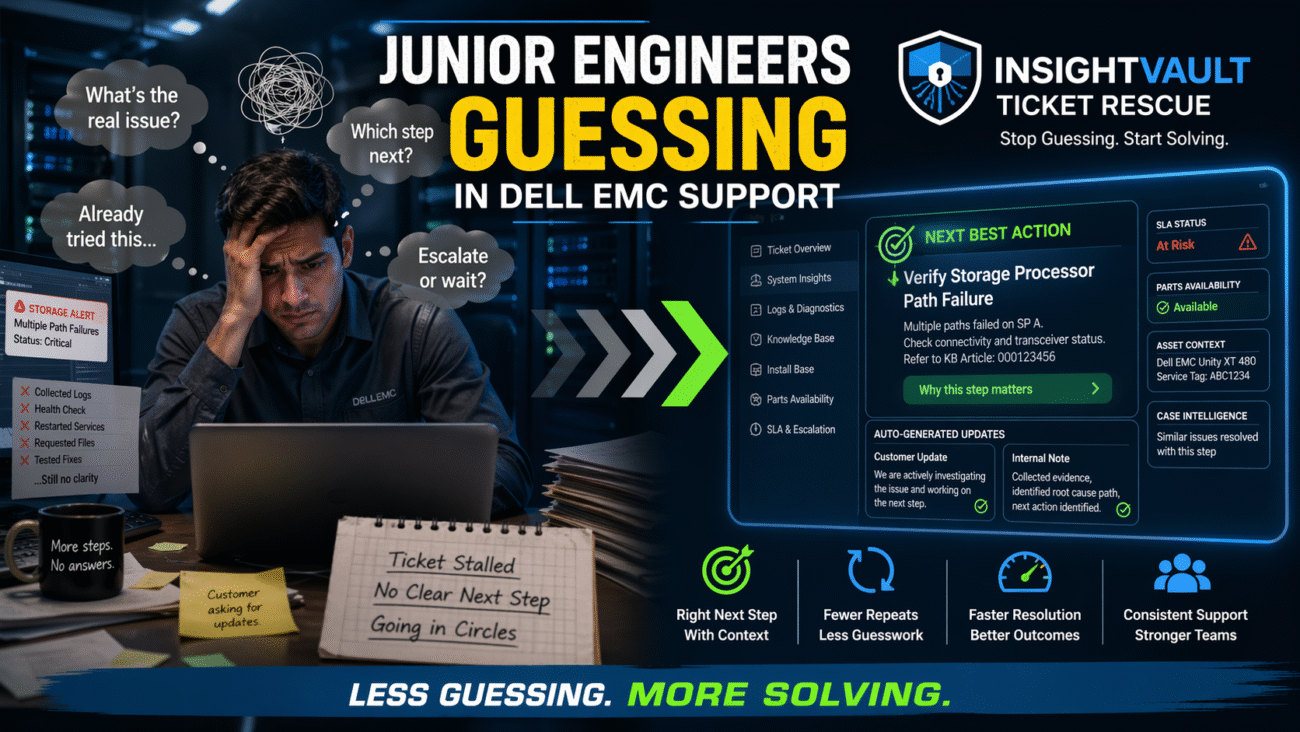
The platform surfaces actionable next steps based on:
- Dell EMC procedures
- escalation workflows
- diagnostics analysis
- inventory status
- SLA conditions
- ownership tracking
This helps engineers and managers decide what should happen next instead of simply reviewing what already happened.
That distinction is critical in high-pressure enterprise environments.
Customer-Facing and Internal Rescue Notes
Enterprise support teams often struggle with communication consistency during escalations.
InsightVault generates:
- customer-facing rescue notes
- internal operational notes
- escalation summaries
- accountability updates
This improves alignment between:
- support engineers
- account teams
- escalation managers
- operations leadership
Customers receive clearer updates with stronger accountability and more realistic expectations.
Real Operational Integrations
This is where InsightVault differs significantly from standard GPT tools.
A normal GPT works primarily from pasted conversations or uploaded text.
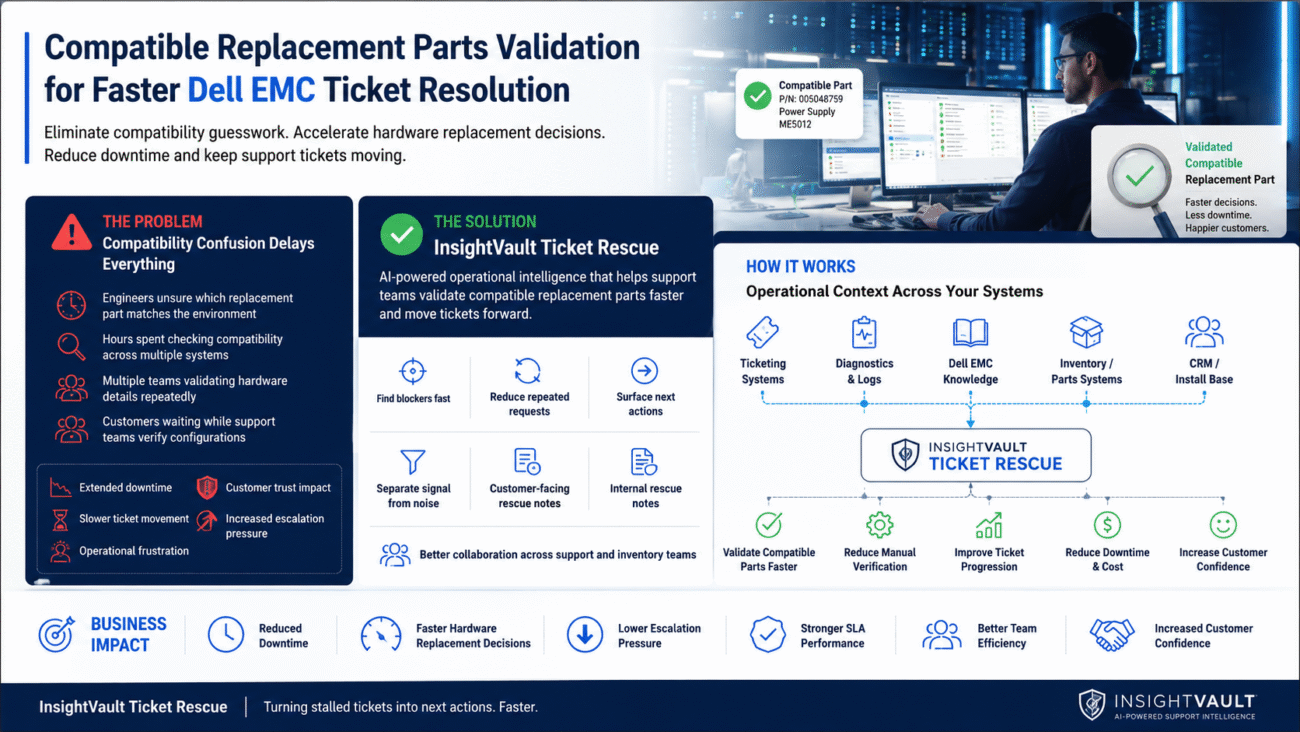
InsightVault Ticket Rescue works with live operational data.
The platform connects with:
- ticketing systems
- logs and diagnostics platforms
- Dell EMC knowledge workflows
- CRM systems
- inventory and parts systems
- install-base records
- SLA and escalation systems
This means support decisions are based on real-time operational context rather than isolated chat history.
That operational visibility helps teams:
- respond faster
- communicate better
- escalate smarter
- improve accountability
- compete more effectively
It also helps leadership identify workflow bottlenecks before customer frustration escalates further.
Why Competitive Response Time Now Impacts Revenue
Enterprise customers increasingly evaluate vendors based on operational responsiveness.
When support teams consistently:
- respond slowly
- repeat requests
- provide unclear updates
- fail to move tickets forward
customers begin exploring alternatives.
Competitors that resolve issues faster gain a major advantage in:
- renewals
- expansion opportunities
- service reputation
- customer retention
This is especially true in Dell EMC environments where downtime pressure affects production systems, financial operations, healthcare infrastructure, and enterprise applications.
Support responsiveness is no longer viewed as a back-office function.
It is now part of the customer experience itself.