Inventory Visibility Challenges in Enterprise IT: How Unused Parts Delay Critical Support Tickets

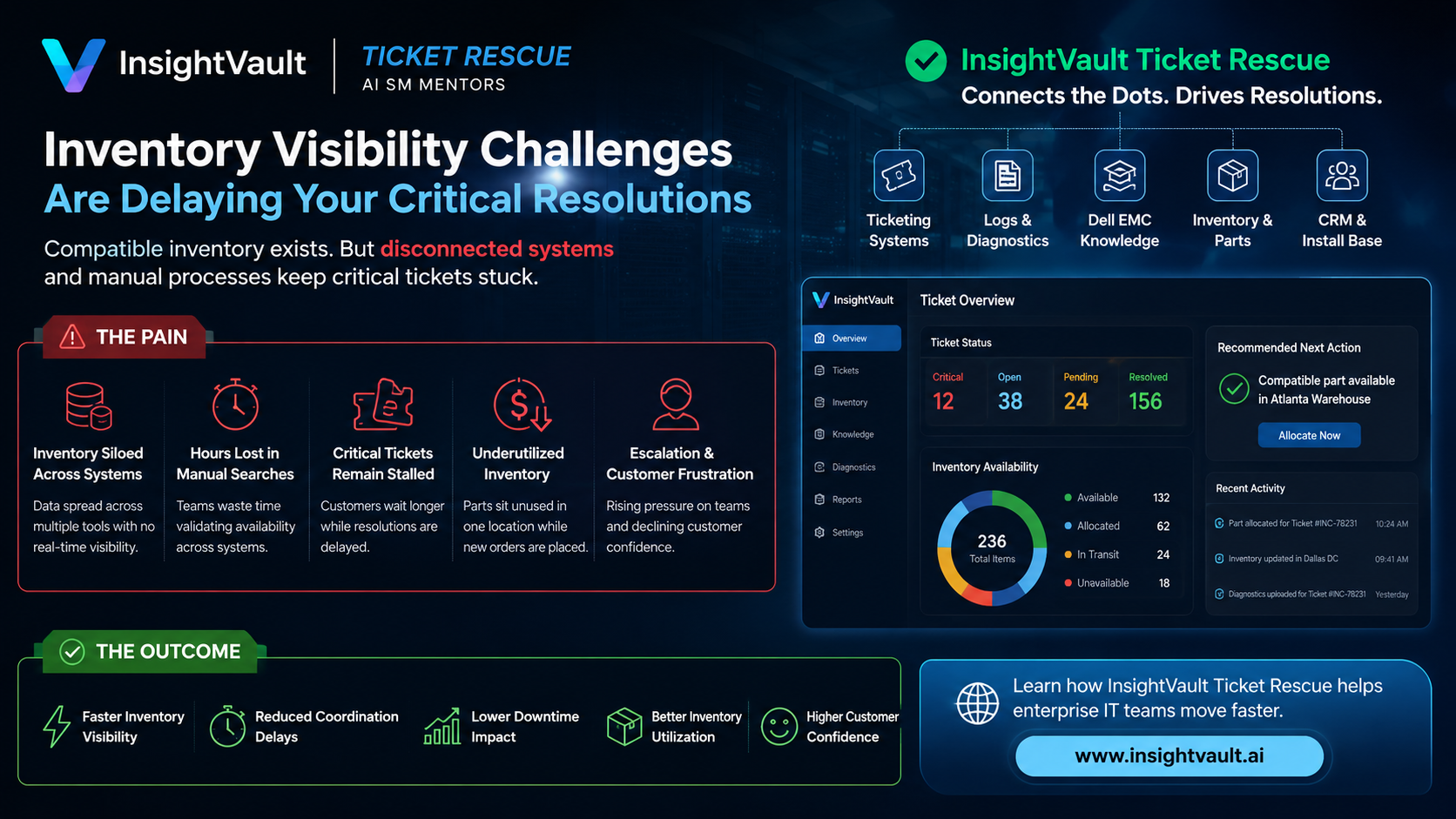
Inventory Visibility Challenges are one of the most overlooked causes of delays in enterprise IT support environments. Every day, support teams work urgent infrastructure incidents while compatible hardware already exists somewhere within the organization. The problem is not always a lack of inventory. The problem is knowing where it is, whether it is compatible, and how quickly it can be allocated.
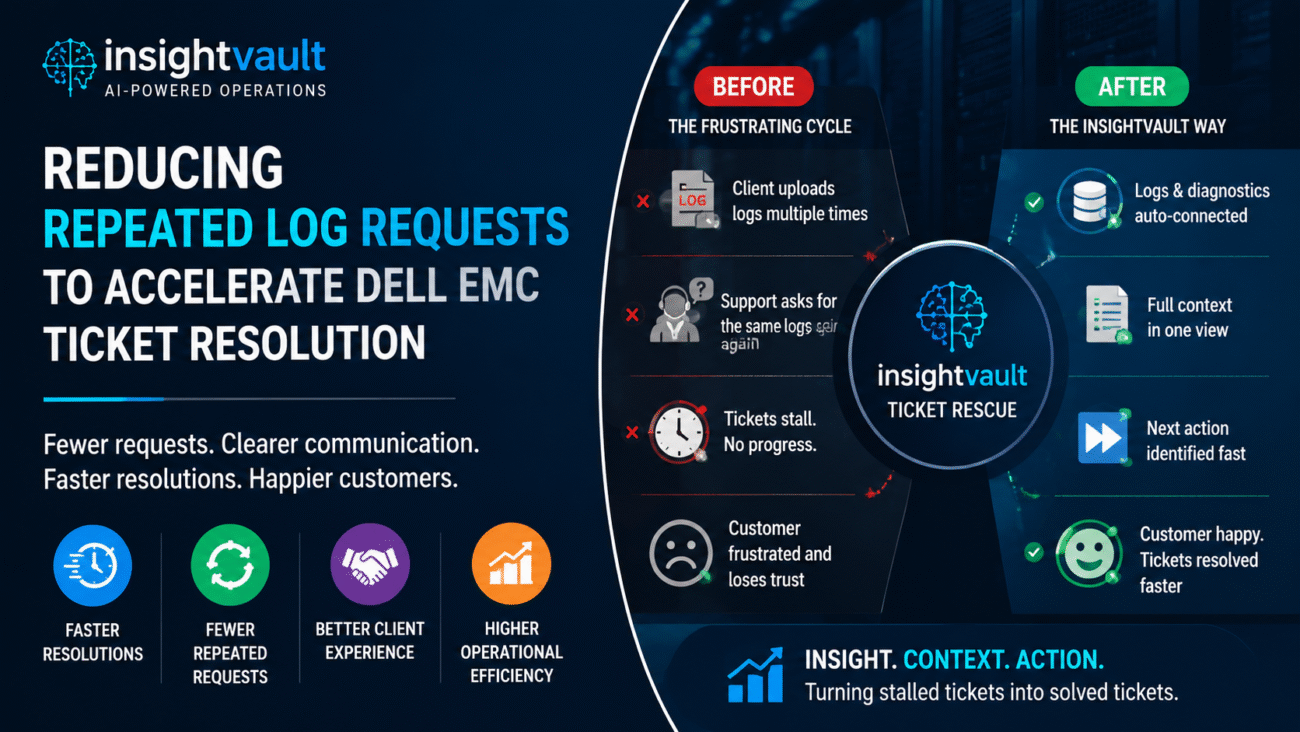
In large enterprise environments, inventory information often lives across multiple systems. Support teams check ticket records, inventory databases, logistics platforms, spreadsheets, install-base records, and vendor documentation just to determine whether a replacement part is available.
While this investigation is happening, critical support tickets remain open, customers continue waiting, and downtime costs continue increasing.
Challenge
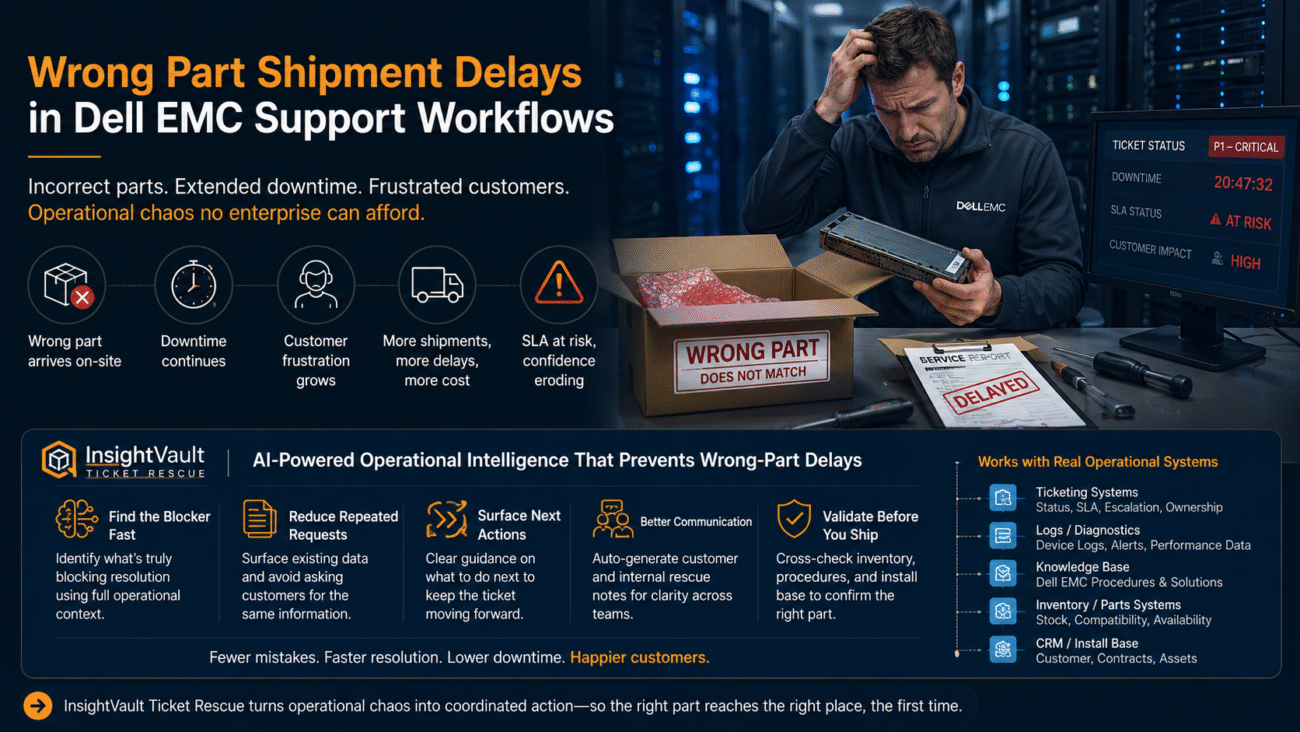
A critical Dell EMC storage issue has been escalated.
The customer’s production environment is experiencing performance degradation. Support engineers determine that a hardware replacement may be required. The customer expects rapid action.
The support team immediately begins searching for available inventory.
One system shows no stock.
Another system shows inventory in a regional warehouse.
A third system indicates compatible parts may be available at another customer return center.
Meanwhile, logistics teams are validating availability while support engineers continue investigating the ticket.
Hours pass.
Sometimes days.
Then someone discovers the required part was available all along.
The part simply wasn’t visible to the right people at the right time.
This scenario is common across enterprise IT operations.
Inventory may physically exist, but operationally it is unavailable because visibility is fragmented.
Support teams often perform manual validation across:
- Ticketing systems
- Asset management platforms
- Inventory databases
- Logistics applications
- Dell EMC compatibility documentation
- CRM systems
- Install-base records
Every handoff introduces delay.
Every disconnected system creates another opportunity for missed information.
The consequences are significant.
Customers experience longer outages.
Support organizations face escalating pressure.
Inventory investments remain underutilized.
Operations teams spend valuable time coordinating information instead of resolving incidents.
What makes this challenge particularly frustrating is that the organization already owns the resources needed to solve the problem.
The inventory exists.
The visibility does not.
Solution
Imagine a different workflow.
A critical Dell EMC support ticket arrives.
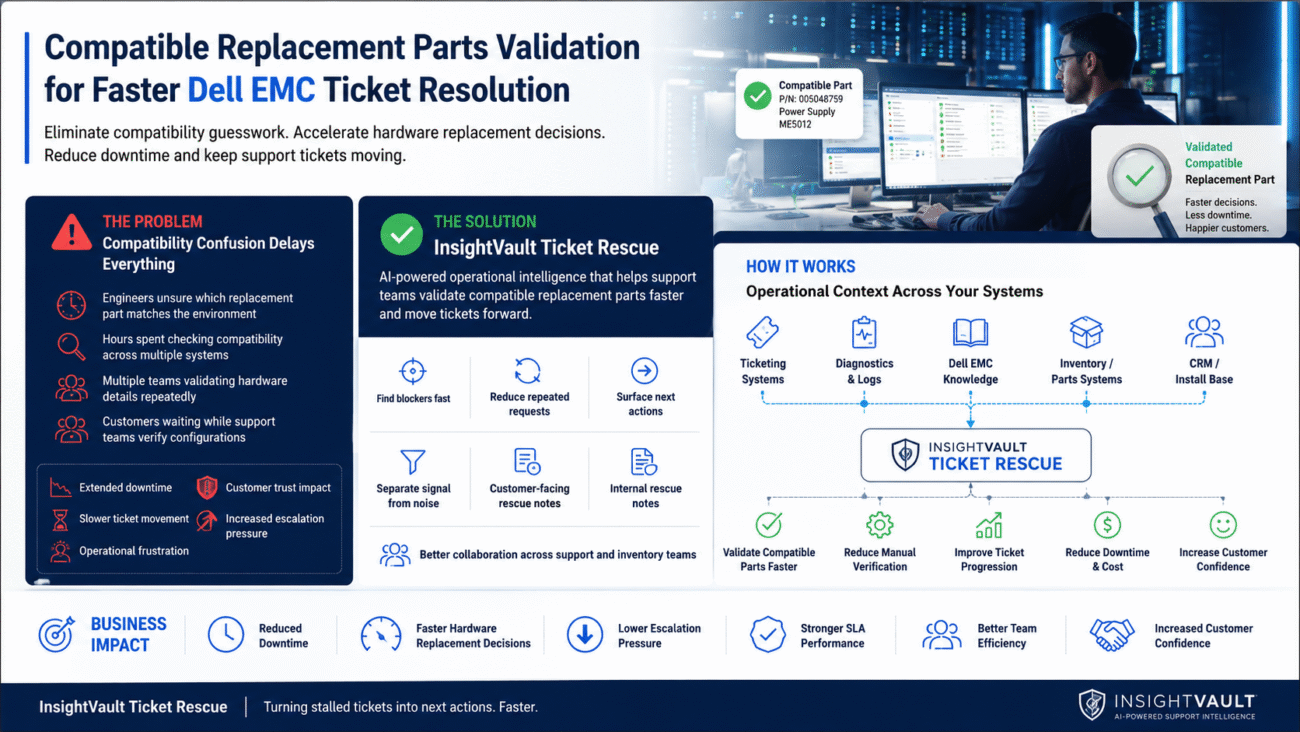
Instead of manually checking multiple systems, support teams immediately gain visibility into ticket history, installed assets, hardware compatibility requirements, and available inventory.
Potential replacement options are surfaced quickly.
Compatible inventory locations become visible.
Support teams can determine whether a part exists, where it is located, and what action should happen next.
Logistics teams receive clearer information.
Support engineers avoid unnecessary back-and-forth communication.
Customers receive faster updates.
Critical incidents move forward sooner.
The result is:
- Faster inventory visibility
- Reduced coordination delays
- Improved hardware allocation decisions
- Lower downtime impact
- Better inventory utilization
- Improved support efficiency
- Higher customer confidence
Organizations maximize the value of existing inventory investments while reducing unnecessary operational friction.
How It’s Done in InsightVault
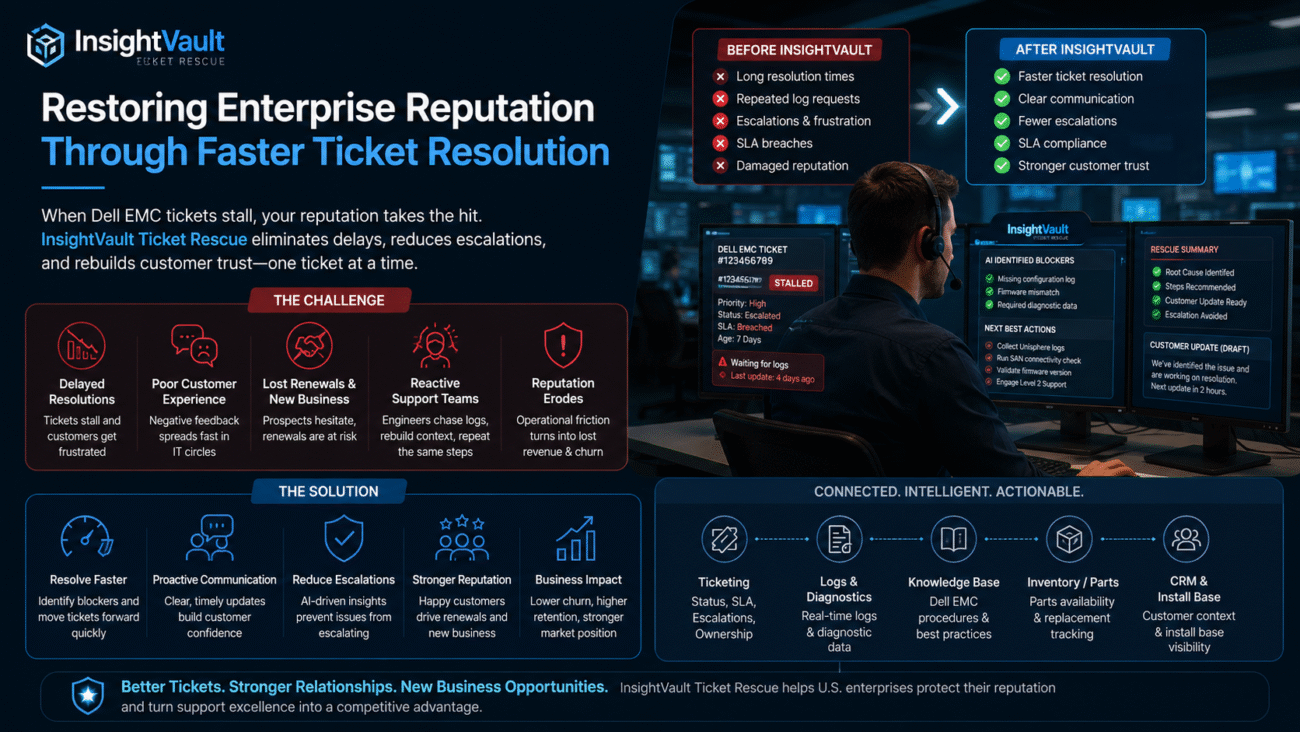
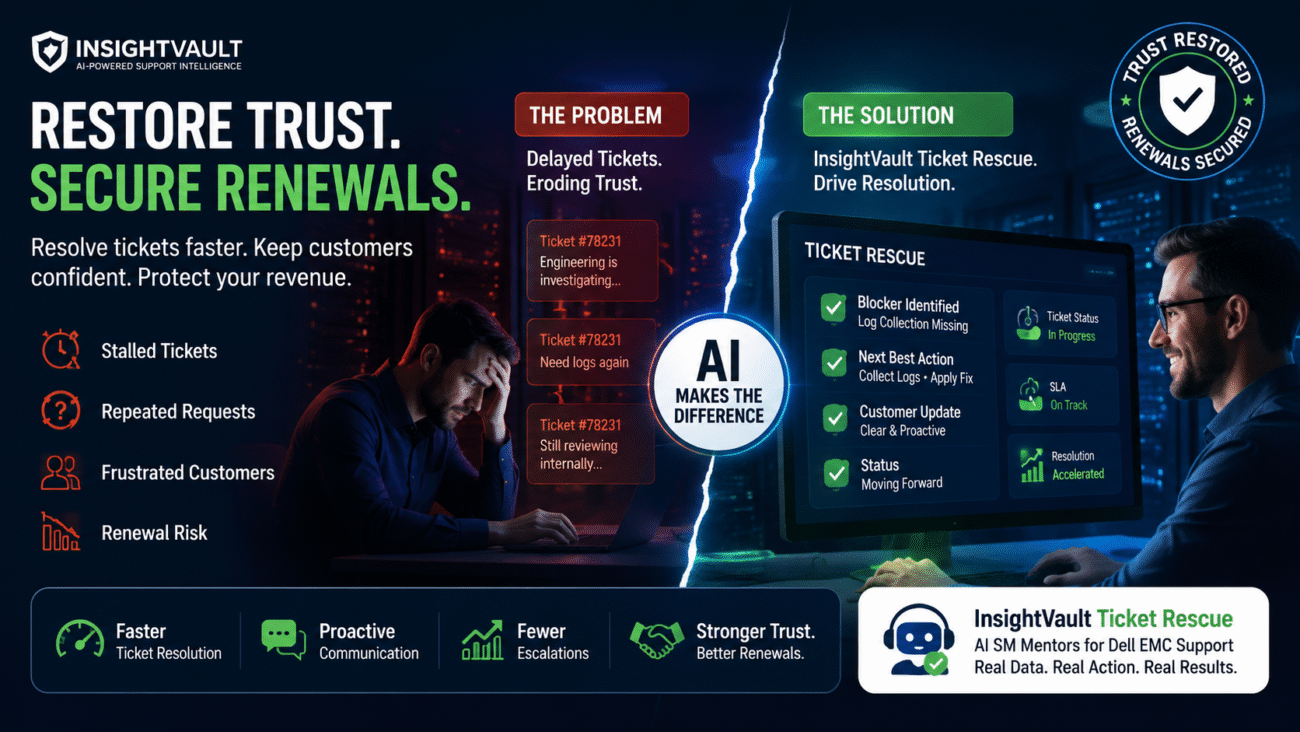
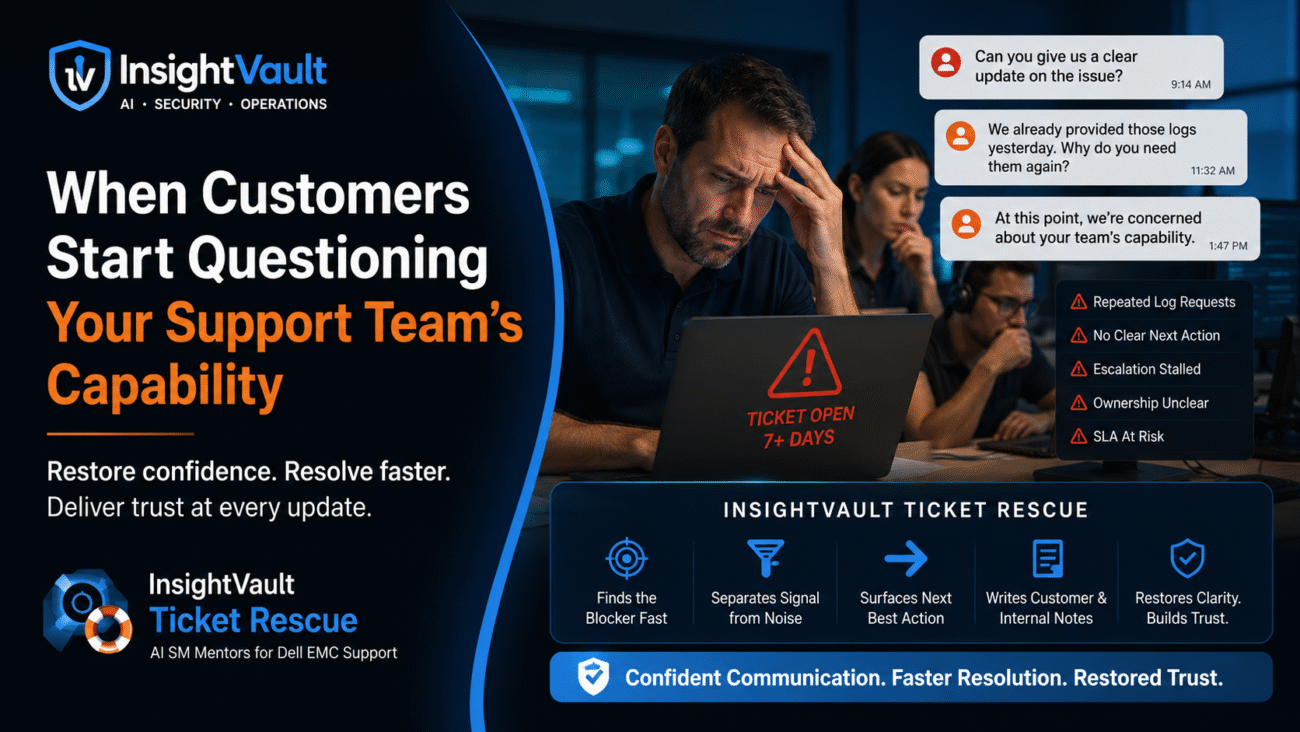
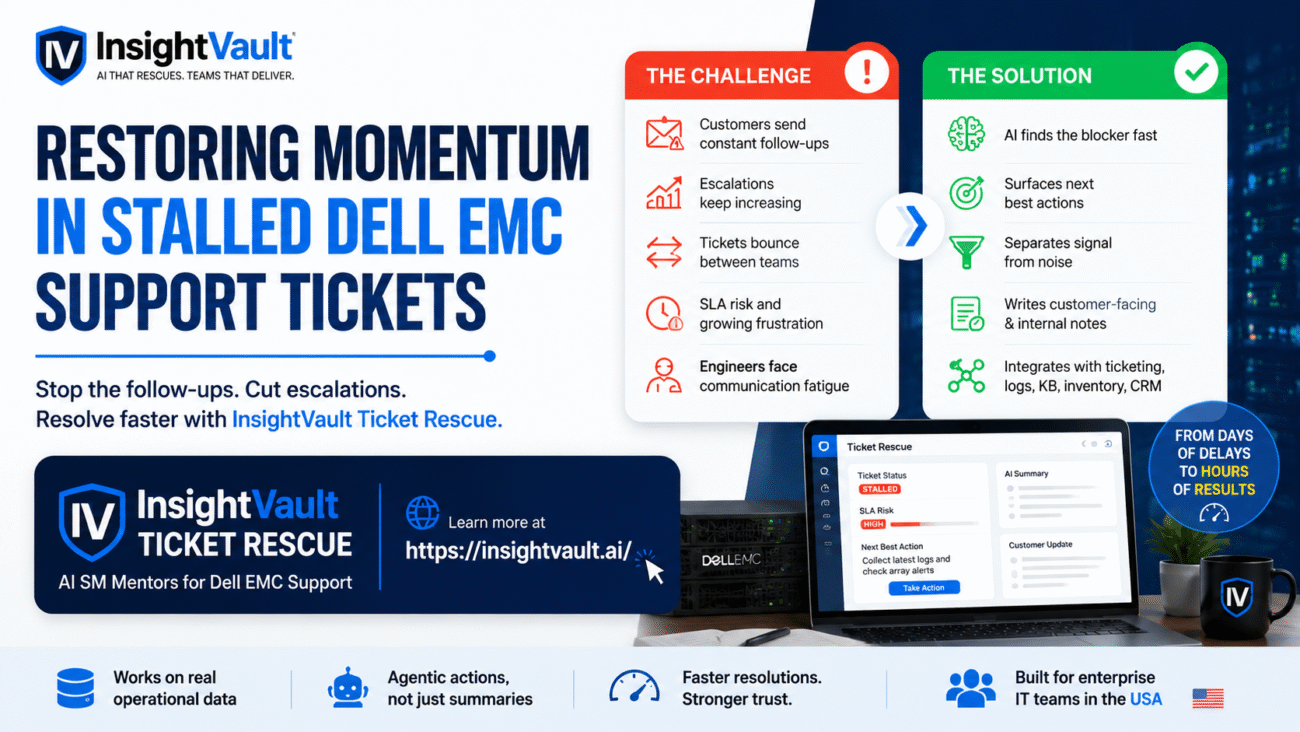
InsightVault Ticket Rescue is designed specifically for operational support environments where critical tickets become stalled because information is scattered across multiple systems.
Unlike a standard GPT tool, InsightVault is not focused on simply summarizing conversations.
A normal GPT can summarize a support ticket.
It can explain what happened.
It can rewrite notes.
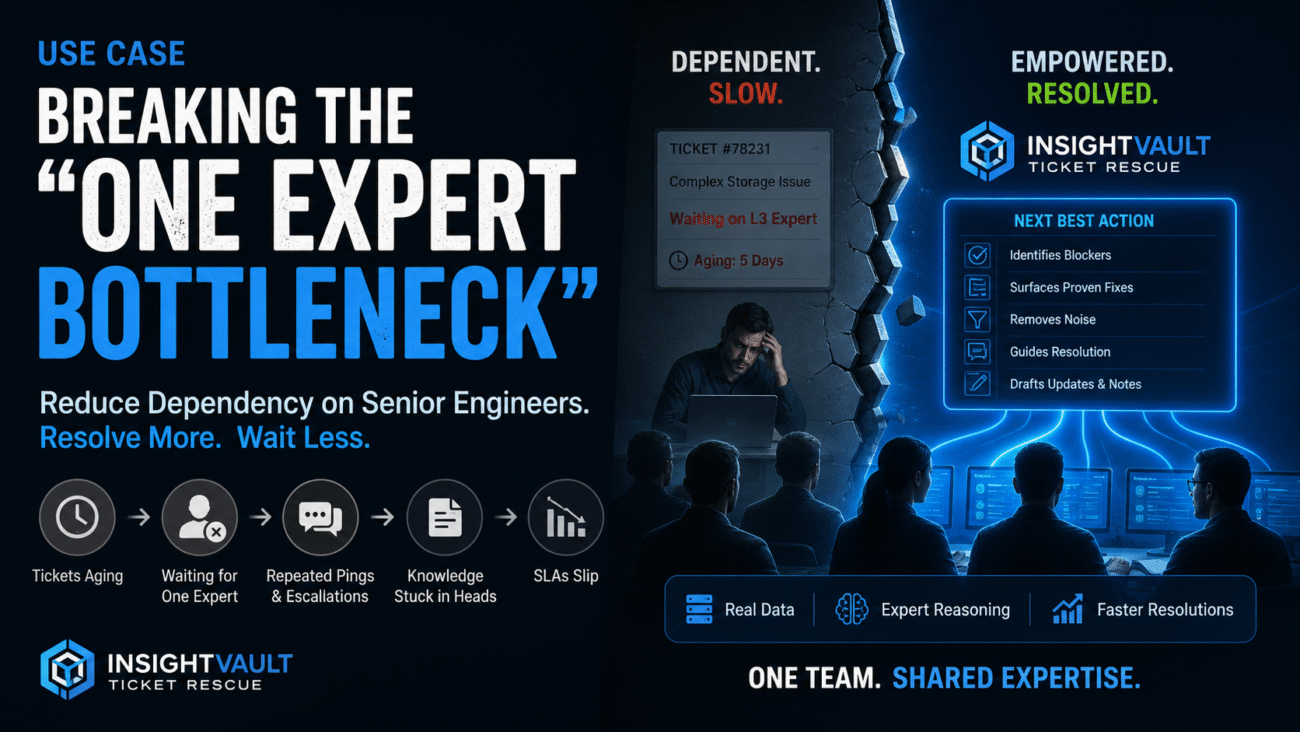
But it cannot independently understand operational dependencies across support workflows.
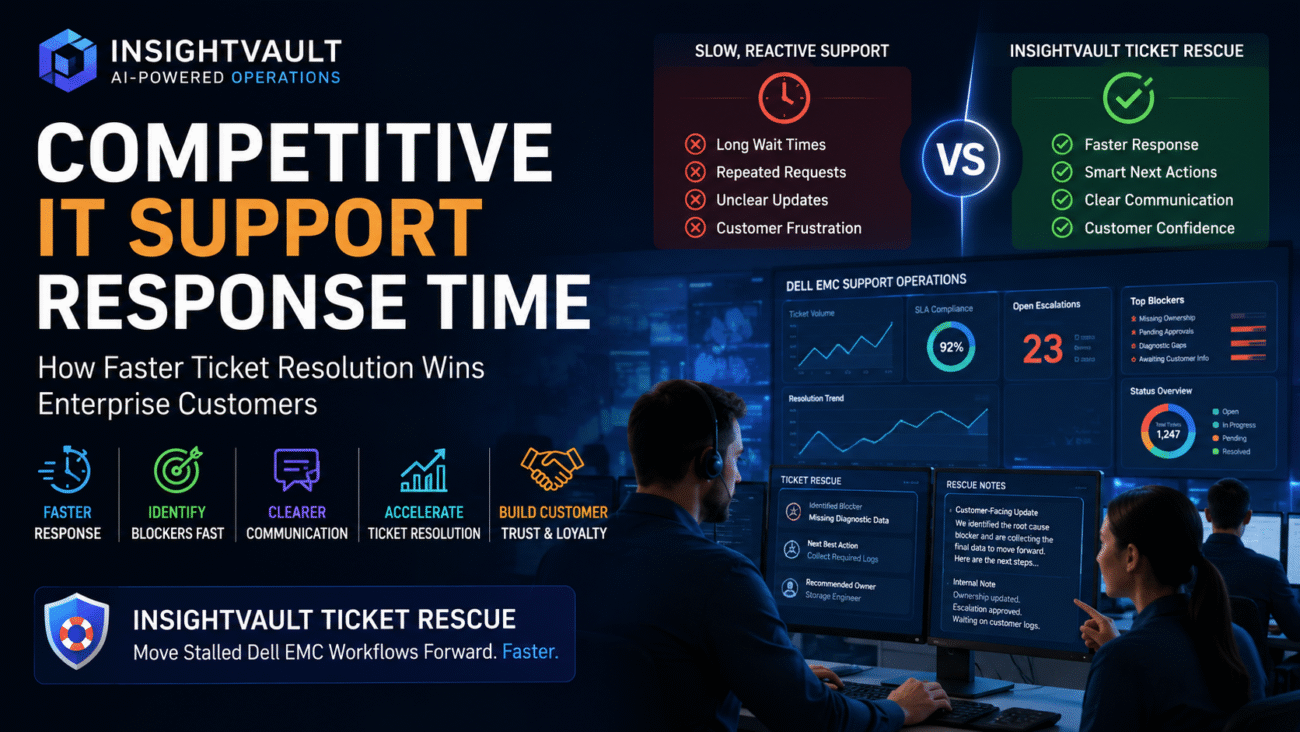
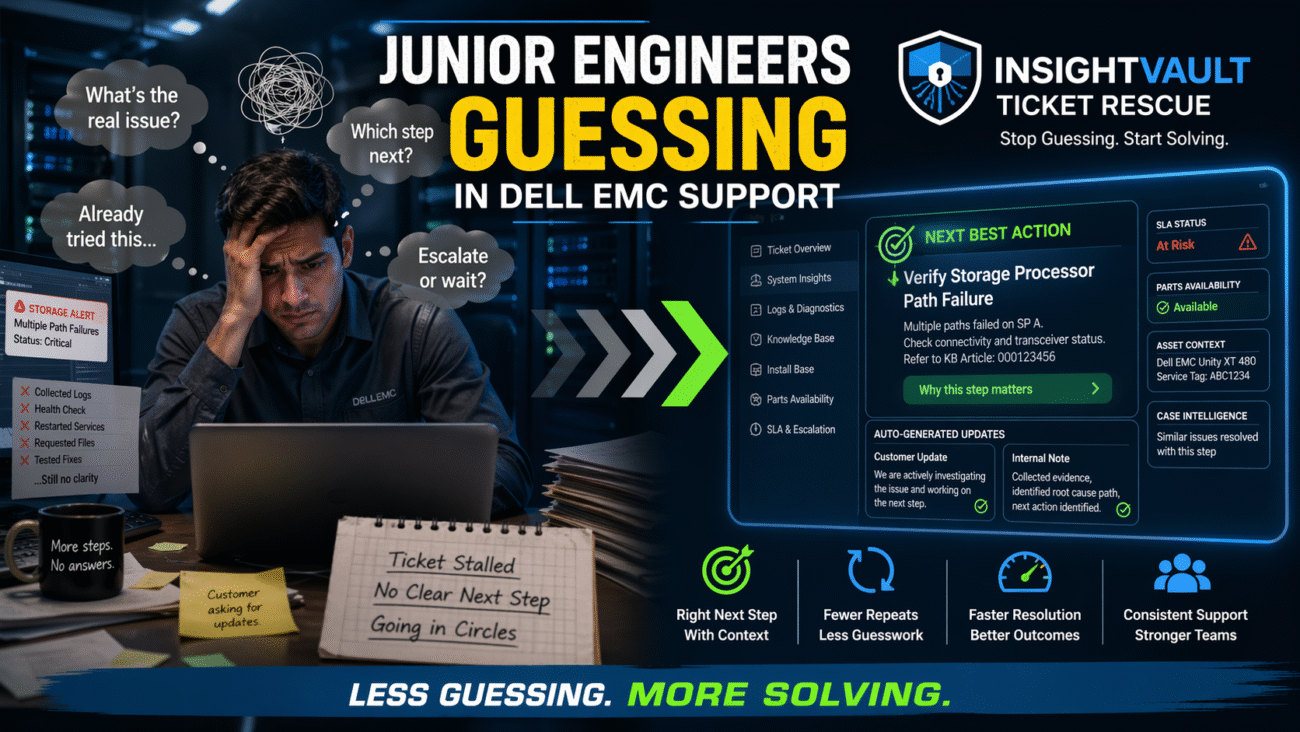
InsightVault Ticket Rescue focuses on action.
It helps teams:
✔ Find blockers faster
✔ Reduce repeated requests
✔ Separate signal from noise
✔ Surface next actions
✔ Generate customer-facing rescue notes
✔ Generate internal operational rescue notes
✔ Move stalled Dell EMC support workflows forward
Operational Intelligence Instead of Conversation Summaries
The key difference is operational context.
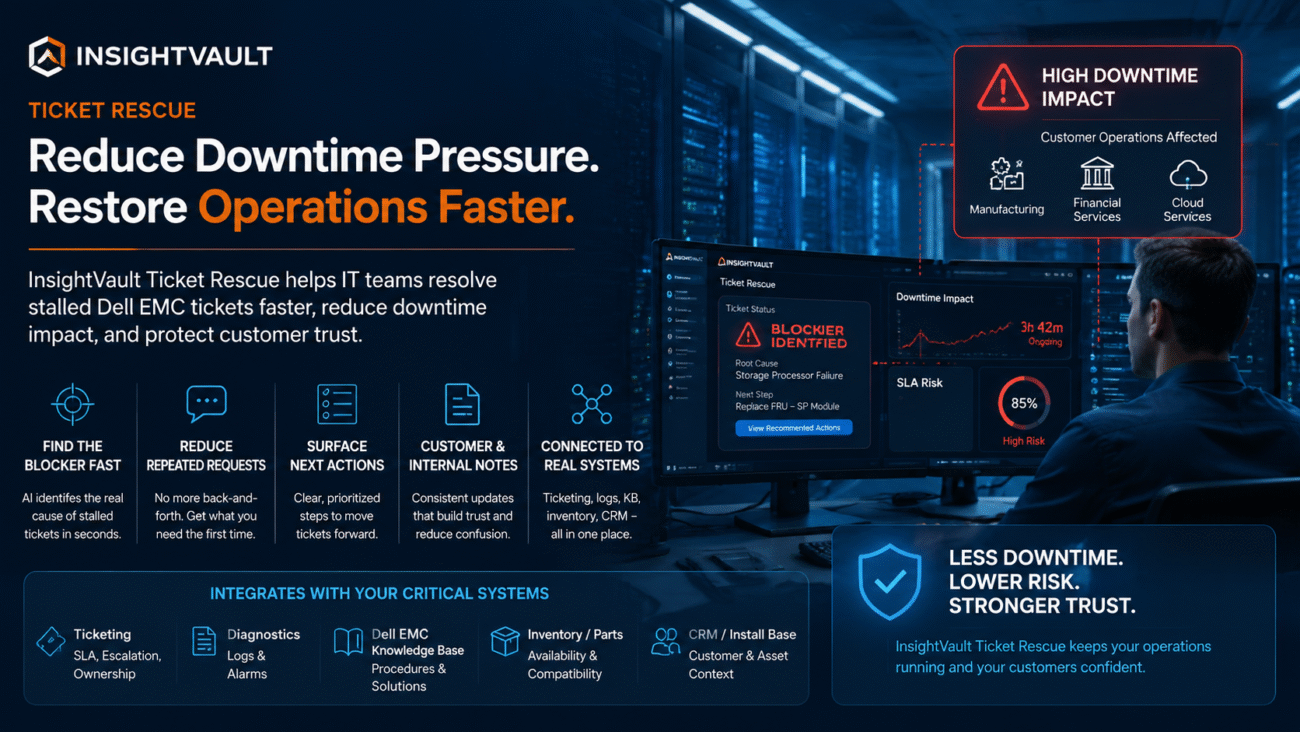
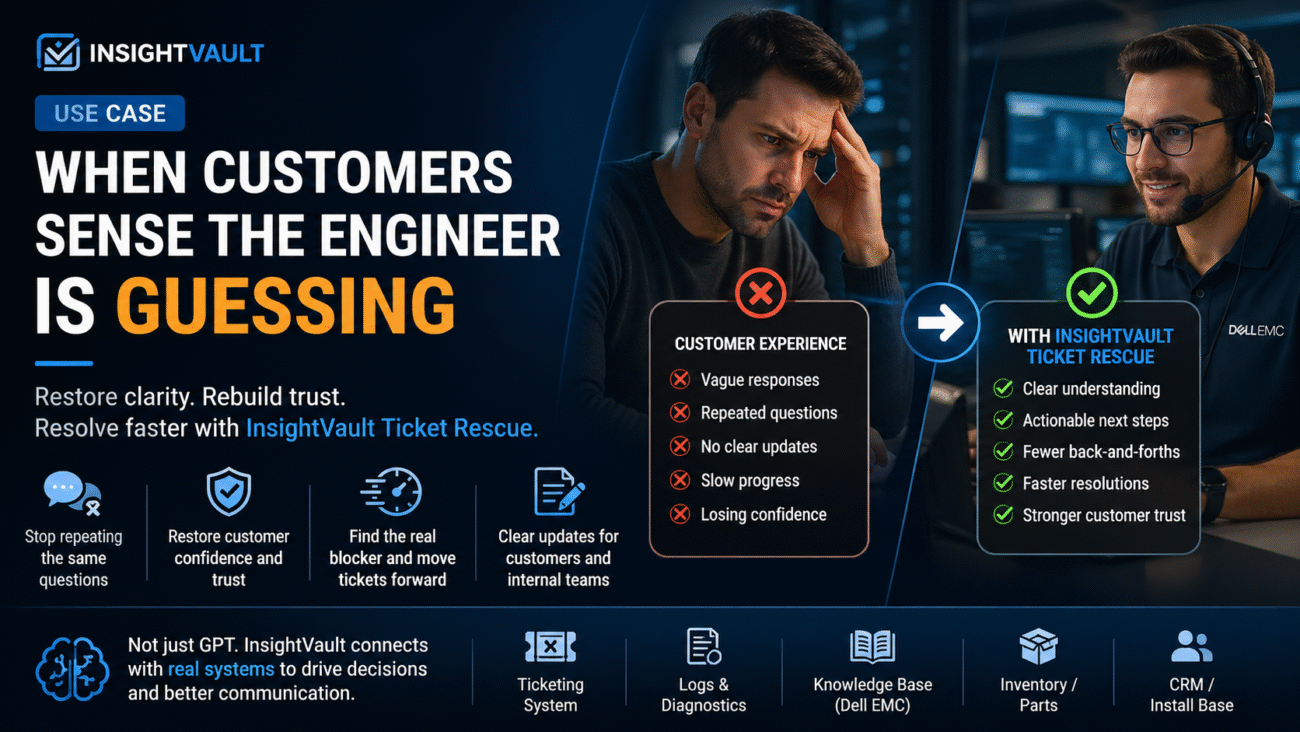
InsightVault connects directly with operational systems, including:
Ticketing Systems
Provides visibility into:
- Ticket status
- Escalation history
- SLA commitments
- Ownership records
- Support activity
Logs and Diagnostics
Analyzes:
- Error patterns
- Diagnostic outputs
- System events
- Technical indicators
Dell EMC Knowledge Sources
Accesses:
- Procedures
- Support workflows
- Hardware guidance
- Resolution paths
Inventory and Parts Systems
Provides visibility into:
- Available inventory
- Compatible hardware
- Allocation status
- Warehouse availability
- Parts utilization
CRM and Install Base Data
Provides context around:
- Customer environments
- Installed equipment
- Service history
- Support entitlements
Because InsightVault works on real operational data rather than pasted chat conversations, it can help teams identify available inventory faster and reduce delays caused by disconnected systems.
Improving Coordination Between Support and Logistics
One of the largest sources of delay in enterprise support operations is coordination.
Support teams need inventory information.
Inventory teams need ticket context.
Logistics teams need compatibility validation.
Customers need updates.
Each team often works inside a different system.
InsightVault helps bridge these gaps.
By bringing together ticket data, inventory visibility, install-base information, diagnostics, and operational procedures, teams gain a more complete understanding of what is happening and what should happen next.
This reduces:
- Unnecessary escalations
- Duplicate investigations
- Repeated status requests
- Inventory allocation delays
- Customer frustration
Most importantly, it helps organizations use inventory that already exists before spending additional money sourcing new parts.
Business Impact
When inventory visibility improves:
Support Teams
- Resolve tickets faster
- Spend less time coordinating
- Improve SLA performance
Logistics Teams
- Allocate inventory more effectively
- Reduce unnecessary shipments
- Improve utilization rates
Customers
- Experience shorter outages
- Receive clearer communication
- Gain confidence in support teams
Leadership
- Improves operational efficiency
- Maximizes inventory investments
- Reduces downtime costs
Inventory is expensive.
Downtime is expensive.
Disconnected operational visibility makes both problems worse.
The organizations that connect support intelligence with inventory intelligence gain a measurable operational advantage.