Wrong Part Shipment Delays in Dell EMC Support Workflows

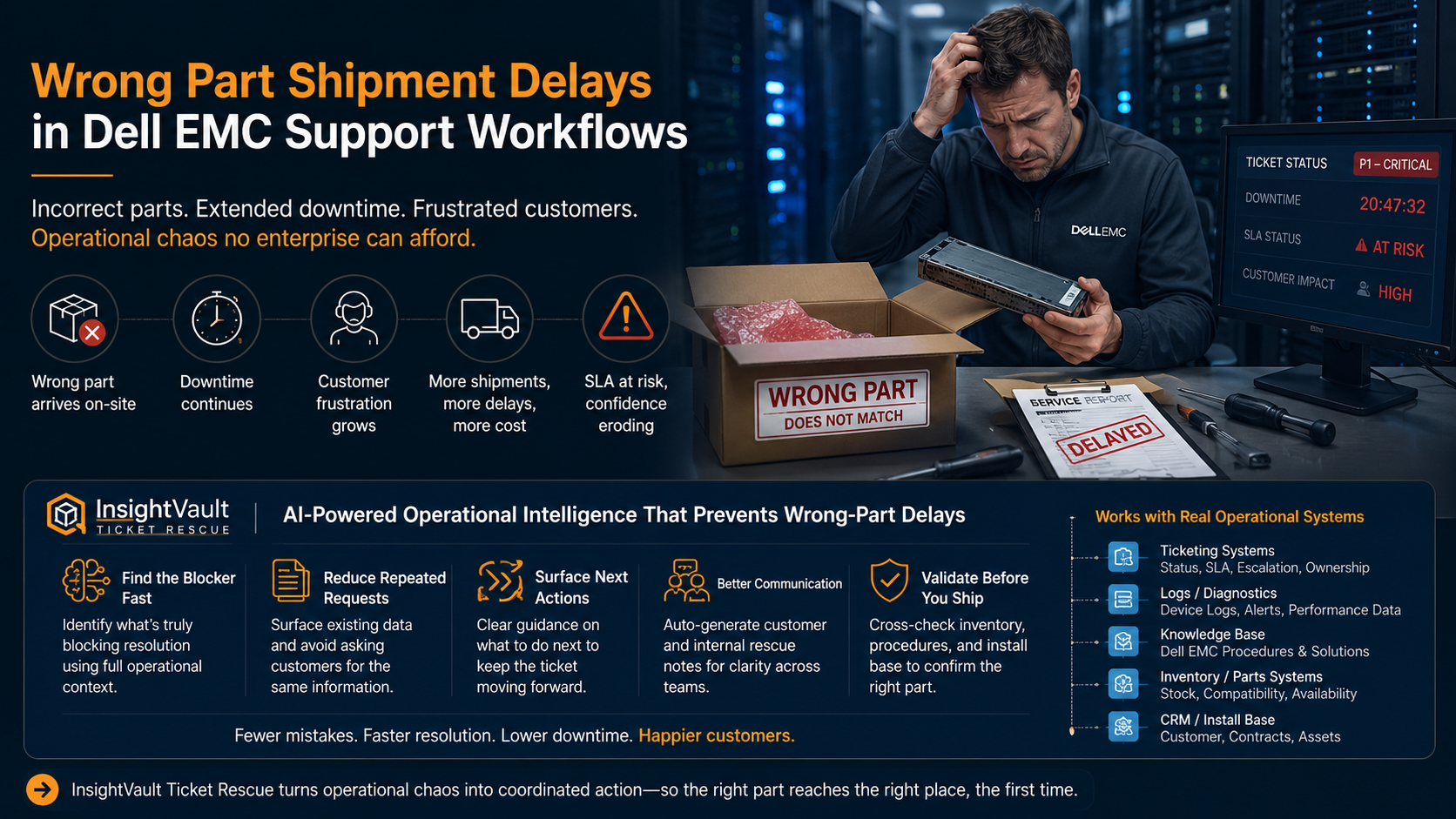
Wrong part shipment delays are one of the most frustrating operational failures inside enterprise storage support environments. A replacement part gets approved, shipped overnight, and arrives at the customer site — only for the engineer to discover it does not match the actual hardware issue. The outage continues. Escalations increase. Customers lose confidence. Meanwhile, support teams scramble between diagnostics, ticket updates, inventory systems, and logistics coordination trying to correct the mistake before SLA windows collapse.
In large U.S. enterprise environments running Dell EMC infrastructure, this happens more often than many teams admit. The issue usually is not effort. It is fragmented operational visibility and rushed troubleshooting under downtime pressure.
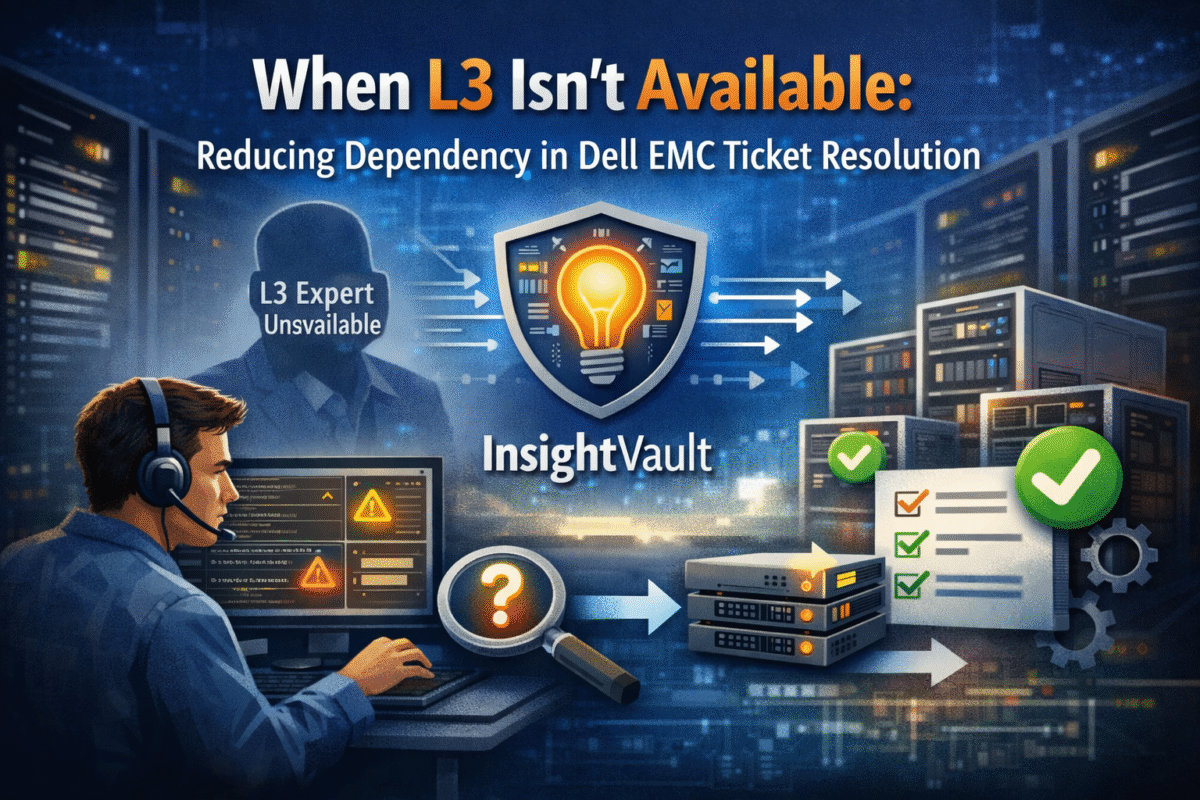
InsightVault Ticket Rescue helps enterprise support organizations reduce wrong-part shipment delays by identifying blockers faster, validating replacement actions earlier, and improving coordination between support, inventory, and logistics teams.
Challenge: Wrong Parts Arrive While Downtime Continues
A critical Dell EMC storage system fails during business hours.
Applications slow down. Virtual machines disconnect. Internal escalation bridges open immediately. The support ticket becomes high priority within minutes.
The support engineer begins troubleshooting while multiple teams request updates simultaneously. Logs are uploaded. Diagnostics are reviewed. Inventory data is checked. Different engineers join the case. Escalation pressure rises quickly.
Then the replacement decision gets made too early.
A hardware component is identified as the suspected cause. Logistics teams move fast. A replacement part ships overnight to the customer location.
But when the field engineer arrives onsite, the problem becomes obvious.
The shipped component does not match the actual failed part.
Sometimes the issue was misdiagnosed. Sometimes inventory records were outdated. Sometimes multiple symptoms created confusion inside the ticket history. Sometimes escalation notes were incomplete and critical diagnostic details were buried across emails, attachments, and CRM updates.
Now the customer waits again.
Another shipment must be approved. Another coordination cycle begins. Another downtime window expands unnecessarily.
This is where operational frustration becomes visible.
Support engineers become defensive because they are under pressure to restore service fast. Logistics teams blame incomplete information. Customers stop trusting status updates because timelines continue changing. Leadership starts questioning why the ticket is still unresolved despite multiple escalations.
The business impact becomes severe:
- Downtime continues longer than necessary
- SLA risk increases
- Engineers waste hours repeating validation steps
- Overnight shipping costs increase
- Customers lose confidence in support quality
- Escalation pressure spreads across multiple teams
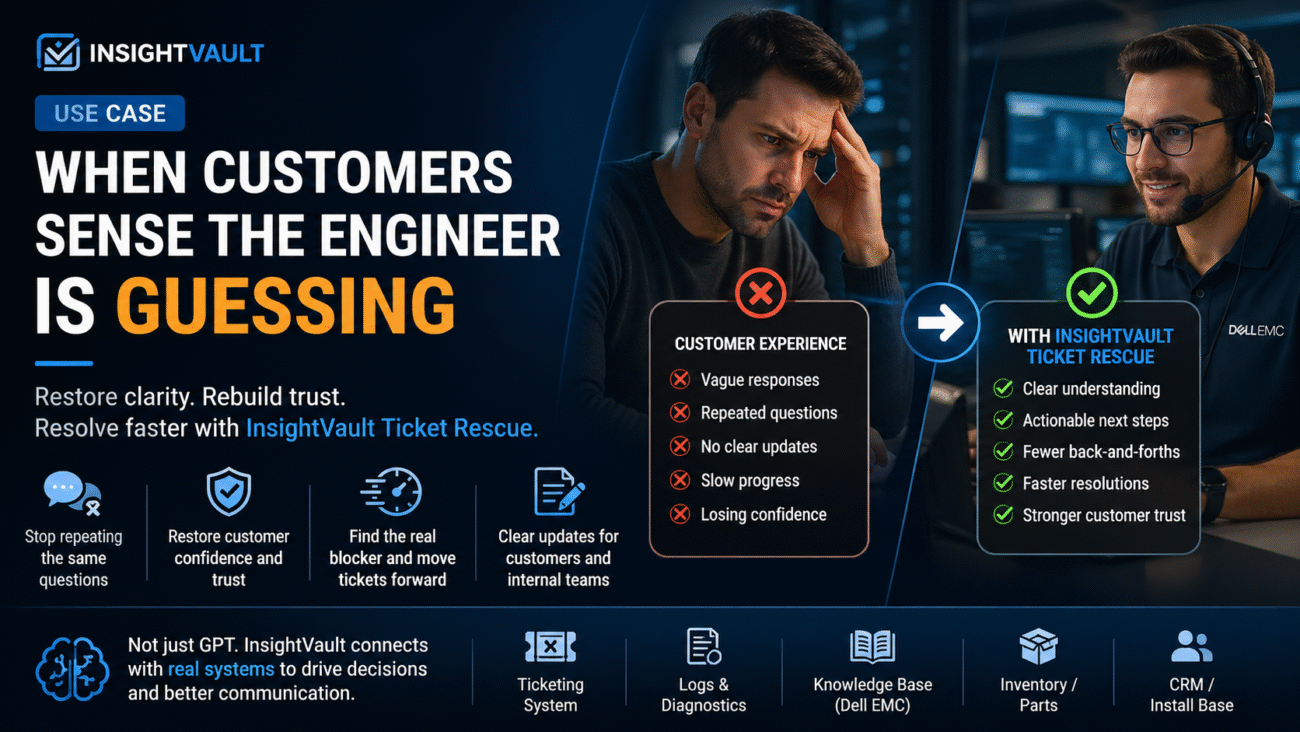
Most importantly, the customer starts believing the support organization no longer understands their environment.
That is difficult to recover from.
According to Dell Technologies infrastructure guidance, operational visibility and validated hardware lifecycle processes are critical for reducing enterprise downtime risks.
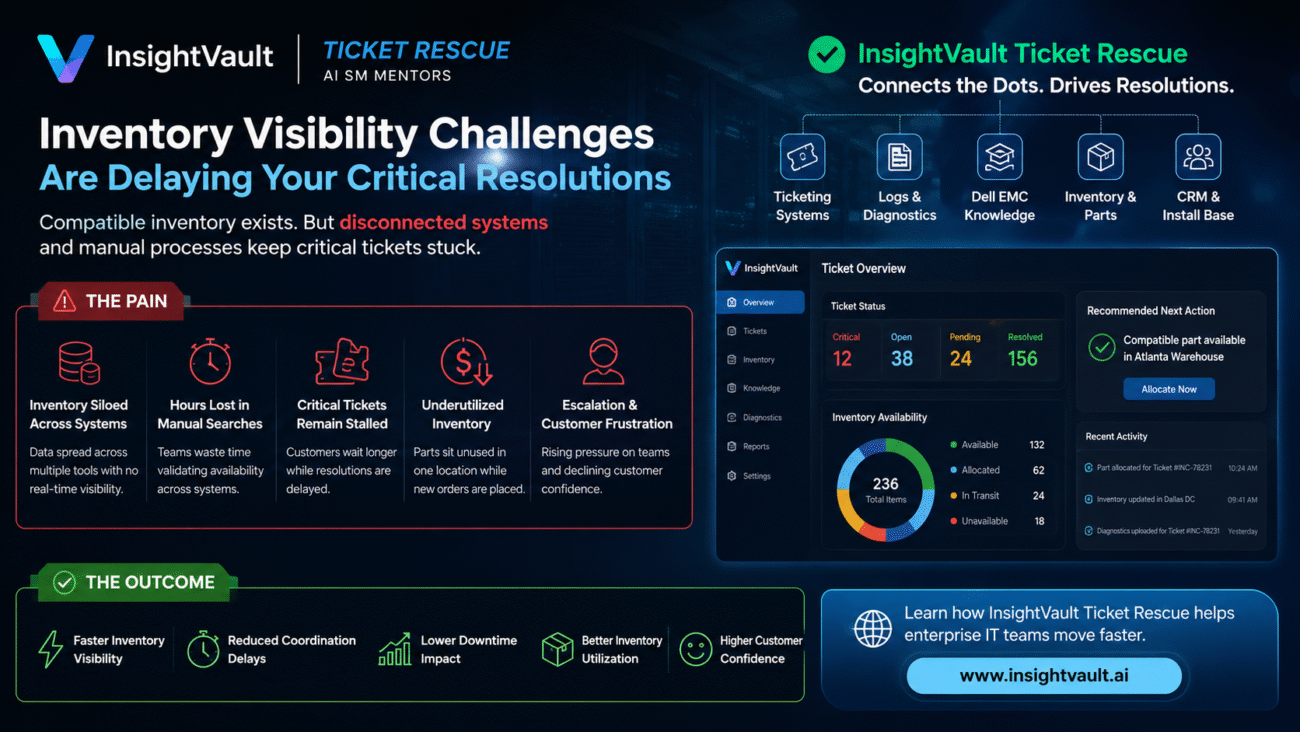
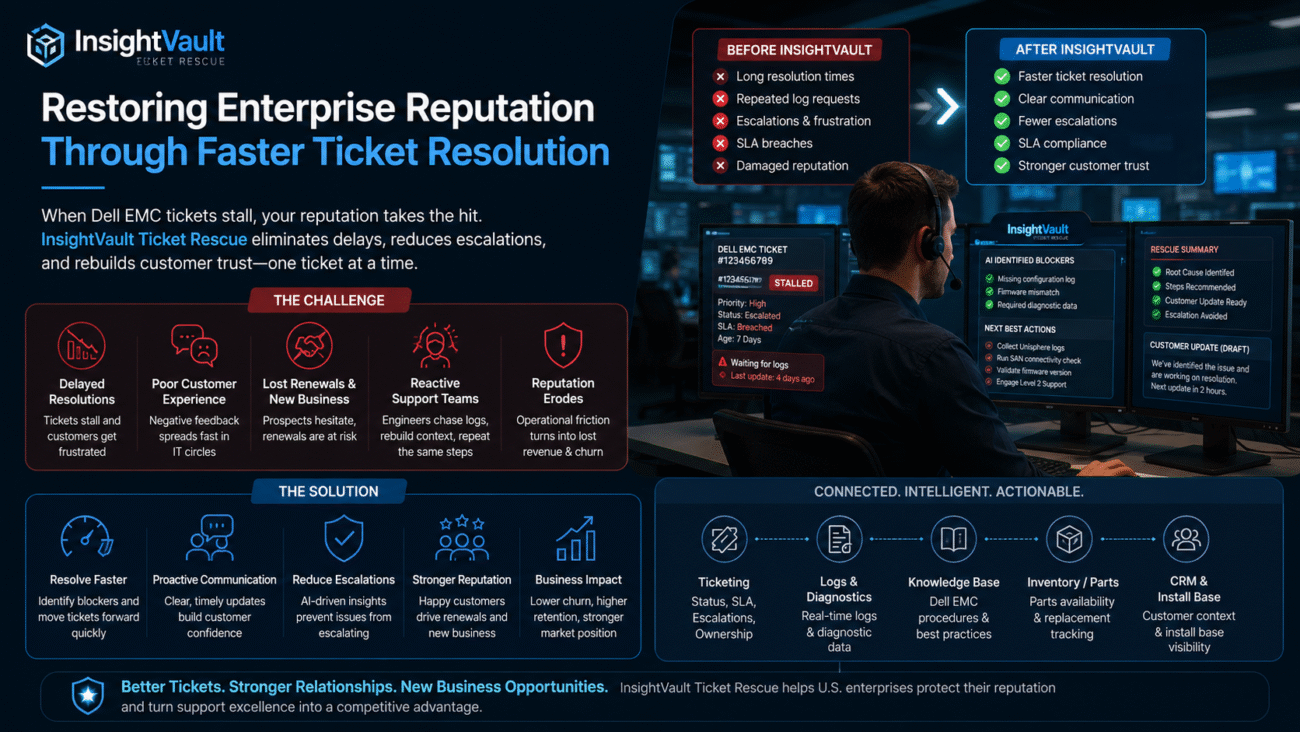
Traditional workflows struggle because operational data lives everywhere:
- ticketing systems
- diagnostics tools
- inventory databases
- CRM systems
- escalation emails
- Dell EMC procedures
- install-base records
Support teams spend more time rebuilding context than driving resolution movement.
Standard GPT tools can summarize the ticket conversation.
But summaries alone do not prevent wrong-part shipment delays.
Solution: Faster Validation Before Hardware Ships
The ideal support workflow is not simply “faster troubleshooting.”
It is accurate operational coordination before replacement actions begin.
Enterprise support teams need systems that:
- identify blockers early
- validate replacement logic before shipment
- reduce repeated requests
- connect operational systems together
- improve communication between engineering and logistics
- surface next actions clearly under pressure
This is where InsightVault Ticket Rescue changes the workflow.
Instead of only summarizing conversations, InsightVault focuses on stalled Dell EMC support operations where resolution movement has slowed down or confusion is increasing.
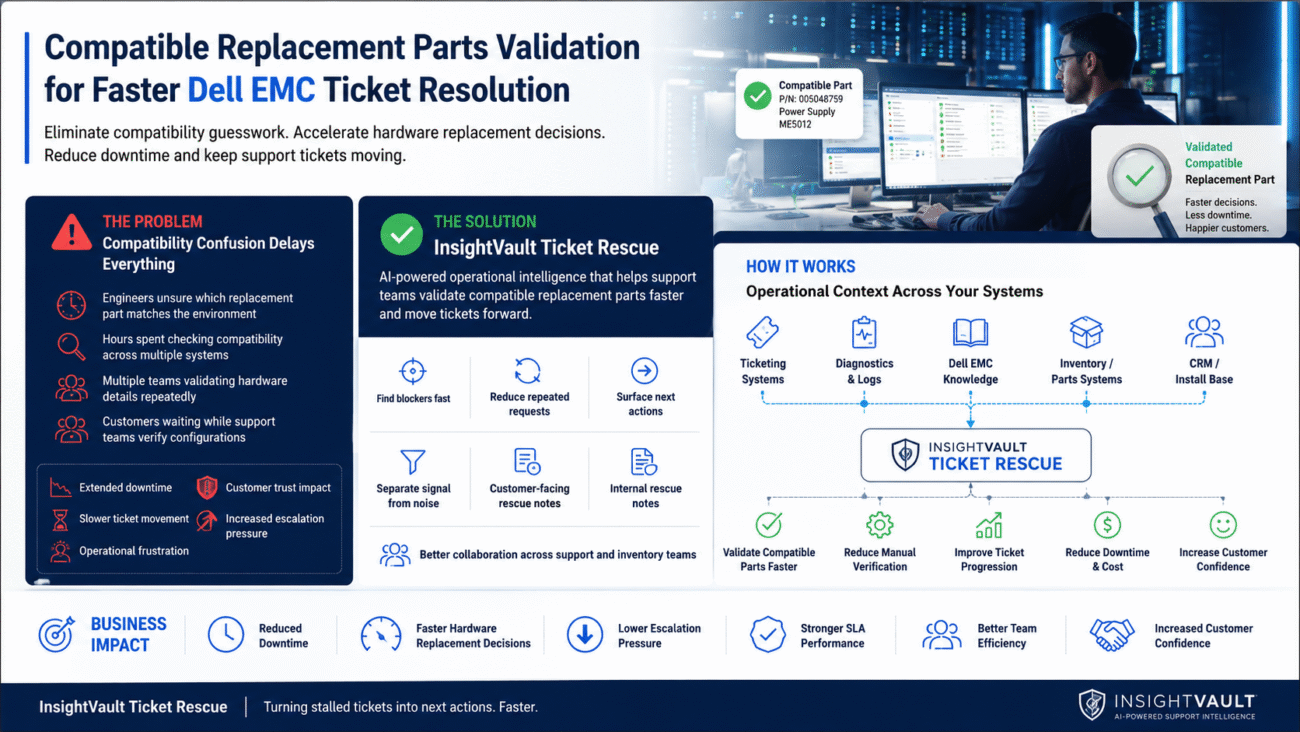
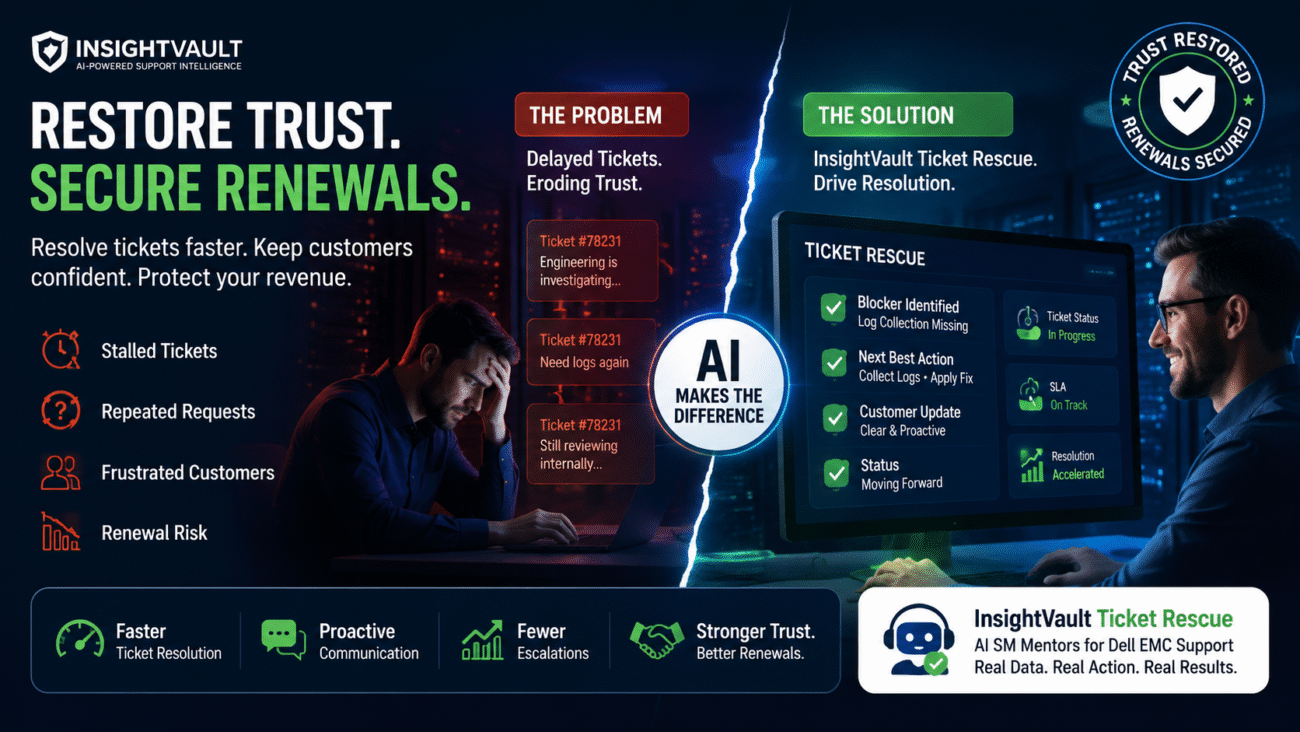
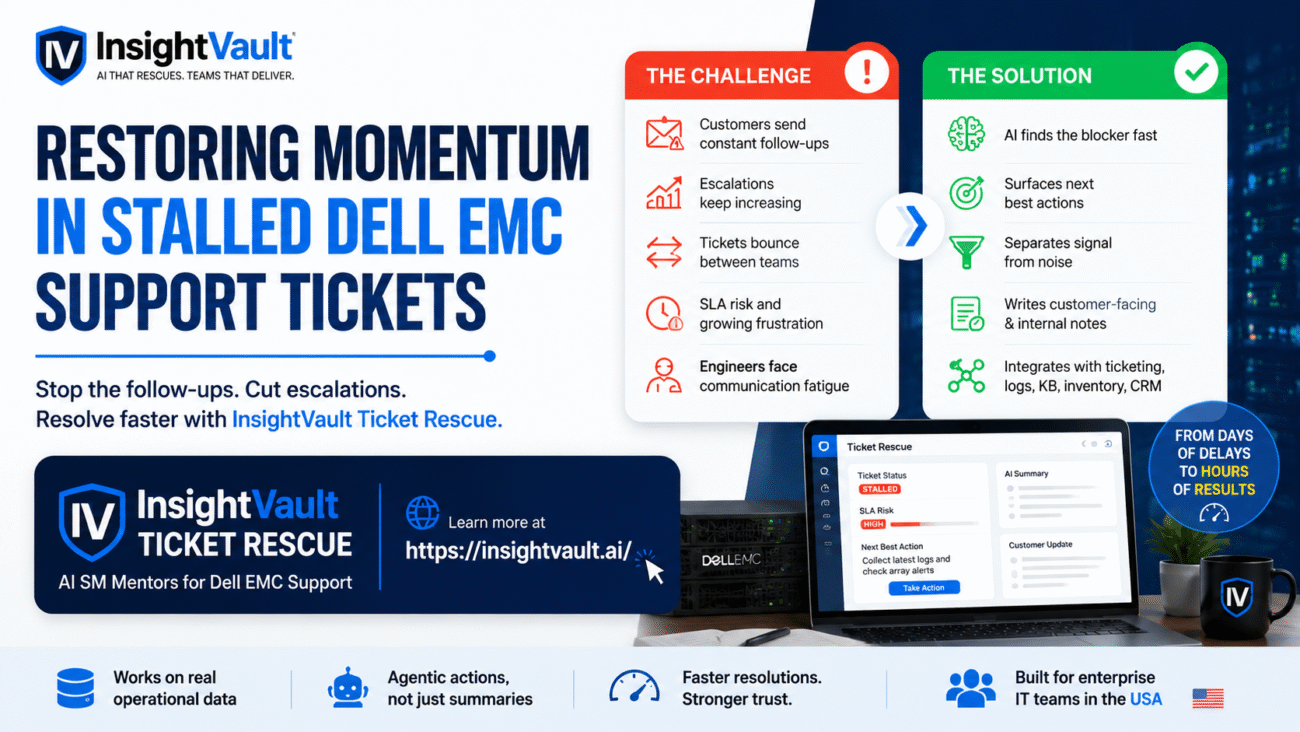
The platform helps teams:
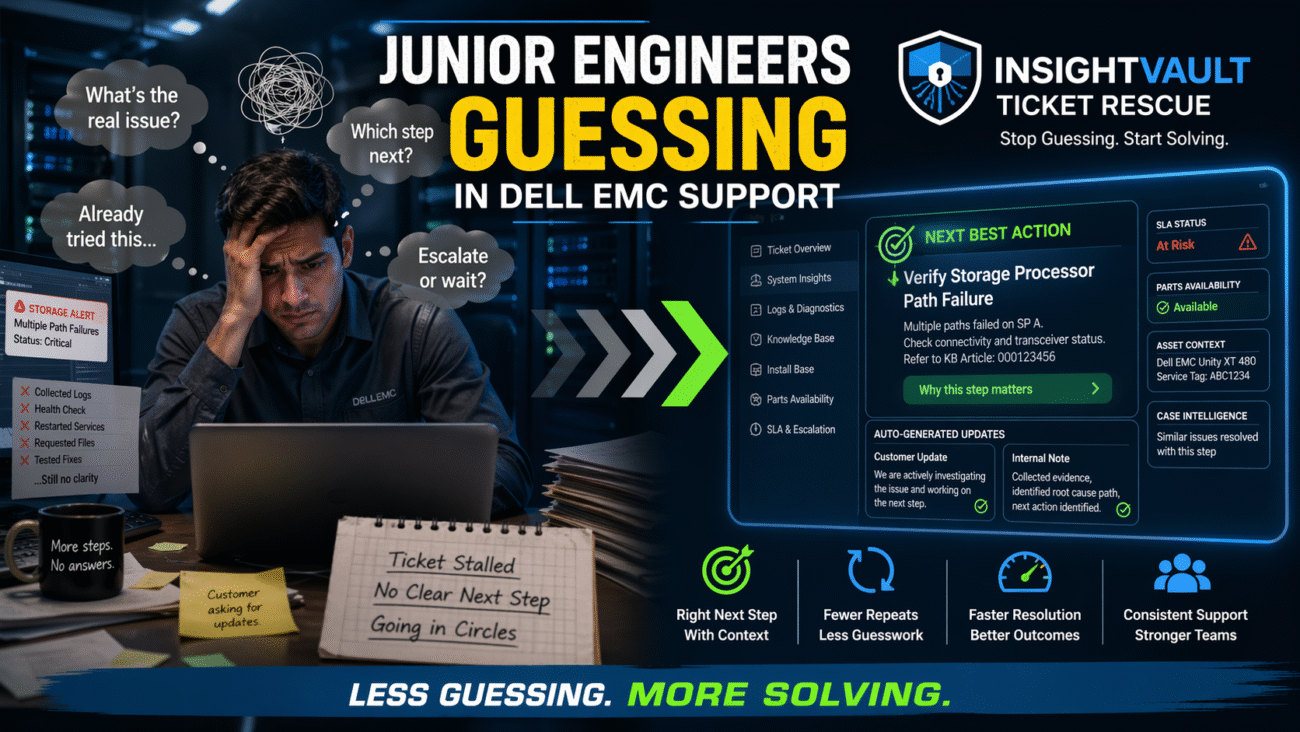
- identify the actual blocker faster
- reduce repeated diagnostics requests
- separate signal from noise across ticket history
- surface next operational actions
- generate customer-facing rescue updates
- generate internal coordination notes
- validate hardware replacement actions using operational context
The result is fewer shipment mistakes and faster coordination between teams handling critical incidents.
More importantly, customers experience clearer communication and improved confidence during outages.
That matters in enterprise environments where every additional hour of downtime impacts operations, revenue, and long-term support relationships.
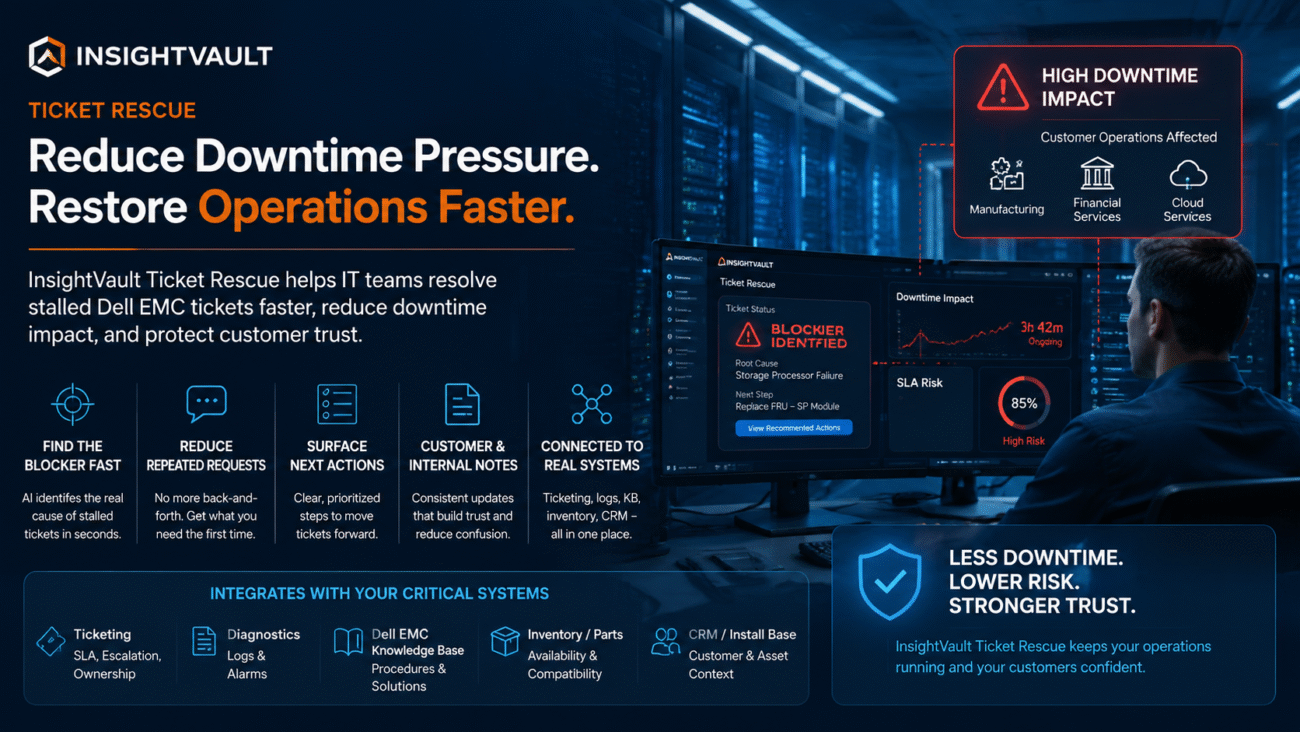
InsightVault also connects with real operational systems instead of relying only on pasted chat history.
This includes:
- ticketing systems for SLA, escalation, and ownership visibility
- logs and diagnostics systems
- Dell EMC procedures and knowledge workflows
- inventory and parts systems
- CRM and install-base records
Because the platform works across operational data sources, teams gain better validation before replacement approvals happen.
That directly reduces wrong-part shipment delays.
For enterprise infrastructure teams managing complex storage environments, operational coordination is just as important as technical troubleshooting.
Additional infrastructure lifecycle guidance:
- Dell Technologies Support Services: https://www.dell.com/en-us/dt/services/support-services.htm
- AWS Infrastructure Operations Best Practices: https://aws.amazon.com/architecture/well-architected/
- IBM Hardware Lifecycle Management: https://www.ibm.com/services/lifecycle-management
How It’s Done in InsightVault
Identifying the Real Blocker Faster
InsightVault analyzes operational signals across ticket history, diagnostics, escalation notes, and infrastructure context to identify where the workflow is actually stalled.
This helps engineers avoid rushing toward incorrect hardware replacement actions.
Instead of manually searching fragmented systems, teams see:
- unresolved diagnostic conflicts
- missing validation steps
- repeated escalation loops
- incomplete inventory checks
- conflicting engineering recommendations
This reduces confusion before logistics actions begin.
Reducing Repeated Requests
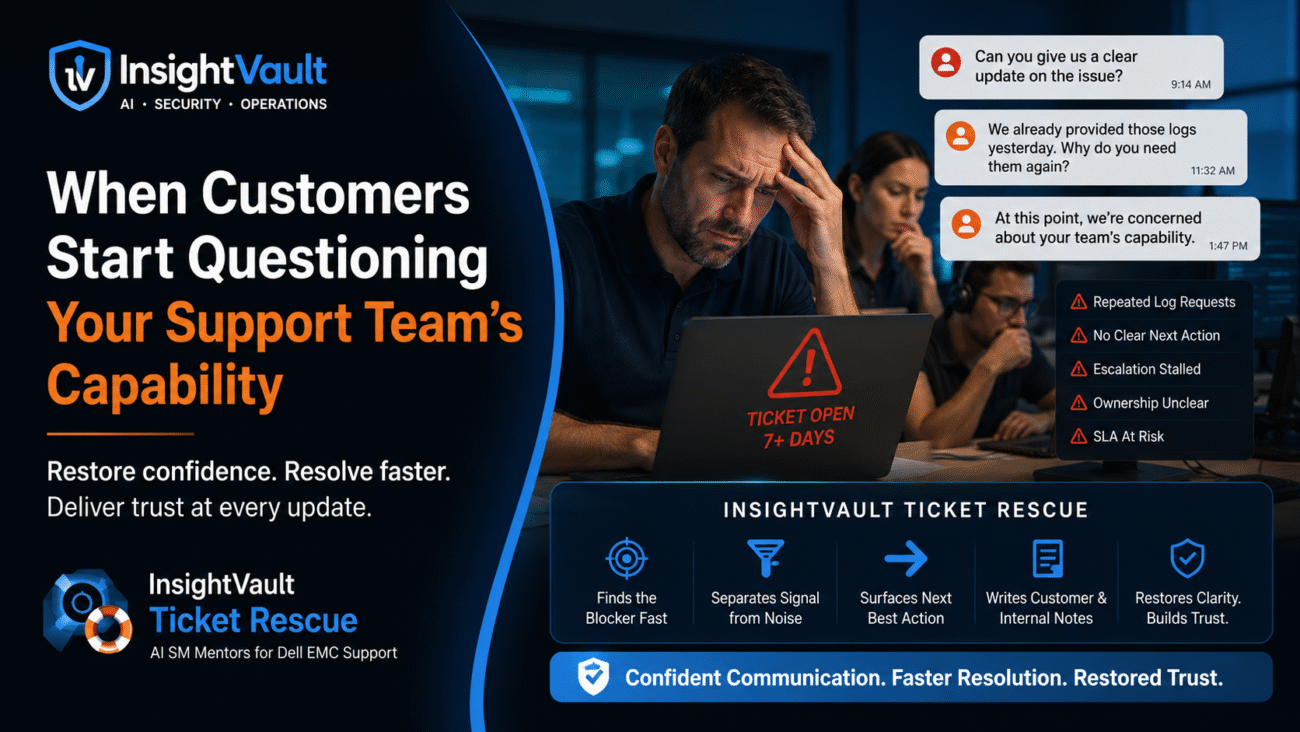
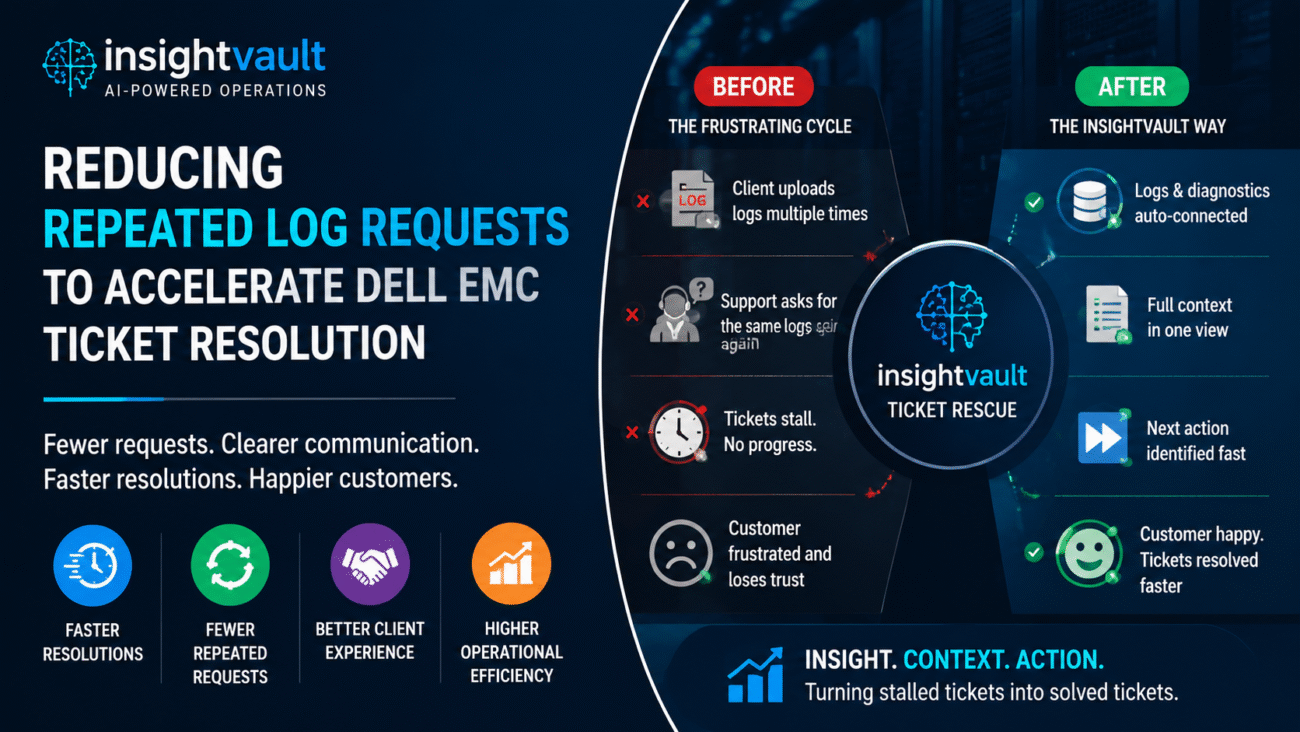
Customers become frustrated when multiple engineers repeatedly ask for the same logs or diagnostic information.
InsightVault reduces communication fatigue by organizing operational context clearly and surfacing previously submitted data faster.
That means:
- fewer repeated requests
- less customer frustration
- cleaner escalation handling
- better coordination between support teams
Improving Communication During Critical Incidents
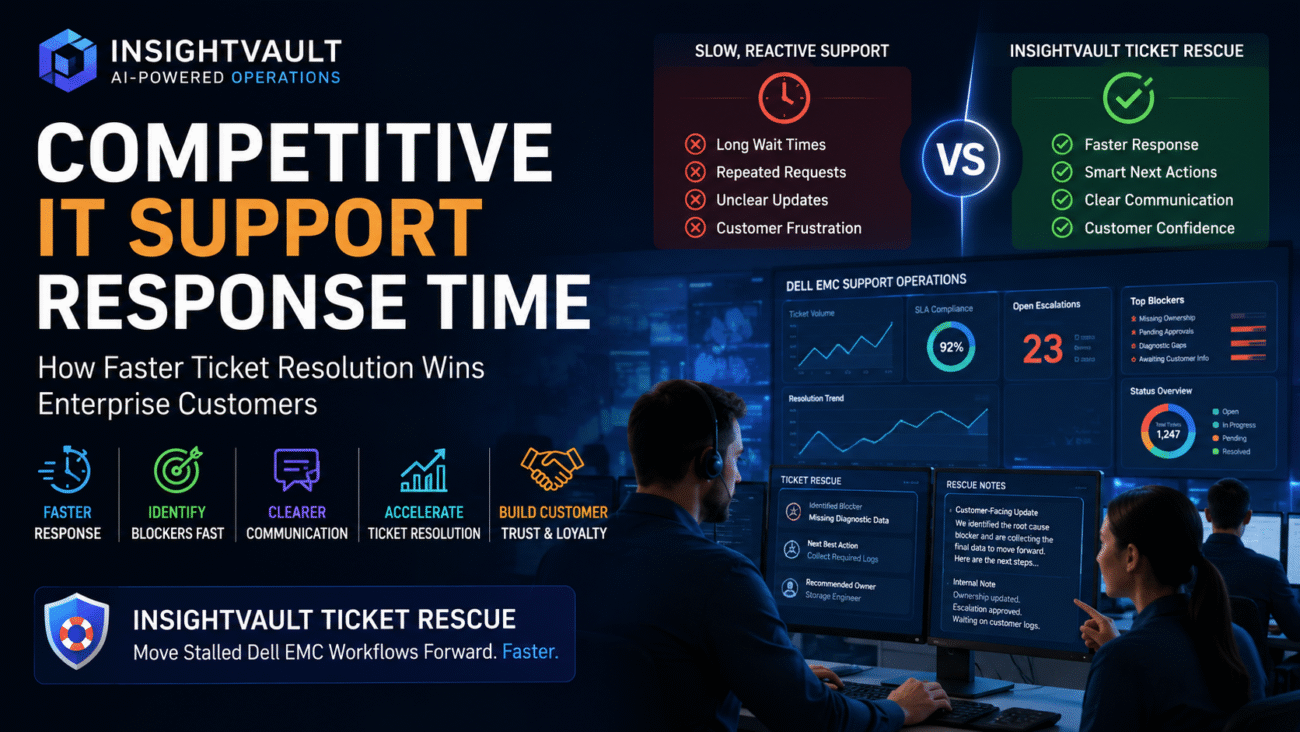
One of the biggest operational failures during downtime events is inconsistent communication.
InsightVault generates:
- customer-facing rescue notes
- internal coordination summaries
- next-step operational guidance
This improves clarity between:
- support engineers
- logistics teams
- field technicians
- escalation managers
- enterprise customers
Clear communication helps reduce panic-driven shipment decisions.
Real-Time Operational Intelligence — Not Just GPT Summaries
This is the major difference between standard GPT tools and InsightVault Ticket Rescue.
A normal GPT system summarizes text.
InsightVault operates on real operational workflows.
The platform connects with:
- Dell EMC procedures
- ticketing systems
- inventory systems
- diagnostics platforms
- CRM records
- install-base visibility
This creates operational intelligence instead of static summaries.
The outcome:
- faster validation before shipment
- reduced wrong-part risks
- lower downtime impact
- improved SLA performance
- stronger customer confidence